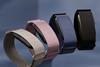
Garmin’s screen-free, subscription-free CIRQA Smart Band is a hardware bet against Whoop
Garmin has entered the screen-free wearable category with the CIRQA Smart Band, a $199.99 device that requires no subscription. The launch lands squarely against Whoop, the fitness tracker company whose membership only model has carried it to a roughly $10 billion valuation and which has been repeatedly linked by investor media to potential public listing plans.
CIRQA gets up to 10 days of battery life, syncs continuously to the Garmin Connect app, and can be worn on the wrist or as an armband. A single side button lets users tag one of more than 80 automatically detected activities, from running to yoga, while the band separately tracks sleep stages, heart rate variability, stress, skin temperature, blood oxygen and a proprietary Body Battery energy score.

Connected GPS borrows location data from a paired phone, and women can sync skin-temperature readings to the Natural Cycles birth control app, though that integration carries its own subscription requirement.
Garmin is chasing the wellness buyer, not just the athlete
CIRQA is not really aimed at Garmin’s existing base of endurance athletes. It is a funnel into a broader wellness audience that has so far gravitated to Whoop and Oura: buyers drawn to continuous health tracking who are put off by either a recurring charge or the learning curve of a full smartwatch.
Garmin’s fitness segment revenue rose 42 percent year-over-year last quarter to $1.75 billion. On the back of that growth, the company has layered in AI coaching, circadian rhythm scoring and the Natural Cycles tie-up before adding a screenless product: evidence of a company building toward what Fitt Insider described as a “personal health OS” rather than simply a hardware catalog.
The subscription fault line
Screenless wearables are no longer a niche: Google’s Fitbit unit has released the $100 Fitbit Air, reported to carry an optional subscription for advanced features, and Amazfit has pushed into hybrid screenless straps of its own. Garmin’s entry completes a pattern of established players adopting Whoop’s form factor.
But they are explicitly rejecting Whoop’s monetization logic.
Whoop, which launched its first tracker more than a decade ago focused on elite and professional athletes before expanding toward mainstream buyers, has built its entire business on mandatory membership fees rather than device sales. Garmin and Fitbit are both betting that a one-time hardware purchase, not a recurring charge, is what will win the next wave of wellness-focused buyers.
If that calculus is right, the launch of subscription-optional screenless bands from two of the category’s biggest names arrives at an inconvenient moment for Whoop, which has been reported as exploring an eventual public listing built on the durability of its subscription revenue.