A personal walk through IFA Berlin’s halls, past robot dogs and football-playing humanoids, into a subtler story: Chinese exoskeleton, wearable and home fitness brands are turning sporting goods, consumer electronics and personal health into a single connected category.
IFA Berlin has long marketed itself as Europe’s answer to CES, the January show in Las Vegas. The comparison only holds loosely: CES leans toward venture pitches and keynote spectacle, while IFA has traditionally been a trade show for household appliances and the retail buyers who stock them. If I close my eyes and associate IFA with a couple of immediate images, the first that come to my mind are XXL-size TV sets and big, powerful washing machines made in Germany.
A mix of German, prevailing, with English. And the smell of Berliner currywurst. Big, yes, but not CES.
This year, I take with me other sounds and other images.
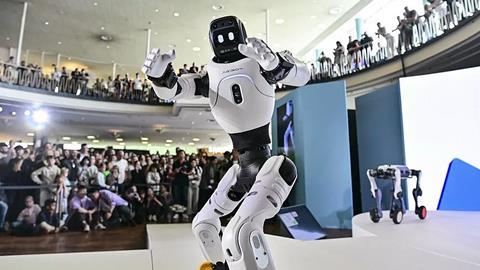
Walking Messe Berlin’s halls, I heard more Mandarin than German, and at moments more Mandarin than every other language on the floor combined. And the images? The show floor had the texture of a science fiction set. Robot dogs trotted between stands. Humanoids kicked footballs with more enthusiasm than accuracy. Machines squared off in boxing rings with technique that owed more to mixed martial arts than to boxing itself.

A few robots turned to watch passersby and tried, with mixed success, to strike up conversation. Getting past that army and into the substance of the show took patience, and a sense of humor helped.
What sat beyond it was not a parade of impressive gadgets.
IFA 2026 was not about breakthrough products. Yet a selective walk across the halls with closer ties to our industries, sport technology, connected fitness and wellness, home fitness, gives back a picture of what suppliers believe consumer demand may eventually follow.
This wrap-up of my journey through the halls can be broken down into four threads: exoskeletons, wearables, the home fitness built for people who work from home and blend work and movement in ways that, so Chinese producers think, have transformed forever how we move indoors since the pandemic, and robots borrowing the language of sport.
None of this looks, at first glance, like sporting goods news. It is nonetheless the material a consumer will meet first when searching for fitness equipment online, or walking into a sports and technology retailer next season.
So, I tried to make a picture out of it all.
What connected many of the launches was not only geography but strategy. Category after category, Chinese manufacturers approached fitness hardware with a playbook already familiar from electric scooters, robot vacuums and e-bikes: move quickly into an emerging segment, sell direct to the consumer, rely on performance marketing and TikTok creators (who, notably, were the most welcome guests at the stands during media days, not journalists), compress margins and iterate the hardware fast, before larger global brands decide the category is large enough to matter.
On the surface, powered hiking aids, smart rings, walking pads and budget treadmills have little in common.
What links them is a shared promise: reducing the friction around physical activity.
Instead of asking consumers to carve out dedicated training time, they fold movement, measurement or assistance into daily routines. The result is a shift away from performance equipment and toward what might be called lifestyle infrastructure. This is the transformation the sporting goods industry needs to acknowledge and adapt to.
- Exoskeletons leave the clinic for the trail
- Wearables give up the screen
- Between moving while working and social fitness
- Robots borrow sport to introduce themselves
1. Exoskeletons leave the clinic for the trail
The clearest shift at IFA was seeing powered exoskeletons move from rehabilitation clinics and industrial settings into consumer outdoor gear.
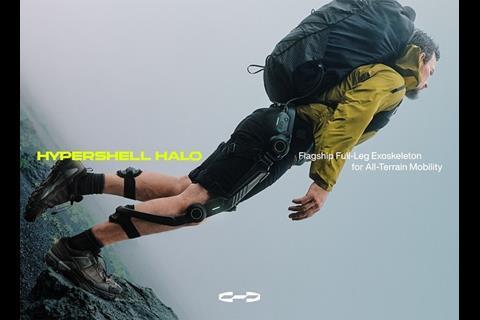
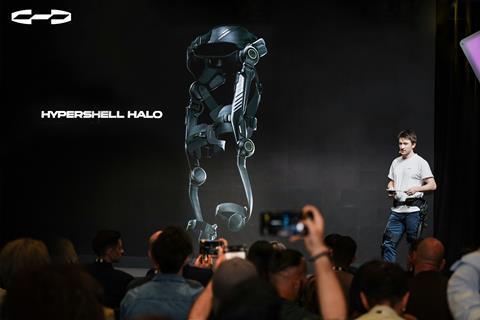
Hypershell, a Chinese exoskeleton brand active in more than 70 countries, presented Halo, its first full-leg system designed for all-terrain mobility. The device weighs 2.6 kilograms, delivers up to 1,490 watts of peak power, and uses a 370-gram removable battery rated for up to 20 kilometers. Chief executive Kelvin Sun described Halo as “a complete rebuild” of the consumer exoskeleton, not simply a hip-assist device with knees added.


Ascentiz, another Chinese entrant, is targeting the same market through modularity. Its H hip module and K knee module share a common Exo-Belt that houses the battery and controller. The modules are built for walking, hiking, stairs, skiing, and carrying loads, and they swap in seconds via a quick-release mechanism borrowed from military webbing. The system runs on an open-source software layer the company calls BodyOS. Vice president Cody Kou summarized the logic: people do not move the same way all the time, so the hardware should not be locked into a single configuration. Pricing starts at €1,599 for the H module and rises to €3,999 for the combined H and K Ultra system.
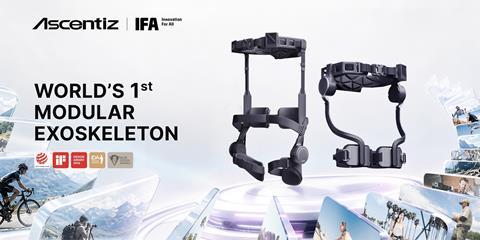
The broader exhibitor list reinforced the trend. VIGX, also Chinese, already rents exoskeletons to visitors at Chinese mountain resorts, suggesting a business model beyond the prototype stage. AlpWalk, another Chinese brand, pitched its hip-assist S1 to older consumers as a safety product rather than a performance tool. NAVEE showed a 1.8-kilogram trekking exoskeleton built around AI motion tracking. The logic is straightforward: modular pricing and resort rentals lower the barrier to a category that would otherwise ask hikers to spend more than €1,600 on unproven hardware.
2. Wearables give up the screen
This year, there were fewer smartwatches and more smart bands and smart rings. Is this just a fad, or the start of an irreversible shift toward tracking and control in smaller, less visible formats?
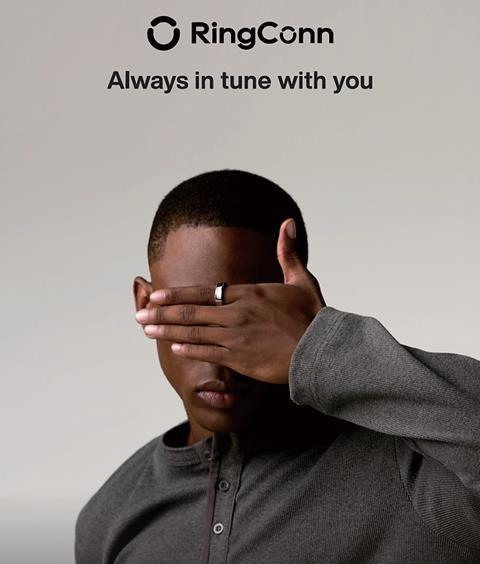
RingConn showed the third generation of its smart ring, adding vascular trend data and vibration alerts to continuous sleep, activity and stress tracking, all without a subscription requirement. ACTXA, a Singapore company, paired its screenless Spark Band with an AI-generated, non-invasive glucose snapshot, folding metabolic monitoring into a product otherwise built for sleep and recovery.
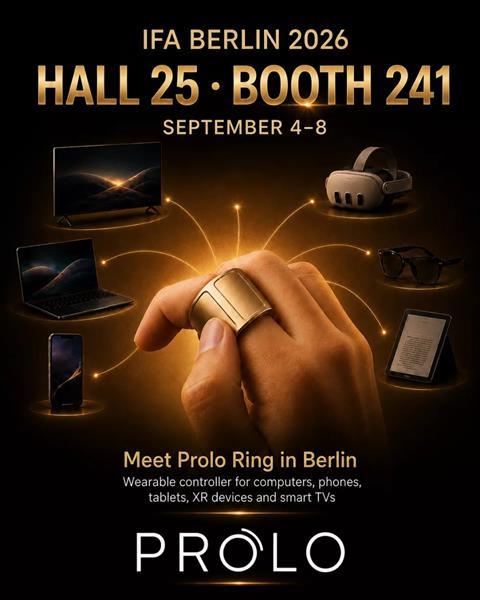
A second track ran in parallel: rings as interfaces rather than sensors. Prolo Ring and KiWear, both American, showed gesture-control rings that operate computers, phones and extended-reality headsets, turning the finger into a remote control rather than a data source. In some cases, they are even positioned as dictation devices, bringing back an old espionage fantasy: an invisible recorder literally at your fingertips.
Withings, the established French wearable maker, offered a contrast, framing its releases around clinical credibility rather than sport or lifestyle.
3. Between moving while working and social fitness
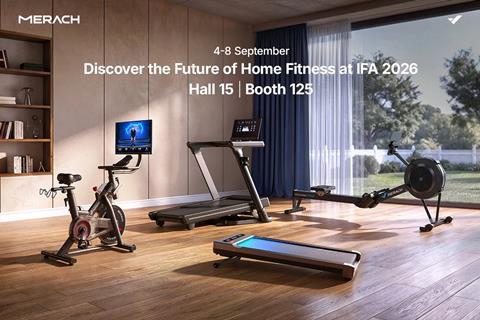
Chinese brands used IFA’s home fitness cluster to test a specific premise about European behavior: that people will work and exercise at the same time. MERACH brought the European premiere of its UltraWalk W60 Plus walking pad, built around a brushless motor rated for 15,000 hours of use, an electronically controlled incline, a 53-decibel operating volume and a 150-kilogram weight capacity. Co-founder Xue said the pad was designed to feel like it “fits naturally into everyday life” rather than demanding dedicated workout time. European preorders run through Sept. 20 at an early-bird price of €379.99, down from a €459.99 list price.
DeerRun pitched the category differently, tying its walking pads and treadmills to PitPat, a platform for virtual races and leaderboards. General manager Tex Yang summed it up: “Your treadmill becomes a stadium.” The company is showing three PitPat-compatible products at its Berlin booth and already runs a retail store in the Houston area.
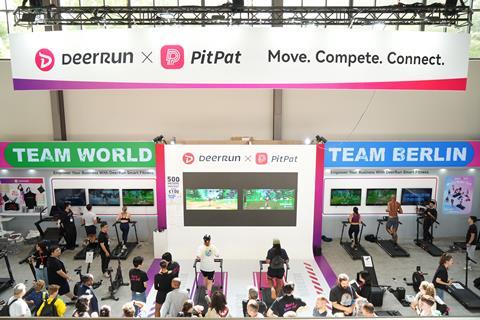
The logic is familiar: fitness borrows from gaming, and hardware borrows from content. The open question is whether that entertainment layer actually improves retention, or just adds another novelty feature to a category with a well-documented abandonment problem.
The wider field, including UREVO, based in Hong Kong and mainland China, and China’s KingSmith with its WalkingPad line, points to a coordinated effort by Chinese manufacturers to establish walking desks as a lasting category rather than a pandemic-era accessory.
Visualizza questo post su Instagram
Whether European homes and work habits adopt a product philosophy shaped by compact apartments in China and open-plan offices in North America remains an open question.
Robots borrow sport to introduce themselves
Sport is one of the quickest ways to make robotics legible to a general audience. RoboCup, run with Berlin United from Humboldt University, staged autonomous robot football matches throughout the show. The games were imperfect, but they offered a live glimpse of decision-making under real conditions rather than a scripted demo. Tenniix showed a more directly commercial product: a portable, AI-vision tennis robot that tracks the ball, scores rallies and adjusts drills, positioned as a training partner rather than a ball machine.

A wider cluster of humanoid robotics companies, including Unitree, MagicLab and AGIBOT, used movement and play in the same way: as public proof of balance, perception and autonomy. Most are robotics companies first and should not be described collectively as sports-technology businesses. What they share with Tenniix and RoboCup is a simple assumption: sport is the fastest route to persuading non-technical visitors that a machine can move, react and decide on its own. For sporting goods brands, this is an early marker of where competition could emerge, with AI-driven training partners entering the same retail and search conversation as wearables and connected fitness equipment.
One uncomfortable footnote that a well-informed observer cannot overlook: some of the same robotic platforms presented at IFA as consumer technology are also being adapted for military use on the battlefield, or are being developed with those scenarios in mind.
A category boundary is dissolving
None of this fits neatly into the traditional definition of sporting goods. Exoskeleton makers do not position themselves as outdoor brands. Smart ring companies increasingly present themselves as health platforms rather than sports tech firms. Walking pad manufacturers borrow language from productivity software and e-gaming as much as from fitness equipment.
Yet they are all competing for the same consumer attention and, increasingly, the same spending. The line between sporting goods, consumer electronics and personal health is getting harder to draw.
IFA 2026 suggests that some of the next challengers to established fitness brands may not come from the sporting goods industry at all.
FitnessBrands, technology and the new formats of sport
From training sportswear and wearables to connected home equipment and hybrid race formats,SGI Europecovers fitness through the lens of brands, retailers, and the product strategies that define the category.
Explore Fitness →