The Adidas Group's performance last year marked what managers described as a remarkable comeback, after enduring a slump in golf and Russian sales and the perceived sluggishness that caused jitters among investors two years ago.
Herbert Hainer, the company's outgoing chief executive, said that the new impetus was supported by a change in the company's approach, which led to a stronger focus on brands and consumers. This was encapsulated in “Creating the New,” a strategy that is meant to cover the five years beginning with 2016 but was already widely adopted in the organization last year.
The change clearly transpires with the more centralized function of the Global Brands organization and the group's bolder approach in marketing in the last months – and not just in terms of spending. Hainer said that the company's order books are full across all major performance and lifestyle categories.
The radical changes implemented in the football category paid off with a double-digit sales increase to more than €2.2 billion. According to independent market research, Adidas was able to significantly raise its market position in this category, particularly in Western Europe, where its share of the football boot market reached 38 percent in the third quarter of 2015.
This year has already seen the launch of the laceless boot worn by the likes of Mesut Özil and Ivan Rakitic, and the company is gearing up for the European football championships. The three stripes will outfit nine teams, including top-ranked teams such as Germany, Spain and Belgium.
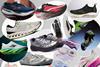
Another area of major investment was running, leaning on the Boost technology. The company said it sold more than ten million pairs of Boost running shoes last year. Sales of running products were up by 6 percent in constant currencies last year, with robust increases for both footwear and apparel. The focus for the running category this year remains on the Ultra Boost franchise.
On the Originals side, the Adidas brand's sales soared by 36 percent in constant currencies last year. Adidas sold more than 15 million pairs of Superstars. The focus this year should be on the Tubular and the NMD, while the group will continue to ride on the partnership with Kanye West around the Yeezy. The Adidas brand's development has also been marked by investments in its women's business, as described in our previous issue.
North America is to remain strongly in focus this year, with the organization of disruptive marketing activities and a concentration on athletes in sports that are most relevant to that market.
The group is also strengthening its partnership with some retailers in the U.S., for example installing new shop-in-shop applications in nearly 300 Foot Locker stores and more than 700 apparel pads at Dick's Sporting Goods stores. Adidas is also opening many new stores, including prominent spaces such as its first “Stadium“ store of 4,000 square meters on New York's Fifth Avenue.
When it comes to China, it was announced just after the results presentation earlier this month that Adidas intended to open another 3,000 stores in the country, adding up to about 12,000 stores across 2,200 Chinese cities by 2020. The plans were shared at a briefing in Shanghai by Colin Currie, the Adidas group's managing director for Greater China. He was quoted as saying that most of the growth would come from smaller cities and that Adidas would also focus on children, after the relaxation of China's one-child policy.
The company predicts that its global sales will increase at a rate between 10 and 12 percent in constant currencies this year. It anticipates more sales in all regions other than Russia and the CIS countries, with the strongest performances coming from Western Europe, North America and China – all projected to deliver double-digit growth in constant currencies.
Sales are expected to drop for the Taylor Made Adidas Golf business, but this should be entirely due to declines for the Adams Golf and Ashworth brands, while sales should go up for the Taylor Made brand and for Adidas Golf.
The Adidas Group further predicts that improvements in its prices, product mix and increased sales through own stores will mitigate growing input costs in Asia. Aided by a predicted increase in the product margin for TMAG, the entire group's gross margin is anticipated to reach between 47.3 and 47.8 percent, down between 0.5 and 1.0 percentage points from 48.3 percent in 2015.
Marketing and point-of-sale investments should remain at about the same level as the 13.9 percent reported as a percentage of sales for 2015, but other operating expenses will still decrease as percentage of sales, due to a decline in the rate of operating overhead expenditure.
The operating margin excluding goodwill impairment will thus remain at least stable, compared with 6.5 percent in 2015, and net income from continuing operations excluding goodwill impairment is projected to increase at a rate of 10 to 12 percent, to reach around €800 million.
It may be a sign of extra confidence that the group's supervisory board has nominated representatives of two major shareholders for election to the board at its annual meeting in May. They are Ian Gallienne, co-chief executive at Group Bruxelles Lambert; and Nassef Sawiris, chief executive of OCI. It turned out last year that investment vehicles related to Albert Frère and Sawiris acquired sizable stakes in Adidas, with a reported stake of 3 percent for the Belgian investor and 6 percent of voting rights directly and indirectly controlled by the Egyptian billionaire's group.
For this purpose, the board has requested an amendment in the articles of association, to enlarge the board from 12 to 16 members. The two other extra members would be elected by Adidas employees. The four new board members would join the board for the remainder of its current term, ending in 2019.