Domestic manufacturing has long been a marketing asset for New Balance more than a commercial one, covering a limited share of its US sales. Military procurement changes that arithmetic, supplying multi-year volume insulated from tariffs, consumer demand and sourcing disruption.
New Balance has been awarded a three-year supply contract by the Defense Logistics Agency to equip United States Army, Navy, Air Force and Marine Corps recruits with athletic footwear built in Maine, with deliveries beginning in early 2027.
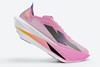
The shoe is the Made in USA 0430, produced at the company’s Central Maine factory in Skowhegan. Under figures released alongside the award, the agency will buy a minimum of 22,000 pairs a year, a floor of 66,000 pairs across the term, with a ceiling of 540,000 pairs. The contract is valued at as much as $59 million. At the contract’s maximum volume, that implies a unit price of roughly $109.
A category that took a decade to open
Athletic footwear was one of the last pieces of military kit to fall under domestic sourcing rules. The Berry Amendment, introduced in 1941 and made permanent law in 1994, requires the Department of Defense to source personnel equipment and uniforms domestically wherever possible, yet recruits had never been issued Berry-compliant athletic shoes even as combat boots and service uniforms met the standard.
A provision in the fiscal 2017 National Defense Authorization Act, pushed by the Maine delegation, closed that gap, and in 2018 the Defense Logistics Agency awarded New Balance a $17.3 million contract to supply recruits arriving at basic training. The 2026 award is more than three times the headline value of the 2018 contract, though the two cover different performance periods.
What the contract is worth to New Balance
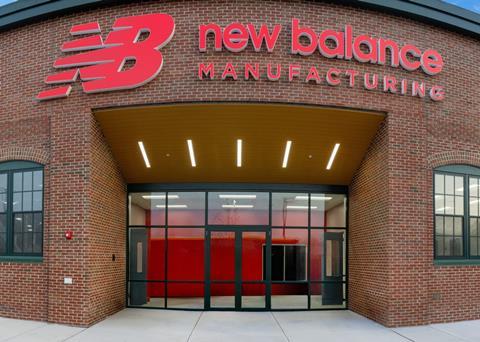
The money is not the point. New Balance reported worldwide sales of $9.2 billion in 2025, so $59 million spread over three years barely registers. What the contract buys is certainty. Made in USA shoes carry a domestic value of 70 percent or more and make up only a small share of the company’s US sales, which means the five New England factories run at costs the open market rarely covers. A federal order fills those lines for three years at a fixed price, regardless of tariffs, retail demand or supply disruption. In effect, New Balance has turned a heritage asset into a contracted one.
There is a second return. Every recruit issued the 0430 at basic training is a young consumer handed the brand at the start of a service career. The 0430 name, pronounced zero-four-thirty, refers to the early wake-up calls of basic training.
The wider defense trade in sporting goods
New Balance is not an outlier. The US military buys its uniforms and kit under rules that shut out most global suppliers. Because every fiber, thread and component must in principle (which means: with some exceptions) originate in the United States, only a small group of domestic manufacturers can bid at all, and several outdoor brands keep military lines running alongside their consumer business to stay inside that group.
Arc’teryx built its Law Enforcement and Armed Forces range for military and police buyers over two decades, restricting sales to serving personnel, and folded it into a single professional platform under the Arc’teryx Pro name in 2025. The traffic runs both ways. Polartec developed its Alpha insulation to a US Special Operations Forces brief and released it to outdoor brands from 2013, where it is now standard in active midlayers. The jackets that carried it into service were designed and built by Patagonia, which has supplied the Protective Combat Uniform program for years. Domestic capacity is expensive to hold, but it is the only qualification for a buyer that does not shop on price alone.