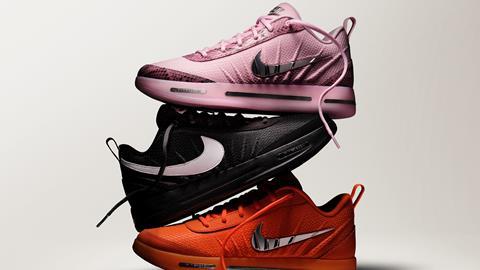
Behind the product show, Nike set targets to fiscal 2031 that rest on running, outdoor and a Sportswear reset. Growth returns only in fiscal 2029, Greater China stays flat and nearshore output for Europe nearly doubles.
Nike’s first investor day since 2017 arrived with the sort of backdrop no presentation deck can quite soften: shares had lost more than half their value since CEO Elliott Hill took the job two years ago, and sales were still sliding. In the latest quarter, Greater China was down 26 percent on a currency-neutral basis.
Investors, meanwhile, had a refreshingly concrete wish list. Ahead of the event, shareholders told Reuters they wanted products that sell “at full price, and not go on the markdown shelf.” In other words: less discounting, more demand. Simple enough. If only it were.
Nike wasn’t the only brand setting out its next chapter this week, although in very different ways. On Nov. 17, Puma launched the tenth generation of its Future football boot as the embodiment of its new path, with no special event and the focus firmly on product. Asics published Vision 2035, setting out its long-range ambitions, and presented it at its 15th Investment Day, anchoring the plan to its original mission, taken forward.
Nike, from its Oregon headquarters, instead went for the all-in version: a product pipeline, new platforms, financial targets and enough promises to keep investors busy taking notes.
This series examines three very different approaches to the future of sportswear, starting with the one that covered the most ground. Here are ten things to watch from Nike’s two-day investor marathon:
1. Calendar
Nike warmed up on Nov. 16 with a World of Athletes event, a product show staged the day before the numbers, with every release filed under the same newsroom tag: “Nike Investor Day.” The order was hard to miss: product first, money second.
What investors saw, though, mostly belongs to next year. Five new Nike Pro apparel categories arrive in January, Vomero 19 in March, and Devin Booker’s Book 3 and the ACG Kigerfly trail shoe in spring, still inside fiscal 2027, which ends in May.
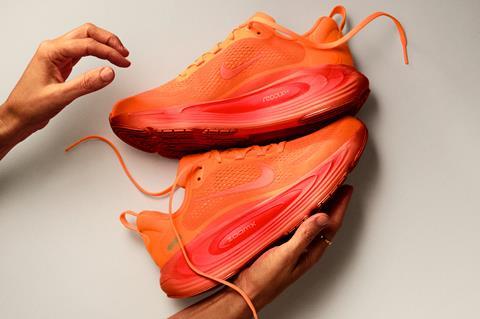
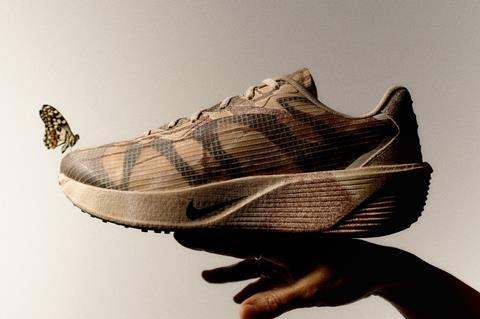
The rest comes later: four new Nike Mind styles in summer, a Vaporfly 5 that is still a prototype in the fall, and, between late 2027 and 2028, Tuned Air, a new digital way of making Air units, together with the Project Ride Sportswear platform.
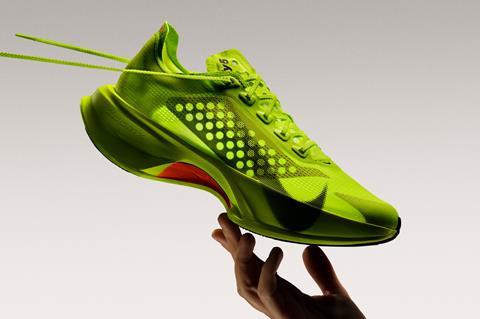
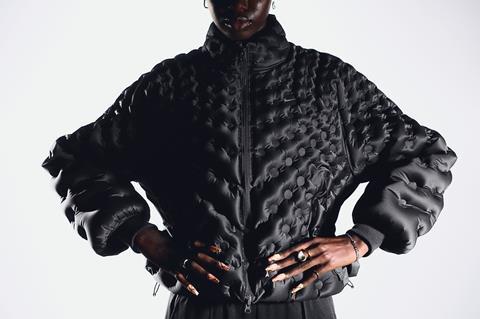
Not all of it is new, either. The inflatable Therma-FIT A.I.R. jacket scales up a design first made for Team USA at the Milano-Cortina Winter Olympics, Nike Free returns to training more than 20 years after its launch, and Nike itself calls Vomero 19 “an evolution, not a revolution.”
2. Targets
Then, the numbers. On the main stage on Nov. 17, Nike set targets for fiscal 2031, using fiscal 2027 as the base: about $5 billion of extra revenue, an operating margin of 12 to 14 percent, and adjusted earnings per share of $3.00 to $3.50. It also promised about $12 billion in dividends over five years, including the current one.
| Nike — 2031 financial framework | ||
| Fiscal 2027 guidance vs. fiscal 2031 target | ||
| Fiscal 2027 | Fiscal 2031 | |
| Revenue | High-single-digit decline | About +$5bn vs. FY27 |
| Operating margin | About 6% (adjusted) | 12%–14% |
| Adjusted EPS | $1.15–$1.35 | $3.00–$3.50 |
| Dividends | About $2.4bn | About $12bn, FY27–FY31 |
| Pace savings | Benefits begin | About $2.5bn annual run-rate |
Source: NIKE, Inc. press release, “NIKE, Inc. Announces Full Stride Ahead Strategy and 2031 Financial Framework at Investor Day,” Nov. 17, 2026. Fiscal 2027 margin and EPS exclude Pace restructuring costs of about $0.15 per share.
CEO Hill did not hide the starting point.
“We are not where we want to be.”
Sportswear and Jordan, he said, have had “an outsized impact” on results, especially in Greater China.
3. Timeline
Patience is the first thing the plan asks for. Nike calls fiscal 2027 and 2028 “a period of investment,” which, by its own guidance, means two more years of falling sales, with the decline only easing in the second.
The turn is penciled in for fiscal 2029, when Nike expects to grow in line with the market, a pace Hill put at 3 to 4 percent a year. Beating the market, the kind of growth investors used to expect from Nike, is left for fiscal 2030 and 2031.
The savings run on the same slow clock. The Pace restructuring should deliver about $2.5 billion a year by fiscal 2031, but after a modest start the savings ramp up only in fiscal 2029 and 2030, a year after the bulk of the new product reaches stores.
4. Performance
If the plan has a center of gravity, it is the business that is already working. Nike expects about $4 billion of the extra revenue from Performance Sports, led by five priority sports (running, training, global football, basketball and outdoor), and only about $1 billion from, which covers Nike Sportswear, Jordan and Converse.
| Nike — Where the extra $5 billion comes from | |
| Incremental revenue, fiscal 2028–2031 (fiscal 2027 base) | |
| Contribution | |
| Performance Sports | About $4bn |
| Sportswear (Nike Sportswear, Jordan, Converse) | About $1bn |
| Total | About $5bn |
| of which ACG (within Performance Sports) | More than $1bn |
Source: NIKE, Inc. press release, “NIKE, Inc. Announces Full Stride Ahead Strategy and 2031 Financial Framework at Investor Day,” Nov. 17, 2026; ACG figure from the Investor Day presentation.
Running is the template everyone on stage kept returning to. According to Nike, it has grown for nine straight quarters and added $1 billion of revenue, and the Vomero collection alone now generates more than $1 billion a year. In shoes priced above $110,
Nike says it gained six points of market share in the US and Western Europe over the past year, climbing from fifth to third place.
Football is where the template gets tested next, and where Nike admitted its own stumbles. Federation apparel sold twice as much at this year’s World Cup as at the previous one, but Chief Operating Officer Venkatesh Alagirisamy said Nike “sold out too early in places and couldn’t replenish fast enough.” That lesson goes into “the World Cup next summer,” the Women’s World Cup in Brazil.
5. Outdoor
Then there is the business Nike barely has. By its own count, the company holds less than 1 percent of a nearly $60 billion outdoor market, a figure close to Euromonitor’s estimate of $59.3 billion for outdoor sportswear in 2024.
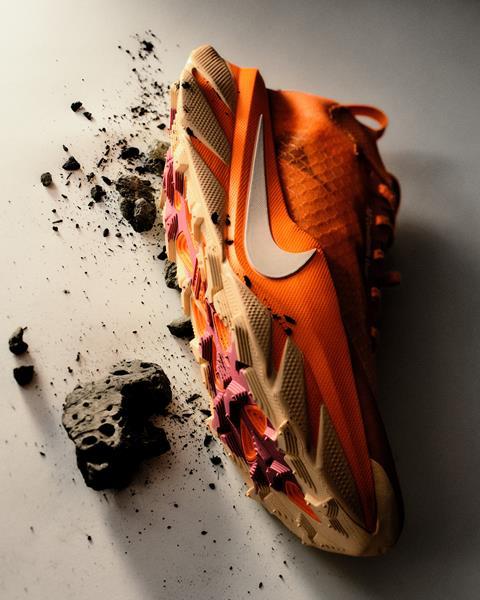
ACG (All Conditions Gear) is meant to change that, and to contribute more than $1 billion of revenue between fiscal 2028 and 2031. To get there, Nike plans to take ACG from about 3,000 doors in 2027 to 8,000 by 2031, with a focus on outdoor specialty stores.
6. Sportswear
Sportswear faces the biggest changes. Amy Montagne, President of the Nike brand, said about half of Nike Sportswear revenue comes from a small number of footwear families, the kind of concentration that looks efficient until those families stop selling. Nike’s answer is to cut the number of models in half.
The other half of the answer is newness. Less than 10 percent of Sportswear footwear revenue now comes from new models or updates, and the target for fiscal 2031 is about 40 percent, including fresh product in the $80 to $100 range.
Hill put the problem in plain words, blaming “a handful of classic footwear franchises coming down from their peak” across all three brands. Clearing them out will weigh on revenue, he said, but it is only the first step.
“Marketplace cleanup is the starting point, not the strategy.”
Converse, the smallest of the three brands, is expected to return to growth in fiscal 2028, with revenue above $1 billion, according to Nike. Well, for now it is still shrinking: in the first quarter, sales fell 28 percent to $263 million.
7. Speed
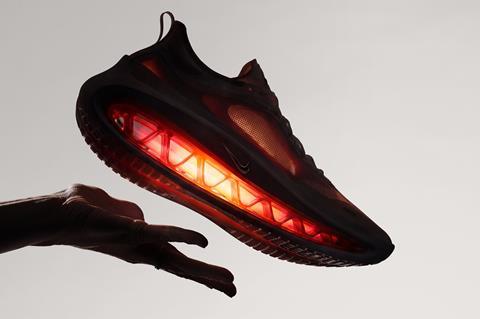
Nike has now put a number on how fast it wants to move. Hill said one of its measures will be to double the units of product created in under 14 months, a meaningful stretch when Alagirisamy admits a typical product creation cycle “still takes a year and a half or more.”
Being slow, he explained, is expensive. “When we make the wrong products, we pay three times,” he said, and he was frank about Nike’s last attempt to fix it: Express Lane, the fast-track unit set up in 2018, ran alongside the rest of the company instead of changing it.
“One fast lane doesn’t make a company fast.”
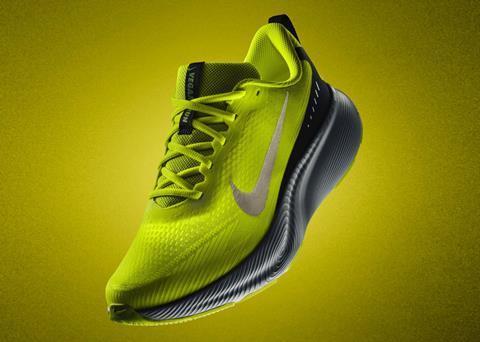
This time the promise is a faster company, not a faster lane. Alagirisamy showed the running shoe for India that went from kickoff to production in five months, against up to two years before, and set two more targets: two weeks less inventory by fiscal 2031, freeing about $1 billion in working capital, and more than 3 million work hours a year handed back by artificial intelligence.
“Some of the time we get back will make us leaner,” he added, a line that sits alongside the job cuts already announced under PACE.
8. China
The least comfortable number of the day came from Cathy Sparks, Vice President and General Manager for Greater China. Nike expects revenue in the region to stay roughly flat from fiscal 2027 to 2031, in a market that made up about 10.5 percent of group revenue in the first quarter. Her diagnosis:
“Local competitors are moving with speed and fluency.”
Nike’s marketplace, she said, “has not kept pace.” The fix starts in January, when Nike’s business on China’s online platforms moves into official Nike, Jordan and Kids flagships, and continues with a Shanghai product creation team set to double to more than 100 people by fiscal 2028. Selling innovation “on its value, not on discounts” will create short-term pressure for Nike and its partners, she warned.
India is the counterweight to the China pause. Nike expects to more than triple its business there by 2031, helped by a new multi-year partnership with the Mumbai Indians cricket team.
9. Europe
Europe did not get a spotlight of its own: the three markets Nike chose to feature in its geography presentation were the US, India and China. But one of the most concrete targets of the day points straight at the region, as Alagirisamy said Nike will nearly double its nearshore production volumes for Europe by fiscal 2031, including apparel such as T-shirts and jerseys.
The direction was not a surprise. In October, he had told employees that Nike had “very aggressive plans” for nearshore sourcing, while China and Vietnam would remain important.
| Nike — Operating targets | ||
| As presented at Investor Day, Nov. 17, 2026 | ||
| Today | Target | |
| Advanced innovation, share of revenue | About 7% (FY26) | About 10% |
| Sportswear footwear revenue from new models or updates | Under 10% | About 40% (FY31) |
| Number of Sportswear models | – | Cut in half |
| Units of product created in under 14 months | – | Doubled |
| Inventory | – | Two weeks less, about $1bn freed (FY31) |
| Nearshore production volumes, Europe | – | Nearly doubled (FY31) |
| Nearshore production volumes, North America | – | Up more than 50% (FY31) |
| ACG doors | About 3,000 (2027) | 8,000 (2031) |
| Greater China revenue | FY27 base | Roughly flat (FY31) |
Source: NIKE, Inc. Investor Day presentations, Nov. 17, 2026.
10. Reaction
The market, for its part, changed its mind during the day. Nike shares rose as much as 6 percent in early trading on Tuesday, then reversed to trade about 5 percent lower by mid-afternoon. Nike did answer the full-price question, with a newness target for Sportswear, a speed target for product creation and a marketplace reset in China. What it could not offer was growth before fiscal 2029.
The SGIE take: Nike chose to put a number on almost every part of its turnaround. That makes the plan easy to follow, and every target easy to check. The hardest test comes in fiscal 2029, when product, savings and Sportswear all have to work at once.
What’s next: Part 2 covers Asics’ Vision 2035 and its Mid-Term Plan 2029. Part 3 looks at Puma’s Future 10 and what a single boot says about the brand’s direction.
Enjoying this analysis?
Get 30 days of SGIE Professional for €1
Stay ahead of the global sporting goods market with SGIE’s daily news, analysis, executive interviews and essential email briefings.
Start your €1 trial →€1 for the first 30 days. Single-user access for new subscribers.
Sources
- Nike newsroom, World of Athletes releases (Nov. 16)
- NIKE, Inc. press release on Full Stride Ahead and the 2031 framework (Nov. 17)
- Investor day presentations (Nov. 17)
- Reuters (Nov. 16); Bloomberg (Oct. 2)
- Puma Media Hub (Nov. 17); Asics, Vision 2035 release and 15th Investment Day (Nov. 17)