
Between Black Friday bargains and holiday shopping lists, it’s worth keeping an eye on the ball. The brand rivalry that played out at the men’s World Cup in North America is heading to Brazil and the women’s game in 2027. Nike and Adidas are gearing up, while the sports and media industries are looking ahead to a tournament with the biggest commercial expectations ever for a women’s tournament.
1. A billion-dollar target
The headline number is revenue. FIFA president Gianni Infantino has said FIFA is targeting $1 billion from the Women’s World Cup, close to double the $570 million brought in by the 2023 edition in Australia and New Zealand. That edition was the first Women’s World Cup to break even. Wisely, perhaps, Infantino did not attach a year to the goal.
Some reports link it to 2031, when the tournament will be larger and when he hopes to still be in charge: he is standing again in 2027 for a final term that would run through 2031. Brazil expects its own windfall. A study by FGV Projetos for Embratur, Brazil’s international tourism promotion agency, projects R$8.8 billion (€1.4 billion) in economic activity, 73,700 jobs and R$928 million (€148 million) in tax revenue
2. More prize money, but no parity
According to Sky News, FIFA plans to double the prize pool to $220 million, although the FIFA Council still has to approve it in December. That would be a record, but it falls short of a promise. In 2023 Infantino pledged to pursue equal prize money for the men’s 2026 and women’s 2027 tournaments. At $220 million, the women’s pool would be about a third of the $655 million paid to the men.
3. The outsider from Malawi
The biggest surprise of qualifying has already happened. Malawi qualified on their WAFCON debut while ranked 153rd in the world. They arrived at the continental championship as the lowest-ranked of its 16 teams and left with a World Cup place.
4. The record that will survive, and the room others will copy
Some benchmarks are out of reach. The tournament’s best attendance is still 90,185, set at the 1999 final at the Rose Bowl in Pasadena, California. The Maracanã, which will host the final, is the largest venue of the tournament with 73,139 seats.
Size is not the only standard in Brazil, though. Belo Horizonte’s Mineirão, which will host eight matches, opened in 1965 beside Oscar Niemeyer’s Pampulha complex, a UNESCO World Heritage Site since 2016. It also has something the other venues are being asked to copy.
Since July 2025 the stadium has run a Sala Lilás, a private room for women facing violence, set up by the Minas Gerais courts and the stadium operator with prosecutors, public defenders and police. Brazil’s federal audit court has cited it as a national reference, the sports ministry wants the protocol in the other World Cup stadiums, and the National Council of Justice wants such rooms to be mandatory at every venue.
Visualizza questo post su Instagram
5. Nike dresses the host, and Germany
The most visible shirts in Brazil will carry the swoosh. The Brazilian federation extended its Nike deal through 2038. The new terms start in January 2027, cover the women’s team at the World Cup and are understood to triple the current $35 million a year, according to GlobalData valuations. Germany follows the same route. The DFB’s contract with Nike begins on January 1, 2027, and the women’s team has already qualified. Brazil will therefore be the German women’s first tournament in Nike, for a side that won both of its World Cup titles in Adidas.
6. Nike wants to “own” the next women’s game
Nike makes no secret of its target. After the men’s final, Camilo Andrade, vice president and general manager of Nike Football, admitted in an internal memo seen by Bloomberg that the outcome fell short of what the brand had hoped for. He then turned to Brazil, writing that Nike has “an outsized opportunity to lead and own women’s football.”
The men’s tournament showed how Nike can compete without the official rights. Onclusive, a media intelligence company, found in an analysis published during the tournament that Nike took 52.4 percent of World Cup endorsement coverage without being a sponsor. It is also signing players early. The wider plan is on the table this week. Nike is holding its first investor day in nine years, and the main presentations will be webcast on Nov. 17, when analysts expect a new five-year financial model through fiscal 2031. The FIFA Women’s World Cup will be one of the topics to lure investors.
7. Adidas plays the long game
Adidas came out of 2026 as the winner. It dressed both finalists, Argentina and Spain, while none of Nike’s 12 teams reached the final. In Brazil it keeps the tournament itself, as one of FIFA’s top-tier partners. It is also preparing for the next cycle with rookies. On Nov. 5 Adidas signed Maddie DiMaria after her move to Angel City FC. Her 12 goals at the U-17 World Cup are a record for any U.S. player at any level.
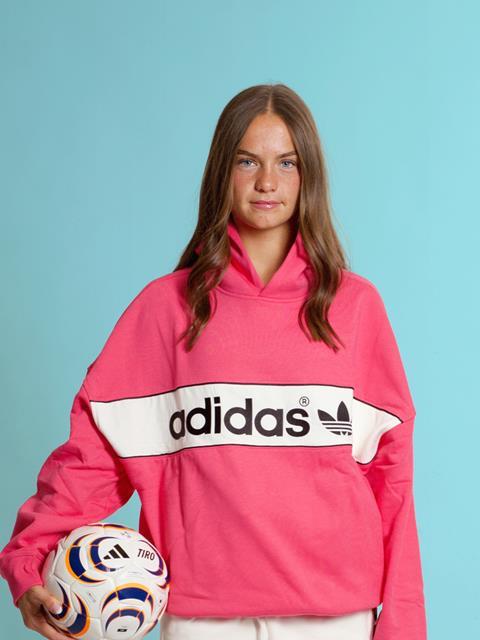
DiMaria was born in February 2009, so she will be 22 when the tournament grows to 48 teams and 104 matches in 2031. The only bid for that edition, from the U.S., Mexico, Costa Rica and Jamaica, goes to a vote at the Extraordinary FIFA Congress on Nov. 23. Brazil may settle the money records, but 2031 is where her generation will be measured.
What’s next
The countdown runs through Rio. The final draw takes place on Friday, Dec. 11, at the Museum of Modern Art in Rio de Janeiro. The day before, a separate draw sets the fixtures for the play-off tournament that will decide the last three places. Before then, FIFA members vote on the 2031 hosts on Nov. 23, and the FIFA Council is due to decide on prize money in December. The tournament opens at the Maracanã on June 24, 2027, with Brazil in the first match.
For SGIE, this will be one of our coverage highlights of next year, and we look forward to a big brand battle, but first and foremost a grand sports event and a statement of what women’s football means for the sports world as such.
Team Sports: Football, basketball, rugby and beyond
From boots and balls to fan merchandise, we track the partnerships, launches, licensing and participation trends behind the world’s biggest team sports.
Explore Team Sports →