A Melbourne-based startup has recorded fivefold annual growth while positioning itself as Australia’s only dedicated running shoe company, building momentum by blending locally informed design with explicit environmental commitments in a market long dominated by multinational brands.
Australian running shoe startup Tarkine has recorded fivefold annual growth while positioning itself as the country’s only dedicated running shoe company, building momentum by blending locally informed design with explicit environmental commitments in a market long dominated by multinational brands.
The Melbourne-based company has expanded from trail models into road, racing and specialized-terrain shoes, a trajectory that founders attribute to performance-led sustainability and a close connection with Australian runners. The brand’s early traction has been driven by product lines engineered for local conditions rather than off-the-shelf designs produced for Northern Hemisphere markets.
Trail runners drive word-of-mouth adoption across running clubs
The Trail Devil series has gained popularity among ultra and trail runners, with customer testimonials citing superior durability, comfort over long distances and better performance on Australian surfaces as reasons for switching away from established international brands. That grassroots approval appears to have translated into strong word-of-mouth in running clubs and local communities.
Recycled materials meet contemporary performance foams
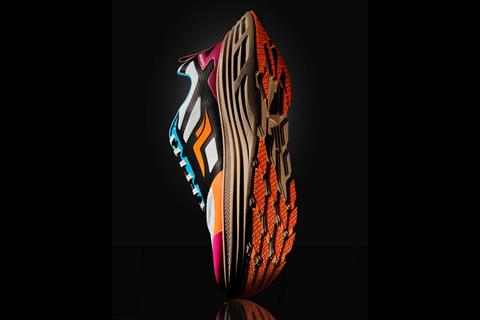
Models such as the Goshawk V2 neutral trainer use recycled and biodegradable materials and a proprietary “Future Foam V2” midsole for energy return and durability, while trail models feature supercritical midsole foams designed for rebound and impact absorption.
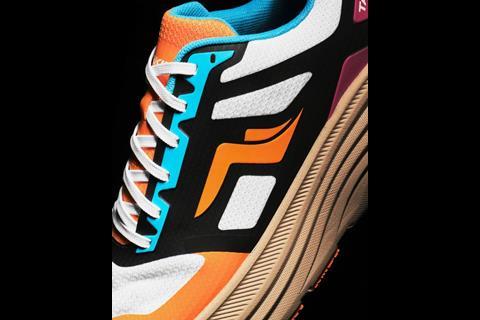
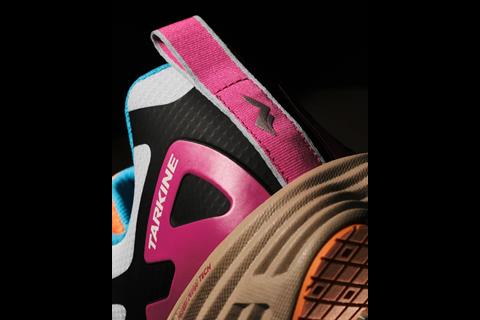
Uppers frequently use GRS-certified recycled mesh or recycled plastic bottle materials, and some models combine TPU (thermoplastic polyurethane) overlays for durability and carbon-infused lugs for grip. The Autopilot and Giants models have been tested for durability beyond 1,000 kilometers, with midsole geometries, drop heights and lug profiles engineered for technical terrain.
Sustainability extends beyond materials to end-of-life programs
Sustainability has been positioned as a founding principle rather than a marketing afterthought. The company offers machine washable uppers, recyclable-component programs and a “Return to Tarkine” recycling option on some models.
The brand operates carbon-neutral shipping on orders and offers international delivery, while emphasizing recyclable or biodegradable midsole elements. These practices underpin the company’s claim that it refuses to trade performance for environmental credentials.
Capturing 5–10% of A$1.5bn market would represent material revenue
Australians spend roughly A$1.5 billion (€900 million) on athletic footwear annually, and capturing even five to 10 percent of the domestic market within five years would represent a material revenue stream for a local firm.
Road running, comprising about 70 percent of the running community, offers a much larger addressable market than trail running alone, and expansion into bricks-and-mortar retail and export demand could accelerate growth. Those projections rest on current consumer trends toward sustainability and local manufacturing, as well as on the company’s ongoing product rollout.
Global brands face complacency accusations as local alternative gains traction
Tarkine’s rise highlights several competitive vulnerabilities for multinational footwear companies in Australia. Many global brands are perceived as complacent, shipping products designed for other markets, applying premium pricing and relying on brand loyalty, while failing to address specific local needs.
Combined with increasing consumer preference for sustainable supply chains and a willingness among some buyers to prioritize locally made goods, the shift in purchasing behavior could make it harder and costlier for incumbents to defend market share.
That said, editorial distance is warranted when considering future projections. The company demonstrates credible design choices and sustainability efforts, but rapid growth in a niche segment does not guarantee nationwide displacement of entrenched brands. Retrofitting mass manufacturers for sustainability is complex and capital-intensive, which is both a structural advantage and potential scaling constraint for a smaller manufacturer that must expand production capacity while preserving its ecological standards.
Local design and ecological transparency become competitive necessities
If Tarkine continues to deliver on durability, performance and verifiable sustainability, it could catalyze a broader reappraisal of where Australian athletes source footwear. The practical outcome could be not merely a handful of converts but a business model others may replicate – local design, clear sustainability credentials and community engagement – potentially prompting more Australian entrants across categories from cycling to hiking.
For multinational incumbents, the lesson is straightforward: local relevance and ecological transparency are no longer nice-to-haves but competitive necessities. The brand is targeting both everyday mileage and specialized racing use cases with models such as the Goshawk V2, Giants and Autopilot to broaden appeal.
About
Tarkine is a Melbourne-based running shoe company founded by Australian runners Sam Burke and Ross Johnson that markets itself as Australia’s only dedicated running shoe brand. The brand is based in O’Connor, Western Australia, and began serious product development in 2017 after founders started experimenting with shoe designs in 2009. The company launched via a Kickstarter campaign that exceeded its funding goal within four hours, selling over $44,000 (€25,000) in inventory. Burke is also the founder of Runner’s Tribe, one of Australia’s largest running media sites.
The company offers trail, road and racing models with an emphasis on locally tested designs and environmental sustainability, including recycled materials, carbon-neutral shipping and end-of-life recycling programs. Tarkine donates two percent of every sale to the Bob Brown Foundation to help protect the takayna/Tarkine Rainforest in northwest Tasmania, Australia’s largest temperate rainforest.