In line with our coverage of the trade policy of the second Trump administration, SGI Europe will be seeking comment from a variety of industry players. We will be updating this article as reactions come in.

We have sent inquiries to about 50 industry players – companies, consultants and others – about the recent change in US tariff policy and its effects on international trade. Few have been keen to comment. Adidas, for instance, says only that it is monitoring the situation.

Arena, as we have just reported, has been working on nearshoring project for the past two years. Expanding its “Made in Italy” range, it has arranged with a company called LAR to set up an automated production line in its home country for some low-end swim googles.

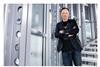
IMG_5163_Peter Graschi_arena CEO

Source: Arena

Peter Graschi, CEO, Arena.

Now its CEO, Peter Graschi, has kindly responded to our tariff inquiries.

“Today’s geopolitical situation is characterized by a certain uncertainty and instability,” Graschi tells us. “The tariffs will certainly have an impact. However, I believe that the watchword today is to negotiate. We need to embark on a path of intelligent commercial diplomacy to reach reasonable agreements. If we look at the sports sector in general, we know it’s a sector vulnerable to protectionist policies, because it largely depends on global supply chains. This situation will cause delays, additional expenses and a direct impact on the supply to the public. At the moment, we are mainly keeping an eye on our American market. Certainly, like many other brands, we will strive to find alternative strategies and new opportunities. Sometimes, it is precisely from crises that new ideas emerge.”

“We will endeavor to ensure that consumers are affected as little as possible by price increases that are attributable to the tariff situation,” he continues, “although a recalculation of costs cannot be avoided. We will then continue to evaluate nearshoring solutions, as we have done for part of our eyewear product family.”

For medium- and long-term changes, “we will continue to diversify our procurement footprint to react even faster to changes. We are doing this in cooperation with our long-standing partners.”

stefan kolbauer

Source: Schwan-Stabilo Group

Stefan Kohlbauer, CEO at Ortovox: “We are continuously analyzing the situation in the USA and working closely with our local team to prepare for various scenarios in the best possible way.”

The outdoor brand Ortovox, part of the Schwan-Stabilo Group, is taking a similar approach, “continuously analyzing the situation in the USA and working closely with our local team to prepare for various scenarios in the best possible way,” Ortovox CEO Stefan Kohlbauer tells SGI Europe. “As many decisions are often short-lived, it is particularly important to remain flexible and create sustainable solutions with confidence. As we can see, the course can change at any time. Our focus is on a long-term, stable business model in the USA that is based on our values and fairness. In doing so, we attach great importance to considering the entire value chain, from our partners to our customers and employees.”

In any case, the company seeks to “avoid rash decisions. The challenge is to ensure an attractive market presence for both end customers and retailers – within the framework of affordable conditions and a suitable business model. We can make various adjustments here, but it is crucial to maintain a balance in order to safeguard the integrity and strength of the brand in the long term.”

The Ortovox portfolio, Kohlbauer continues, is “broad and solid, so we will not make any hasty decisions in this regard either. We continuously review and optimize our portfolio in line with our ethical and economic principles. We also take the constantly changing geopolitical situation into account in our considerations.”

Martin Riebel, CEO of Schwan-Stabilo Outdoor (SSO), agrees, telling SGI Europe that “there is not much to say at the moment, as the situation can change daily with [US President] Donald Trump’s decisions.”

Nevertheless, Riebel continues, “the situation is worrying. If the high tariffs go through, this will have negative consequences for our US business. We are currently playing with different scenarios, but for the moment we are remaining calm and not getting caught up in the general panic. After all, we still generate the majority of our sales in Europe. This is not to say that our US business is not important to us. But the situation is more threatening for companies that generate the majority of their sales in the USA.

“In this respect, we are concentrating on what we can influence and hope that Mr. Trump’s tariff announcements will not become reality. Not even in the next 90 days.”

Other players in the industry remain bullish on China. One such is the brand, marketing commercial consultancy Hot Pot China, which operates in London and Shanghai and serves such clients as Canada Goose and Gymshark.

“China,” founder and CEO Jonathan Travers-Smith tells SGI Europe, “will not be backing down in the tariff war any time soon, especially when you consider that exports to the US represent under 3 percent of total GDP for China,* whose economy grew by 5 percent last year.

“For European sports brands, however, Trump’s tariffs and difficulties in the US highlight even further the attractiveness of the China market. China offers no incremental tariffs for EU businesses, a stable government in the short, medium and long term, plus a growing economy. All are topped off with the fact that fitness and sports sectors are receiving huge government investment in infrastructure, and hence are seeing an average of 18 percent year-on-year growth.

“In the minds of many of our partner brands the ‘risky and expensive’ label applied by some to China can now be more accurately laid at the door of the US. Our recommendation for sports and fitness brands is to double down on understanding your unique consumer segments in China, as well as your competitive advantage with them, before investing in brand building to form a solid and profitable community of brand fans that will pay dividends long after Trump has left office.”

* To round out this picture, we add that in 2023 the US received about 13.9 percent of Chinese exports, worth about €471 billion. This is more than any other country, and it is comparable with the share of the EU or of ASEAN, which received 16.0 percent (€540bn) and 14.6 percent (€492bn) respectively.

Still others, like Cyclite, can afford to sit back and relax. This company – which seeks to make its bicycles as light, aerodynamic, practical, reliable and weather resistant as possible – finds that the present geopolitical situation “has no direct impact on our current business,” as SGI Europe has learned from Max Barnsteiner, who is both its CEO and, with Christoph Kirsch, its co-founder.

The US accounts for a minimal part of Cyclite’s B2C business, and its US B2B business is as yet non-existent. Barnsteiner hopes that the tariff batlle “will not lead to a global economic crisis or recession, which would have a major impact on the development of our company.”

For now, though, the situation requires “no immediate measures” and poses no risk to the jobs the company provides. There has, however, been one change. Cyclite has set aside the idea of entering the US market in the medium term, “which had previously played a role in our considerations.”

torsten jansson porträtt

Source: New Wave Group

New Wave Group, CEO Torsten Jansson: “We are and have been well prepared for this to happen,” and the company has done “very little” in the way of major changes. “We have for several years spread out production in many countries on several continents.”

Neither has New Wave Group been caught off guard, as owner and CEO Torsten Jansson tells SGI Europe. The Swedish designer, acquirer and developer of brands is “not very much” affected by new tariffs from either the US or China. “We are and have been well prepared for this to happen,” and the company has done “very little” in the way of major changes. “We have for several years spread out production in many countries on several continents.”

What about the staff? Is New Wave giving notice? “On the contrary — we are still on the offensive and hiring in many markets.” In fact, “this feels calm compared to previous things, such as the pandemic or the financial crisis.”