
Performance running brand SATISFY has opened its first permanent retail locations in Paris – Supply for apparel and shoes, and Fuel Station for drinks – both on Rue de Saintonge. The store has no product descriptions, items displayed on slabs on the floor and a custom scent designed to mimic a luxury fashion store.
Performance running challenger brand SATISFY has opened its first permanent retail location, in its home base of Paris.
In fact, the brick-and-mortar venture is actually two locations, both on opposite sides of Paris’ Rue de Saintonge: Supply, which stocks SATISFY’s distinct technical apparel and shoes; and Fuel Station, which offers pre-and post-run hydration drinks and coffees.
The design decisions behind the store
Speaking to Wallpaper.com, co-Founder Alphonse Sarthout of the architecture and design office behind the new locations Ciguë – also Paris based – explained some of the unorthodox decisions behind the space:
● minimum displays, with some items displayed on slabs on the floor, to “slow down the rhythm of the space”;
● no explanatory texts about products, so that customers are encouraged to interact with highly-trained sales associates;
● a custom scent to mimic a luxury fashion store.
A space so at odds with a traditional running retail space embodies the punk aspect of SATISFY. Writing on an Instagram post, Satisfy Founder Brice Partouche explains: “It’s not really a SATISFY store. It’s SATISFY as a store.”
As such, both the store and the cafe-cum-meeting place translate the brand’s imagery and ethos into tangible design elements: Partouche’s fascination with American landscapes and deserts via a triptych wild west-style desert landscape, raw natural materials alongside metal clothing racks, as well as “a wall of original first-press punk and hardcore records sits alongside jewelry, magazines, and artifacts I’ve collected over the years.”
All are for sale, “Otherwise, we’d be a museum,” explains Partouche.
SATISFY’s brand identity and the MothTech innovation
As our columnist Sebastian Willefert has previously explained: “Where most running brands competed on split times and podium counts, SATISFY went somewhere else entirely: it built a visual language rooted in degradation, counterculture and earned miles.
“Its garments are designed to look better the more they are destroyed by use. Its community skews toward people who run through the night, listen to noise music and have little patience for the language of wellness marketing.”
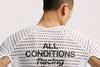
The brand’s signature innovation is MothTech: Organic cotton garments perforated with holes inspired by the wear patterns of vintage t–shirts aged over time. Each perforation is placed precisely where heat builds during effort, creating ventilation without sacrificing the worn, lived-in aesthetic that defines the brand.
The influence of the challenger brand, where long sleeve t-shirts can retail for €180 and shorts for €220, has already been noted in mainstream sports brands.
Nike’s ACG Radical AirFlow NXT trail running top built around an open-hole knit designed to maximize airflow and speed up sweat evaporation drew comparisons with SATISFY’s perforated fabric upon its launch in July 2026.
The SATISFY silhouette and what it means for running retail
Speaking to High Snobiety in Aug. 2026, SATISFY’S Chief Brand Officer Daniel Groh reflected that “‘the SATISFY silhouette’ is infiltrating culture,” and has sparked a new wave of how people run.
Given the importance of the challenger brand in running culture, can we also expect the SATISFY in-store template to infiltrate running store culture too? The signals are there.
SATISFY has already shown that a challenger can set the visual and technical agenda for much larger rivals, and its Paris stores suggest the same could apply to physical retail. For running retailers, the lesson may be less about copying the desert landscape or the punk records, and more about asking what a store can offer that a product page cannot.
Road, track and gravel: the business of running
We track the business story: brand strategies, product launches, financial performance, participation data, and the race formats reshaping the industry’s most competitive category.
Explore Running →