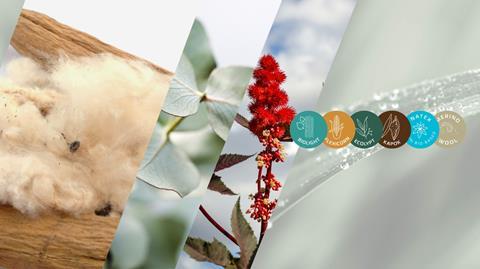
Italian brand UYN (Unleash Your Nature) has developed a range of new high-performance biomaterials. From Kapok, the so-called “plant wool,” to Flexicorn, an elastic fiber made from corn seeds, these fibers are designed to replace those synthetic ones derived from fossil fuels that have a heavy impact on the environment. UYN says its new organic fibers have exceptional active properties on strength, drying speed and breathability, combining sustainability and high performance. The result is the perfect combination of nature and technology, sustainability and functionality.
UYN is using Kapok for the first time in its sportswear. The lightweight fiber, derived from the fruit of the Ceiba Pentandra plant, has a hollow structure and is 80 percent air. This gives it a high insulating capacity and exceptional softness, which is why it is also called “plant wool.” To ensure the elasticity and durability of the garments, UYN has developed “Flexicorn” instead of conventional elastane, an ecologically sustainable fiber obtained from corn seeds. Other biomaterials used include “Biolight,” a fiber derived from beech wood that is characterized by its softness and breathability, and “Ecolypt,” a yarn derived from the eucalyptus plant that naturally neutralizes odors and effectively wicks away moisture.
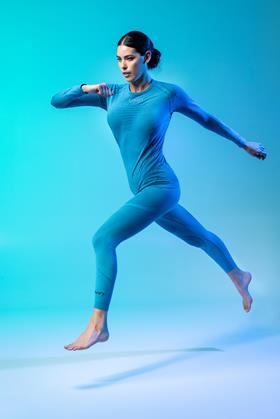
The new materials will be used for the first time in three underwear lines in UYN’s AW23 collection: Energyon Biotech (underwear for high-intensity activities at medium temperatures), Evolutyon Biotech (designed for sports activities in medium to cold temperatures) and Fusyon Biotech (combining extra-fine merino wool, Ecolypt, Natex and Flexicorn for high thermal power). The Biotech collections are characterized by high performance and an exceptional feeling of natural comfort against the skin that cannot be achieved by conventional synthetic fibers. All three collections include a long-sleeved shirt, long pants and 3/4-length pants. Each garment is made from a 99-percent mix of bio-fibers that replace traditional synthetic fibers – with around 1 percent of elastane and polypropylene inside, primarily in the waistband area, and not in contact with the skin.