
With performance running growing at a fifth of SportStyle’s pace last quarter, Asics is moving its core cushioning shoes to a new foam family. The 29th Cumulus follows the Nimbus and adds cushioning at €40 less.
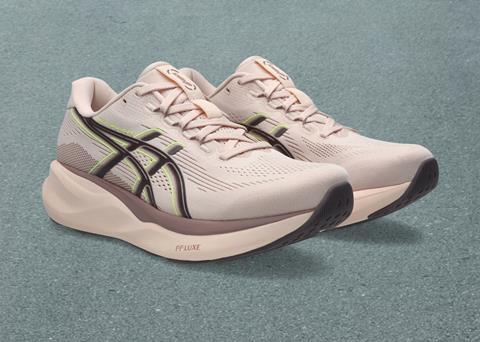
Born in 1999, the Gel-Cumulus counts as Gen Z among running shoes. For its 29th generation, Asics has switched the midsole to FF Luxe foam and restored full rubber coverage to the outsole. Announced in Kobe, Japan, on Nov. 24, the mid-priced daily trainer goes on sale worldwide on Jan. 1, 2027, at €150.
The release comes less than four weeks after the Gel-Nimbus 29, which Asics rebuilt around a softer foam, FF Luxe Plus, at €190. The Cumulus borrows the “Soaring Cloud” design concept from the Nimbus, giving the cushioning family a common look across two price points.
Performance running is where the update matters. In the third quarter, the category grew 9.4 percent, while SportStyle grew 49.2 percent, and Asics shares fell 14 percent on results day. Running still anchors the Mid-Term Plan 2029 presented on Nov. 17. With the Nimbus, the Trabuco Max 6 trail shoe and now the Cumulus moving to the FF Luxe foam family, Asics is renewing its core cushioning range as growth in the category slows.
What changes underfoot
Stack height rises by 2 millimeters over the previous model, while the heel-to-toe offset stays at 8 millimeters. A PureGel unit sits in the heel to soften landings. The outsole combines two compounds, AHAR Lo and AHARPlus (AHAR stands for Asics High Abrasion Rubber), for grip and wear. On top, an engineered mesh upper is paired with a padded tongue and an OrthoLite sockliner.
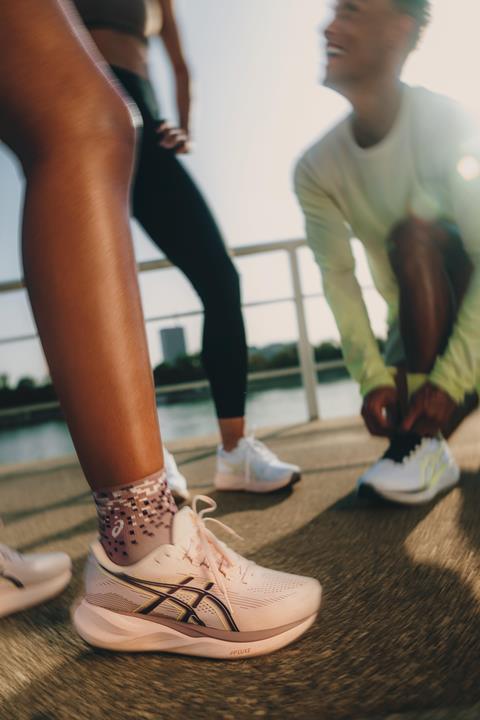
Chris Brown, Manager of Global Product for Performance Running Footwear, said the brief was to keep the series’ character while building on what runners “already value.” Belgian marathon runner Koen Naert, an Asics athlete, described the model as one he reaches for “again and again” in training.
Asics puts the shoe’s carbon footprint at 12.0 kilograms of carbon dioxide equivalent (CO₂e) per pair, against 11.4 kilograms for the Gel-Nimbus 29.
Road, track and gravel: the business of running
We track the business story: brand strategies, product launches, financial performance, participation data, and the race formats reshaping the industry’s most competitive category.
Explore Running →