Two moves in the space of two weeks — a carbon-plate running shoe and a Steffi Graf ambassador campaign — reveal Crivit’s ambition to leave discount sportswear behind. Whether the strategy holds together is another question.
Two announcements less than two weeks apart — the signing of a celebrity ambassador and the launch of a €69.99 carbon-plate running shoe — point to a repositioning effort for Crivit, Lidl’s proprietary sportswear label. Industry watchers are asking whether the two moves reinforce each other or send mixed signals.
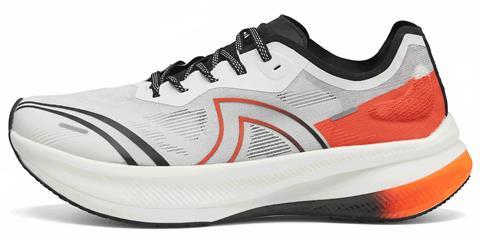
In mid-February 2026, Lidl announced that retired tennis champion Steffi Graf would front an international Crivit advertising campaign across more than 30 countries under the tagline “Find your move.” The campaign features Graf on the brand’s website offering active-lifestyle guidance — a deliberate step toward a more aspirational identity for a label previously associated with functional, value-tier sportswear. Separately, by late February the CarbonLite 1.0 was already available in Lidl’s online shop, priced at €69.99 in Germany and €49.99 in Ireland, with a UK rollout scheduled for March 29 at £39.99 (approximately €47).
Crivit by Lidl: a brand looking for a different ceiling
The Graf appointment sets a clear tone for where Crivit wants to be seen. Graf holds 22 major singles titles and remains the only player in history to win all four Grand Slam tournaments and Olympic gold in the same calendar year. She ranked No. 1 on the WTA tour for 377 cumulative weeks, including 186 consecutive weeks — a record that still stands. Her association with peak athletic achievement is unambiguous; the choice of ambassador says something about the category Crivit is trying to occupy.
The CarbonLite 1.0 carries a similar signal at the product level. Carbon-plate running shoes have been a defining technology in performance footwear since the late 2010s, strongly associated with elite racing and brands such as Nike.
Where the strategy gets complicated
The difficulty is that the “Find your move” campaign — built around accessible, feel-good movement and fronted by an athlete who stepped away from competitive sport in 1999 — reaches an audience that is precisely the group most at risk from carbon-plate running technology.
A carbon plate embedded in a running shoe’s midsole acts as a lever, storing kinetic energy on foot strike and releasing it at toe-off. The mechanism can improve running economy, but it requires established running mechanics and developed musculature in the feet and lower legs to function safely. When those foundations are absent, the plate can impose an unnatural load pattern, elevating the risk of tendon and joint injury, according to Runner’s World.
Lidl’s own product copy acknowledges the limitation, describing the shoe as suited to experienced runners. That caveat has drawn criticism from some in the running community. Sebastian Bär, Chief Executive Officer of Joe Nimble — a Germany, Düsseldorf-based footwear brand whose design philosophy centers on anatomical foot health — posted a warning on LinkedIn arguing that mass-market distribution of carbon-plate tools creates the greatest overuse risk where it is hardest to manage: among amateur runners who are unlikely to follow dosing and conditioning protocols.
Lidl’s own social media framing has leaned in the other direction. An Instagram post from late February suggested the CarbonLite 1.0 would make wearers “the first one at the bakery” — a piece of light humor that speaks to casual runners far more than competitive athletes.
Testing: performance above expectations, weight below spec
An independent shoe review by German magazine Runner’s World found the CarbonLite 1.0 performed more capably than the price might suggest. Reviewers highlighted the shoe’s rolling motion, breathable upper construction, and fit as particular strengths. On weight, however, the test found a meaningful gap: a men’s size 45 sample measured more than 306 grams against the 250 grams stated in Lidl’s product specifications. The publication classified the shoe as a fast training model rather than a race-day carbon shoe — a distinction that aligns with Crivit’s own positioning, if not always its marketing tone.
Crivit as a brand-building project?
Read together, the Graf campaign and the CarbonLite 1.0 point to a Crivit that is attempting to trade up. The label covers outdoor activities, cycling, fitness, running, and team sports across a broad range, and Lidl has been actively internationalizing it since mid-2024. Signing a figure of Graf’s stature — and deploying her across 30-plus markets simultaneously — is a considerable investment in brand credibility for what has historically been a mid-aisle private label.
Whether a carbon-plate shoe with a disputed weight specification and an expert-only usage warning advances that credibility project depends on how the product performs in the hands of the audience most likely to buy it. If carbon technology at this price point leads to a wave of overuse injuries among recreational runners, the brand implications could offset the gains from the ambassador campaign. If it delivers on its performance-per-euro proposition for the experienced minority who use it correctly, Crivit will have demonstrated that the gap between discount and performance sportswear can be closed faster than the major brands would prefer.