
A product count in Shanghai finds Reebok’s relaunch spread across training, running, basketball and classics, with prices that need more explaining. From Scratch founder Nick Hsu argues the brand must pick one direction before it funds more products and stores.
During our visit to Reebok’s new store at Grand Gateway 66 in Shanghai, we asked for the classic red-and-white Question. It had not arrived.
On Oct. 28, a sales associate contacted me to say it was available. That follow-up was welcome. The earlier gap was nevertheless a reminder of the challenge for a returning brand: A familiar name must become a product customers can actually buy.
Authentic Brands Group has appointed NewRee Sports to handle Reebok’s production, import, distribution and sales in mainland China, Hong Kong and Macau. The next question concerns the merchandise: What should Reebok stand for in China today?
After counting products, recording prices and trying them on, I remain skeptical of the approach this store presents. Too many directions are being pursued before one convincing proposition has been established. Consumers face an unclear choice, while the company funds several development and purchasing commitments simultaneously.
The products need a shared direction
Our footwear record covered 36 ordering styles across 29 model-name groups, with 91 style-color combinations. Apparel comprised 44 styles and 80 combinations. These counts exclude sizes and describe assortment breadth, rather than inventory depth.
In an interview with Jiemian, Josh Perlman, ABG’s Head of Greater China, identified performance and classics as two directions, prioritizing fitness and running within sport, with basketball also important. In the store, however, footwear covered training, running, basketball and classics, while roughly 80 percent of apparel leaned toward lifestyle, in my broad assessment. Training and running clothing was limited; I saw no basketball apparel.
The designs and styling did not give those choices a distinctive identity. Men’s, women’s and unisex products were mixed together without making their relationship clear.
I could not identify a coherent collection that connected shoes, clothing, colors and wearing occasions. The products felt as though they had been developed separately and assembled for sale.
Space adds another constraint. Excluding 13 women’s bra, shorts and leggings combinations, the other 67 apparel combinations imply about 134 display items at two per combination, before additional pieces.
That is a partial estimate, not a complete count. Allocating space requires deciding which products deserve prominence and which belong together.
Lifestyle could be a valid direction, provided its design and styling give customers a reason to choose it. A sporting proposition similarly requires products and service that support the chosen activity. The current assortment left both intentions unclear.
Nano X5 featured in campaign imagery, but I did not see a lead product sufficiently supported by related apparel, availability and a clear commercial role to lead the range. Technical showcases and dependable sales drivers need different buying and revenue expectations.
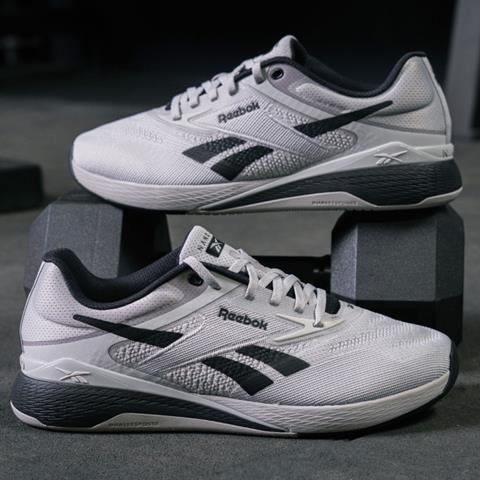
Reebok retains strengths in training products. Staff linked Nano Pro to Hyrox training and competition, and regional official product information identifies CrossFit and Hyrox users. That is an asset to evaluate, rather than an automatic prescription to prioritize training. The essential decision is which direction the brand can make convincing first.
A customer buying for training judges stability, movement and repeated use. Someone returning for a classic may begin with cultural memory, but still considers comfort, styling and price. Younger consumers without that memory need reasons of their own.
A shared logo does not make these buyers interchangeable or create demand across all the categories presented to them.
Prices and availability must support the promise
Seventy-five percent of the 36 footwear styles were priced at RMB 800 (€107) or above; 38.9 percent were at least RMB 1,000 (€134). Two-thirds sat between RMB 800 and RMB 1,299 (€174).
This core price band needs clear differences in purpose and value, rather than a concentration of products with indistinct roles.
Nano X5 was RMB 999 (€134) and Nano Pro RMB 1,999 (€268). A carbon plate or technical label cannot explain that difference alone.
Customers need to understand the benefit for their activity. Based on the proposition presented in-store, I remain highly skeptical of sustained full-price sales for Nano Pro at RMB 1,999.
The Club C examples also show the burden of explanation: RMB 699 (€94) for one version, against RMB 1,199 (€161) for Club C New and RMB 1,299 for Club C LTD. Materials and construction may differ, but customers need to perceive what the additional money buys.
Some apparel prices were more acceptable, including RMB 399 (€53) pants and a complete RMB 799 (€107) tracksuit. But footwear cannot be assumed to generate clothing purchases when the two ranges serve different customers or styles. A higher transaction value needs an actual reason to buy products together.
Fit and supply exposed further gaps. I needed Instapump in size 44.5; the store lacked it, and size 44 was too tight. The Question I tried in size 45 was available only in green and felt excessively long.
A 2XL top’s sleeves were too short. I also saw incorrect shoe imagery in the brand’s own mini-program.
These observations do not establish defects throughout the range. They question whether selection, sample review, local fit and launch readiness were sufficiently coordinated.
The later Question notification is encouraging, but completing that purchase still depends on returning, finding the right size and accepting the product. Sales figures alone can miss demand lost through inadequate availability.
Breadth creates commitments before demand is proven
We modeled the assortment’s potential funding requirement using 800–1,000 pairs per footwear ordering style, retail prices of 4–4.5 times merchandise cost and a comparable apparel scenario using RMB 499 (€67) as a reference price and 800–1,000 purchasing units per style. Apparel colors are allocated within styles, with sets counted as single purchasing units.
If relevant sole molds and associated tooling for all 29 footwear models also required new development, combined footwear, apparel and tooling would represent approximately RMB 12.82–18.47 million (€1.72–2.47m). This is an illustrative budget, not company-disclosed spending or inventory assigned to one store.
Existing tools would reduce it; tooling already included in purchase prices must not be counted twice. Separately incurred development, logistics, licensing and operating expenses remain outside it.
Such a commitment would show considerable willingness to invest. It would also make clear product priorities essential.
Under a fixed budget, buying broadly reduces depth behind each style, color and size. Buying deeply across everything increases inventory exposure. Open-to-buy planning, which sets how much new stock a brand can still commit to, must decide which products deserve reliable supply and which can wait.
Product continuity matters too. Tooling can be recovered across further production only when a line earns subsequent orders.
Spreading costs over future seasons on paper cannot create demand. Replacing products each season can leave the business repeatedly funding development without accumulating lasting product value.
The store, approximately 137 sqm, also has ongoing costs. A retail contact’s indicative terms, interpreted as monthly base rent of RMB 2,000 (€268) per sqm plus RMB 110 (€15) in management charges, imply a minimum monthly rental burden of about RMB 289,100 (€38,700).
We assume rent is the higher of the base or 17 percent of sales, with management charged separately. These are explicit assumptions, not Reebok’s verified lease.
Based on our industry experience and understanding of ABG’s licensing model, we use a royalty reference range of 5–10 percent, though the actual contract, calculation base and minimum guarantee are unknown. Staffing and fit-out add further obligations. High ticket prices cannot support these costs unless customers buy; discounting reduces the contribution available from each transaction.
Choose before expanding
Before the next development cycle or further store openings, Reebok needs to choose the proposition through which it intends to rebuild demand, and identify directions to postpone. That choice should reflect a defined customer, convincing products and the team’s ability to deliver consistently.
Several categories can remain, but each needs a role around that focus. Design, footwear, apparel, pricing and replenishment should support the same reason to buy.
Someone must have the authority to remove styles, require better samples, change prices and redirect purchasing funds. Prior channel experience becomes valuable when it improves these decisions.
For European brands, the lesson is to identify the capability their China business lacks before selecting a partner or operating structure. A mature global range may need reliable distribution and local assortment selection.
A recognized name without contemporary appeal may require deeper product rebuilding. Specific fit or category gaps may justify bounded local co-development. Licensing, distribution and direct operation allocate responsibilities; none automatically supplies the missing capability.
For my generation, the incomplete presentation of Reebok’s classic basketball shoes, Instapump Fury and retro running products is disappointing. Nostalgia still needs a contemporary purchasing reason.
I would reconsider my assessment when a focused range delivers sustained full-price sales, useful related purchases and repeat orders with manageable inventory. Those results would give the return a commercial foundation worth expanding.
This is a guest column. The views expressed are the author’s own. Currency conversions based on mid-market rates at time of publication.
Source notes
Store visit: The author visited Reebok’s Grand Gateway 66 store in Shanghai, tried on products and looked at the brand’s mini-program. On Oct. 28, 2026, a sales associate told the author that the red-and-white Question had arrived. This update does not establish a later fitting or purchase.
Operating partner: NewRee Sports’ appointment to run Reebok in mainland China, Hong Kong and Macau comes from Authentic’s announcement.
ABG’s priorities: Josh Perlman’s comments on performance, classics and sport priorities come from his interview with Jiemian. They are his priorities, not the author’s prescription.
Product counts and prices: The author recorded all product counts and ticket prices in the store: 36 footwear ordering styles, 29 model-name groups and 91 style-color combinations, plus 44 apparel styles and 80 combinations. The 80 percent lifestyle share of apparel is an approximate assessment, not a statistical classification. The 134-item display estimate covers only 67 apparel combinations at two items each. It leaves out the three women’s categories and extra third items in some men’s styles, so it is not a complete display count or a measure of floor area. RMB 799 is the price of a complete tracksuit.
Nano Pro and Hyrox: The link between Nano Pro and Hyrox or CrossFit training comes from a sales associate and from Reebok Brazil’s official Nano Pro product information. It shows the shoe’s intended use, not an official Hyrox partnership or a local performance test.
Budget scenario: The RMB 12.82–18.47 million estimate is the author’s model. It assumes 800–1,000 units per ordering style, retail prices of 4–4.5 times merchandise cost, an apparel reference price of RMB 499 and new sole molds and associated tooling for all 29 footwear models. These are assumptions, not company orders or disclosed spending. Apparel sets count as single purchasing units. Existing tooling, or tooling already included in purchase prices, would reduce the separate tooling allowance.
Store rent: The rent figures are based on indicative terms from a retail contact familiar with Grand Gateway. They are read as monthly terms, with rent taken as the higher of base rent and turnover rent, management charged separately and 137 sqm used provisionally. No actual Reebok lease was obtained.
Royalty: The 5–10 percent royalty range reflects the author’s industry experience and understanding of ABG’s licensing model. It is not a confirmed contract rate and does not establish the calculation base or any minimum guarantee.

Eastern views
Asia-Pacific insights for the sporting goods industry
Analysis, insights, and expert perspectives on the sporting goods industry across Asia-Pacific — covering market trends, manufacturing, retail, and brand strategy from China to Southeast Asia to Oceania.
Explore Eastern views →