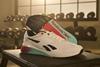
After a failed first partner and four years of vanishing retail presence, Authentic Brands Group is trying again in mainland China. The $1 billion target is real. So is the wreckage it’s built on.
The press release landed on April 13, 2026. One page. Confident and clean.
Authentic Brands Group had appointed NewRee Sports as the core operating partner for Reebok across mainland China, Hong Kong and Macau. NewRee would handle end-to-end operations including manufacturing, import, distribution and retail. Footwear and apparel, adults and children. A Shanghai flagship was coming later in the year. Two hundred stores by 2029. A billion dollars in annual China sales by 2036.
The language read like a beginning, but it wasn’t.
Six weeks earlier, on March 9, a far shorter and less widely circulated announcement told the other half of the story. Tristate Holdings, a Hong Kong conglomerate with decades of experience managing Western brands in Asia, had terminated its Reebok franchise agreement at the end of December 2025. The reason, stated plainly in both a filing with the Hong Kong Exchanges and Clearing and in trade coverage: poor performance.
Tristate had operated Reebok across greater China since May 2022, taking over immediately after ABG completed its acquisition of the brand from Adidas. By the time the partnership ended, Reebok’s China revenue had fallen more than 20 percent year-on-year. The brand’s physical retail presence, which had once extended across hundreds of locations during the Adidas years, had contracted to a handful of remaining stores before collapsing further.
By the time NewRee was announced, the China website listed four.
The April press release mentioned none of this. NewRee Sports was presented as a fresh market entry, an expansion move, a signal of momentum. In the public narrative, the Tristate chapter simply didn’t happen.
The ABG model: why China’s collapse barely hits the balance sheet
To understand why ABG keeps pressing forward, you have to understand what ABG actually is, and what its relationship to Reebok’s China performance actually looks like from the inside.
Authentic Brands Group is not a sportswear company. It owns intellectual property. The operational work belongs to licensed partners, and ABG collects royalties on their sell-through. It’s a model that generates extraordinary margins when partners perform and insulates ABG from operational losses when they don’t. Tristate absorbed the China losses. ABG absorbed the royalty shortfall.
The numbers ABG’s Greater China head Josh Perlman cited to the Financial Times in April - Reebok’s global sales having “doubled to $5 billion”- are retail sales figures: the aggregate of what all licensees globally sell through, not what ABG receives. The audited financial picture, drawn from a 2024 Companies House filing by UK-based Reebok International Limited, which holds the brand’s IP under Authentic, is more precise:
- Brand licensing revenue: $302.5 million (up 9.4 percent year-on-year)
- Operating profit: $192.2 million (up 8.4 percent)
- Net profit: $180.4 million (up 10.0 percent)
The operating margin on royalty income sits at approximately 63 percent, which is a characteristic of asset-light IP platforms.
China barely registers in those royalties right now. Current annual sales in the mainland are under $100 million, and declining before the partner change. The $1 billion target by 2036 is a 10x projection built on a business with four stores and a new operator that was incorporated in 2025.
That operator, Xinrui Sports Shanghai, trading as NewRee Sports, is controlled by Shanghai Xinrun Investment Management, which holds an 80 percent stake. Its parent company’s background is in technical services and clothing retail. There is no disclosed track record in managing a multi-sport international brand at the scale Reebok’s ambitions require.
That matters because Tristate was not an inexperienced operator. It runs Nautica and Spyder in the region and has managed Western brands in Asia for decades. If Tristate could not stop Reebok’s slide in greater China over more than three years, NewRee’s starting position deserves more scrutiny than the April press release suggests.
ABG has not disclosed the financial terms of the NewRee agreement. The 200-store target by 2029 will require significant investment in premium retail real estate, fit-out and staffing. That capital will come from NewRee’s balance sheet, not ABG’s. How an entity incorporated in 2025 funds that buildout has not been explained publicly.
Greater China: big market, challenging conditions
None of this makes the attempt irrational. It is demanding, but the market logic is clear.
China’s activewear category has been one of the more resilient segments in a soft consumer environment. Perlman acknowledged “softer consumption” in FT comments, citing the property sector slowdown, but noted “pockets of strength.” HOKA and On have gained share in performance running precisely by finding those pockets. Fitness and lifestyle activewear have held up better than many other discretionary categories.
The competitive backdrop is more complicated. Domestic players such as Anta Sports and Li-Ning have gained share in China’s sportswear market, leveraging agile supply chains, deep domestic retail networks and the cultural tailwind of the Guochao movement. Both brands compete at price points, with production speed and cultural specificity that no Western licensing model can easily replicate.
Nike’s position illustrates the scale of the challenge. Greater China revenue fell 16.8 percent in fiscal Q2 2026. CEO Elliott Hill called China the “longest road” in the company’s turnaround, and Nike has operated there for decades, with thousands of stores and deep local teams.
The one Western brand that genuinely recovered is Adidas. After five consecutive quarters of China decline in 2023, it staged a real comeback and by 2025 had logged ten straight quarters of growth. The mechanism is instructive: locally designed products now account for approximately 60 percent of Adidas’s China range. The brand didn’t just change its distribution model. It changed what it was selling and, even more, how it embedded itself in the sports movement, local leagues and local culture.
Reebok’s China plan, as currently disclosed, does not describe an equivalent product commitment. The stores will “feature both new running technology and heritage lines,” according to the FT report. You could say the same for every market worldwide.
Heritage sells in the West, but Reebok’s reboot has no China memory to tap
The heritage question is worth pausing on, because it sits at the heart of ABG’s global positioning for Reebok and is hardest to translate to China.
Globally, ABG has been rebuilding Reebok’s brand equity reliving its heritage and taking it back to the roots. The basketball comeback is the clearest example. In 2023 the brand signed Angel Reese, then still in college, already a cultural phenomenon, pairing her with Shaquille O’Neal as President of Basketball and Allen Iverson as Vice President.
In early 2026 came “COMM. ONE,” a basketball campaign film fronted by Reese and DiJonai Carrington, narrated by musician Tobe Nwigwe, centered on the new Engine A 26 shoe. It’s the most culturally coherent basketball campaign Reebok has produced in years. The Club C and Classic Leather have genuine archive traction in Europe and North America.
None of that translates automatically to China. Reese is unknown to the typical Chinese fitness consumer. The WNBA partnership, the Engine A silhouette, the whole basketball revival arc: these are stories built for a North American audience. And the Classic Leather’s appeal rests on lived memory of Reebok’s 1980s and 1990s peak.
For Chinese consumers under 35, that memory doesn’t exist. Heritage is a weaker asset in markets that didn’t experience the original.
This is the deeper structural challenge that the press releases can’t resolve. ABG’s licensing model activates existing brand equity through local operators. In China, that equity had eroded close to zero. You can’t license your way to cultural relevance from that starting position. You have to build it: in communities, through product that earns daily use, over time.
Maia Active, the Chinese women’s activewear brand now owned by Anta, is the clearest contrast. Founded in Shanghai in 2016 on the premise that East Asian women were being underserved by international brands, it spent six years building product specificity - multizone construction leggings and proprietary compression fabrics calibrated to different body proportions - and community infrastructure before Anta acquired a controlling stake in October 2023. Anta brought capital and operational scale. Maia’s identity, and the consumer trust it earned, took a decade of proximity to its customer.
Reebok is trying to compress that in China into a three-year store rollout, via an operator incorporated the previous year.
ABG’s operational transition is still underway
ABG’s own global operational structure adds one more layer of complexity that the China story sits inside.

Authentic Brands Group announced the development strategy for its brand Reebok in the Chinese market in April, 2026 / AGB
Since early 2025, the company has been rebuilding Reebok’s entire partner network. In the US, the license moved from SPARC Group to Galaxy Universal, which also absorbed the Reebok Design Group, taking over global product creation, design and sourcing from Boston. In Europe, Galaxy formed a joint venture with the Batra Group to replace New Guards Group, whose parent Farfetch collapsed. In India, ABFRL is expanding physical presence. WSI is relaunching hockey.
Multiple new partners, simultaneously, across the most important markets and categories. Brand consistency is not an organizational default in that structure.
ABG established a regional headquarters for APAC in Shanghai in June 2025. But in May 2026, Jamie Salter stepped back from the CEO role, with Matt Maddox taking over as chief executive as Salter moved to executive chairman. The transition arrived at precisely the moment of maximum operational complexity across the Reebok network.
The gap between narrative and reality, and the challenge ahead
Here is what the press releases say: Reebok is returning to China with a new partner, 200 stores by 2029, a billion dollars by 2036, and a Shanghai flagship this year. All of that is accurate.
Here is what the press releases don’t say: the previous partner failed and exited after three years of declining revenue. The new partner was incorporated last year and has no disclosed sporting goods track record. The $1 billion target is a licensing-revenue aspiration that would require roughly 10x growth in a market where the brand currently has almost no physical presence.
The heritage that drives Reebok’s appeal in Europe and North America has no equivalent resonance among Chinese consumers too young to remember it. And the only Western brand to successfully recover in China did so by redesigning 60 percent of its product for the local market, not by installing a new distribution partner and reopening stores.
None of that makes success impossible. ABG has shown in markets where equity still exists that it can scale a revitalized brand quickly. China, however, is a tougher market, where domestic players have gained momentum and Western incumbents are being pushed to rethink long-standing playbooks. It starts with cultural understanding, not distribution mechanics.