The former wrestler and co-driver in the Jordan rally wants to be first over the finish line of the IOC presidency.
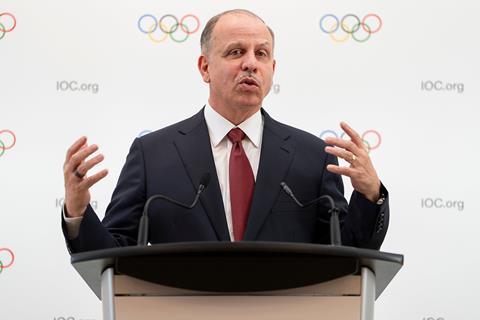
HRH Prince Feisal Al Hussein, 61, is the brother of the reigning king of Jordan, Abdullah II.
He received his secondary education in the US, where he took gold at the Interstate Championships in wrestling (1978) and then pursued a degree in electrical engineering at Brown University. He later earned a master’s degree in management at London Business School.
Back home he trained as a pilot in the Royal Jordanian Air Force and would in time, as an RJAF Commander, found Jordan International Air Cargo (JIAC), which says it “specializes in lifting different ranges of air cargo to meet Jordan’s market readiness for investment in air cargo and to utilize the strategic location of the country.”
What role, if any, the prince has played in the airline’s subsequent management is unclear, but in 2013, according to the New York Times, JIAC – in cooperation with the CIA, Qatar, Saudi Arabia, Turkey and possibly Croatia – flew arms to the rebels opposing the regime of President Bashar al-Assad in Syria, the same rebels who are now in charge of the country. JIAC’s cargo director said at the time, as quoted in the Times, “This is all lies” and “We never did any such thing.” He also said that JIAC did not own any planes of the model purportedly used, but photos of such planes (Ilyushin-76MFs) were then to be seen on the JIAC website, which was soon taken down, according to Foreign Policy.
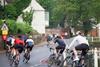
Wrestling is not Feisal Al Hussein’s only sport. Less than a decade after his gold-medal performance he had taken to motorsports, serving as a co-driver in the Jordan Rally. By 2004 he was Chairman of Jordan Motorsport (a non-profit within Jordan’s Royal Automobile Club), and remains Chairman to this day. According to the IOC, he also plays football and volleyball, the latter being the sport of his daughter, who is President of the Jordan Volleyball Federation.
His other posts include serving as Chairman of Jordan’s Royal Water Commission and as a member of the Board of Trustees of the King Abdullah II Centre of Excellence. It was in 2003 that he became President of the Jordan Olympic Committee, another seat he has kept since.
His election to individual membership in the IOC dates back to 2010, and he serves on the body’s Executive Board (member), the Women in Sports Commission (Vice Chairman), the Prevention of Harassment and Abuse in Sport Working Group (Chairman), the Safeguarding Working Group (Chairman), and the Gender Equality, Diversity and Inclusion Commission (Vice Chairman).
Hence the prince’s involvement in the IOC’s response to the scandal over Larry Nassar, a doctor for USA Gymnastics (1996-2014) who, to quote from People v. Nassar (Ingham Circuit Court, Michigan), “sexually abused dozens of teenage and prepubescent girls, many of whom were his patients, over many years” and “collected 37,000 images and videos of child pornography.” According to Inside the Games, the accusations against Nassar come from 260 women, and some of them match up with the London Olympics of 2012.
In 2017, with Feisal Al Hussein’s help, the IOC published a 106-page “toolkit” titled Safeguarding Athletes from Harassment and Abuse in Sport. The following year the prince observed that solving this “societal” and “global” problem would require a legal structure with due process and that perhaps ten or 15 years later people would look back and see the IOC’s reaction as a watershed. “It starts with awareness, and a lot of cultures, unfortunately, don’t always see that this is a form of harassment.”
In 2007 Feisal Al Hussein founded Generations for Peace (GfP), a Jordanian non-profit for which he serves as Chairman of the Board. GfP describes itself as a “peacebuilding organization” that is “dedicated to sustainable conflict transformation at the grassroots,” with mentorship programs for “volunteer leaders of youth.”
One of its techniques is “Sport for Peace and Development” (SPD), which it defines as “the intentional use of sport, physical activity and play to attain specific development and peace objectives, including, most notably, the [UN’s] Millennium Development Goals.”
The non-profit lives on grants amounting to a bit more than 4 million Jordanian dinar (€5.4m) per year, according to the latest available financial statements (December 2022). One of the big donors is Denmark’s expansive Novo Nordisk Foundation, which maintains interests in pandemic antiviral discovery (PAD), vaccines, AI, quantum computing and CO2 research, among other things. Novo Holdings, which the foundation owns, reported €149 billion in assets under management in its annual report for 2023. This foundation appears to be the largest in the world, ahead of India’s Tata Trusts (about $100bn) and America’s Bill & Melinda Gates Foundation (about $50bn).
The other big donors are UNICEF (which donated €1.5m in 2022), an entity called USEM and the EU, chiefly through its Regional Development and Protection Programme (RDDP) for refugees and host communities in Lebanon, Jordan and Iraq. The EU also contributes through an initiative called European Union – Connect. This is perhaps the EU’s youth portal, but there are several EU entities called Connect. The Olympic Refugee Fund donated in 2022, as did what appears to be its managing body, the IOC’s Olympic Refuge Foundation.
Read on: