

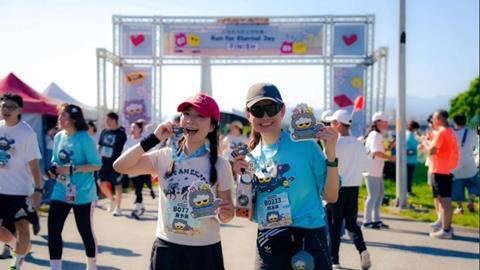
Fans who call themselves non-runners are entering races to run with their idols, collect merchandise and take photos. Some now plan longer distances, creating a new group of runners that sports brands working with K-pop stars have yet to reach with a recurring event.
In 2026, SM Entertainment, the South Korean agency behind some of K-pop’s best-known groups, staged its first running events through SMTown Run Club 26. Several of its artists took part, among them Minho of boy band SHINee, Suho of boy band EXO and Yuri of girl group Girls’ Generation, sending fan excitement even higher.
The events were packed with merchandise and photo booth stations, so fans could commemorate their running experience. SM is also joining in running culture alongside its fans.
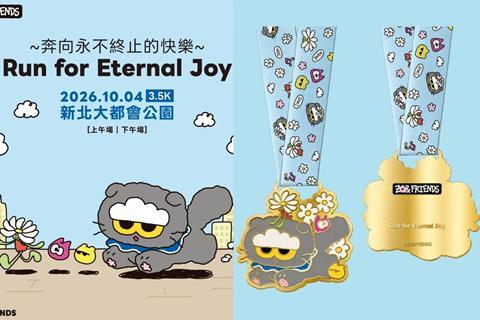
ZOA and Friends, the popular mascot of K-pop solo star G-Dragon, recently held its first running event in Taiwan. Called it handed every finisher a medal while promoting a healthier lifestyle.
Markus Winter, co-CEO of APAC consumer culture and strategy agency Yuzu Kyodai, said the trend gives K-pop agencies a better chance to build a bigger market, with room to partner with many brands.
Visualizza questo post su Instagram
Sports brands and K-pop
Sports brands that partner with K-pop artists have a proven record.Nike’s collaboration with G-Dragon sold out quickly, and Adidas’ line with Jennie, a member of girl group Blackpink, featured exclusive ballet shoe designs and other lifestyle pieces. Winter noted that, so far, most K-pop fandoms run one-off activation events rather than building recurring sports events such as the fitness race Hyrox. That leaves the market open.
“Many fandom-led runs genuinely aim to be real events for real runners too, not just an excuse to hang out with an idol. Fans, moreover, would see through anything insincere,”
Winter said. “SMTown Run Club 26, for example, is a 10k, a very decent run distance and not just a run where you show up for the first time in your life. Most are easy beginner 5k though, like the Disney Incheon Fun Run.” He added that the strong K-pop fan base could connect these events to wider audiences and future brand partners, as plenty of fans are motivated to run right after joining SMTown Run Club 26.
What the fans say
A fan posting as 522day_ on Threads shared her excitement about joining the running events. She said she would eventually try a longer distance after being motivated by seeing her idol, EXO’s Suho.
“Once I’d bagged my SMTown Run Club 26 ticket, I headed out for a light 3 km run. My goal was just 3 km in 30 minutes! It’s the hottest part of the day, so I previously thought that I was going to die… But hey, I made it, I’m still alive! Hahahaha,” the fan wrote.
Another fan, MieMie, who ran in ZOA and Friends’ Run for Eternal Joy, wrote that she joined the event because of the photo booths on offer, with the merchandise keeping fans excited about the race.
“We’re not really runners, but ZOA got us to sign up! We mostly walked the whole way, more of a fun run than anything else. The main goal was taking photos! Every sign along the course was bursting with such positive vibes,” she wrote on social media. She added that a few problems during the race did not spoil the day, and that she loved every bit of the event as a fan.
Connections come first
Therese Reyes, APAC Lead Editor at consumer insight agency Canvas8, said expectations around K-pop running events depend more on the connections fans already have, especially when events bring like-minded people together.
“It’s hard to say for sure, since data specific to fan-led run clubs is limited. However, looking at other events staged by K-pop fandoms, future participation will depend more on the connections that fans build than on the running itself,”
she said.
Running clubs differ across Asia, Winter pointed out. Most in South Korea lean toward lifestyle and merchandise, whereas other markets may value something else entirely. With that in mind, he said, agencies should stage events that understand each country’s running community and meet its specific needs.
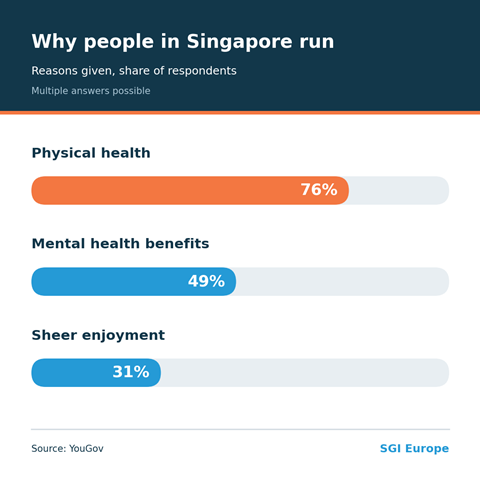
People run for more than the sport itself. When YouGov asked people in Singapore why they run, they cited: physical health, at 76 percent, mental health benefits, at 49 percent, the sheer enjoyment of it, at 31 percent.
Reyes added that, according to Strava data reported by Lifestyle Asia, more than half of survey respondents said they had made new friends through fitness groups, rising to two-thirds among Gen Z. With run clubs serving as much as social gatherings as sporting ones, she said, a fandom element gives people extra confidence that they will get along with the people they meet.
Reyes also noted that not all K-pop fandoms are alike. An approach that works for one may feel “off” to another, and missing the inside jokes, for example, shows fans that a brand isn’t really “one of us.” A wrong song on the playlist or a generic tagline can be enough to decide whether the event works.
Visualizza questo post su Instagram
SMTown Run Club 26, organized by SM Entertainment and staged on Oct. 3, 2026, is a striking example. Its main sponsor was textile materials company Hyosung TNC, which supplied its Askin recycled functional polyester yarn for the official race shirt.
The concept itself grew out of fandom lore, as reported by The Chosun Ilbo. In 2025, Minho invited fellow SM artists to run in London, and their photos went viral, quickly becoming part of the stories several K-pop fandoms tell. Staging a running event turned that lore into something fans could step into and live out for themselves.
“A good collaboration starts with organizers who are genuinely part of the fandom itself. For brands and artist agencies, I think the lesson is simple. Just hire or engage people who truly know these fandoms,”
she concluded.

Eastern views
Asia-Pacific insights for the sporting goods industry
Analysis, insights, and expert perspectives on the sporting goods industry across Asia-Pacific — covering market trends, manufacturing, retail, and brand strategy from China to Southeast Asia to Oceania. With Jakarta-based contributing editor Yohana Belinda.
Explore Eastern views →