
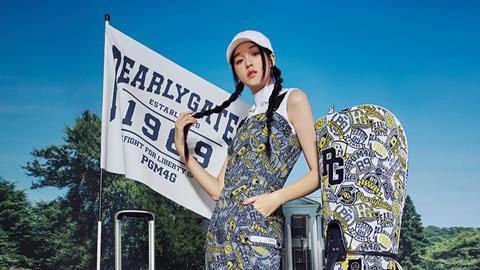
Women’s golf apparel growth in China is trend consumption, not participation. What women buy is not golf wear – it is old money, Ivy League style and refinement. South Korea sets the aesthetic. Yohana Belinda brings you three drivers behind the trend.
Women’s golf in China continues to grow, with over half a million impressions on social media including Chinese social networking platform, Xiaohongshu (or RedNote). #golf has amassed over 2.5 billion, while #golfgear posts connected to women’s golf apparel reached 159.9 million hashtag views.
Western golf brands are aiming to capitalize on the growth. The trending California-based golf-inspired lifestyle brand Malbon and American-owned equipment and apparel brand Ping both recently opened new flagship stores in Shanghai.
According to Moqian Sun, founder of Harvest marketing consultancy in the UK, the trend in China is currently based entirely on trend consumption rather than the number of people participating in golf, which surpassed 108 million worldwide during the 2024–2025 reporting cycle according to R&A, raising questions about whether it could be a long-term trend.
With that in mind, here are three factors that explain the growth in women’s golf apparel in China.
1. What golf represents
Ten years ago, Forbes declared golf was more than sport, since it also holds value as a classic networking tool in the corporate world. According to Forbes in 2016, 90 percent of Fortune 500 CEOs played golf and 80 percent of executives agreed that the sport helps forge new business connections.
Golf as a lifestyle took shape long before any social media trend. But many individuals in China now try to replicate that lifestyle and particular aesthetic. A hobby outside the workplace adds personality value. In the digital era, personality also adds merit when one hunts for a job, becomes an influencer, or simply builds a business, because storytelling matters.
As our 2026 Golf State of Play explained, “the ‘old money’ aesthetic of golf – which is built on its traditions as elitist and exclusive – is said to be a driving force behind the diversification of the game, bringing Gen Z to the course. The tag has over 9.9 million posts and garners billions of views on TikTok.”
“For many young women, what they buy [when they buy golf apparel] is not just simply golf wear, as they buy what it represents, including old-money, Ivy League style, health, refinement, freedom, and a sense of belonging to a particular lifestyle,” says Sun.
“Brands, therefore, can focus on their own positioning rather than worry about where the boundaries of the Golf category sit. As long as they retain a degree of functionality, they can aspire around lifestyle represented by these products.”
2. South Korean golf styling
Sun shared that South Korea – the third largest golf market in the world after the US and Japan, according to Golf.com – also plays an important role in raising the profile of golf wear in China.
South Korea stands as golf’s biggest clothing market, making up 45 percent of all global golf apparel sales, as reported by Asia News Network. The country offers various styles across different price ranges, with high quality, “asian” cuts and sizes, and K-fashion influences appealing to the nation’s high fashion sense.
And the popularity of Korean brands is not limited to Korea. Titleist (owned by Acushnet Holdings Corp.) and Descente Korea have cross-border popularity. Other brands – like Japanese owned Pearly Gates – may be licensed in Korea and make heavy use of K-culture and K-pop icons in their marketing.
For Sun, other brands can also follow the trend if they want to succeed in China.
“For international brands, the opportunity lies in moving beyond the Korean aesthetic and building a distinctive brand universe and perspective,” she added.
“Domestic brands hold a different advantage. They understand Chinese lifestyle, price sensitivity, retail channels and consumer behavior far more deeply, allowing them to iterate products and experiences around local needs in ways that imported brands may find much harder to replicate.”
3. “Emotional consumption” and the “self-rewarding economy”
One final aspect that helps account for the growth in women’s golf apparel in China is, for Sun, that “sport becomes about more than just physical fitness, as it ties into lifestyle, personal identity, community and wellness.
“In terms of trends, what we also observe among younger Chinese consumers is the rise of ‘emotional consumption’, or ‘情绪消费.’ People increasingly spend on exercises that offer emotional value, whether through companionship, relaxation, self-improvement or sense of enjoyment.”
As government tax crackdowns and the ongoing economic slowdown of the luxury consumption in China continues, younger generations are redirecting their spending toward sports apparel.
“At the same time, younger consumers stay pragmatic amid China’s [economic] slowdown,” explains Sun. “For instance, the ‘self-rewarding economy’ reflects their willingness to save on everyday expenses while spending selectively on experiences that feel worthwhile, which could mean driving ranges, indoor video game simulators and other accessible ways of joining the [golf] aesthetic or lifestyle rather than paying for pricier country-club memberships.”
China’s door is open – now comes the hard part
When it comes to Apparel, China now opens its doors to emerging brands, while the market already holds space for popular brands establishing their base with the youth.
Golf apparel is receiving attention from Chinese youths alongside other sports. Crystal Tai, the co-Founder of RedVine, a China culture and consumer intelligence studio, noted that this rise applies to other outdoor sports too, such as skiing, winter sports and hiking, and that it owes much to the success of local athletes such as freestyle skier Eileen Gu, who has led the way at the Olympic and now sets an example for younger generations to follow.
Most importantly, sports apparel brands which aim to tap into China’s youth need an understanding of the market, and need to know how to reach them, such as through Xiaohongshu, where 80 percent of users report having purchased sports apparel via the platform.
“Young Chinese consumers welcome brands with a strong identity and a genuine connection to a particular community. Xiaohongsh […] can give smaller brands visibility that once required major marketing budgets, leaving the challenges now on how to turn that visibility into loyalty and repeat purchases,” Sun concludes.
Cover image source: Pearly Gates

Eastern views
Asia-Pacific insights for the sporting goods industry
Analysis, insights, and expert perspectives on the sporting goods industry across Asia-Pacific — covering market trends, manufacturing, retail, and brand strategy from China to Southeast Asia to Oceania. With Jakarta-based contributing editor Yohana Belinda.
Explore Eastern views →