The Swiss sportswear brand’s annual review places it in Fair Wear Foundation’s highest performance tier for the 2024/25 financial year – an advance achieved two years ahead of internal targets, built on sourcing consolidation and living wage progress.
Odlo International has reached the Leader category in Fair Wear Foundation (FWF)’s annual Brand Performance Check (BPC). The rating covers the financial year July 2024–June 2025 and was announced on March 31. It places the Swiss sportswear brand in the highest of four possible tiers, a result the company says it achieved two years ahead of schedule.
What the Leader tier means
FWF’s Brand Performance Check is an independent annual evaluation of how apparel member companies manage labour standards across their supply chains. The framework focuses not on factory outcomes alone but on brand management decisions – purchasing practices, sourcing strategies, contract terms and monitoring systems – as the primary drivers of working conditions. The Leader category is assigned when a company demonstrates advanced performance across complex areas including living wages and freedom of association (FoA). Below it sit three further tiers: Good, Needs Improvement and Suspended.
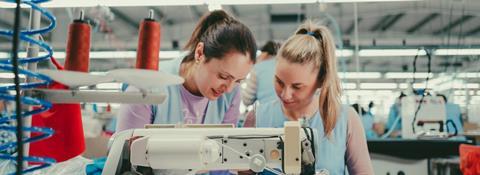
Odlo’s overall score of 75, totalling 156 out of a possible 208 points, was built on a perfect result in foundational systems criteria and scores above 70 percent in most remaining categories. The company has been a Fair Wear member since January 2008.
A three-year effort, spanning multiple company areas
The rating reflects what Odlo describes as a three-year, cross-functional programme spanning product development, sourcing, sustainability, finance and marketing. The work involved reviewing internal procedures, identifying gaps and implementing longer-term structural changes across the supply chain. The Fair Wear Foundation assessment, conducted on 21 Jan. 2026, was based on interviews with five Odlo executives – including Chief Executive Officer Daniel Eppler, Chief Operating Officer Davide Arsie and Director of Sustainability Johanna Heimlicher – alongside documentation, financial records and supplier data.

Where Odlo made progress, and what remains open
The sourcing strategy was one of the stronger-scoring areas. Odlo operates 36 active suppliers across 11 countries, with Romania accounting for 44 percent of production volume – entirely from the company’s own factory, which manufactures exclusively for the brand. Vietnam represents 22 percent, Sri Lanka 12 percent, and Thailand and Türkiye 9 percent each. FWF noted that 74 percent of production volume now comes from suppliers where Odlo holds at least 10 percent purchasing leverage, an increase of more than 10 percentage points on the prior year. The brand is also shifting volumes from Cambodia to Vietnam as part of its risk-reduction strategy.
Living wage progress is concentrated in Romania. Workers at that factory are now paid at the target wage level following collective bargaining agreement (CBA) negotiations involving worker representatives. Together with three Italian factories covered by Italy’s sector-level garment CBA – representing less than 1 percent of output – the share of total purchasing value produced at or above living wage estimates stands at 43 percent.
Since 2024, Odlo has also participated in a living wage project coordinated by Sustainable Textiles Switzerland 2030 (STS 2030), which is developing a roadmap toward living wage payment at the company’s Vietnamese factories, with a target of 50 percent of those facilities reaching living wage by 2030.
The lowest-scoring area – responsible purchasing practices, at 69 percent – included one indicator rated “Insufficient.” FWF found that Odlo’s supplier contracts, while referencing FWF’s Code of Labour Practices (CoLP), place an unequal burden on suppliers through late-delivery penalties and product liability clauses. The organisation requires Odlo to revise these contracts and formally integrate shared responsibility for CoLP implementation. The company began drafting new contract templates during the review period, drawing on the Responsible Contracting Project (RCP), and is on its way to rolling out the updated terms across all suppliers.
Freedom of association remains a priority risk, particularly in Türkiye and China, where factory assessments identified critical findings. In Türkiye, no independent union was identified at factory level. Odlo has implemented worker surveys, developed corrective action plans and run dialogue training, but representative gaps remain open. In Vietnam, excessive overtime – with working time exceeding 60 hours per week at one factory – is a structural issue linked to skilled labour shortages and competition from other manufacturing sectors.
Why this matters beyond the scorecard
The Fair Wear Foundation´s Brand Performance Check is one of the few third-party frameworks that evaluates brand management decisions as determinants of factory-level conditions. For Odlo the Leader rating reflects a more integrated due diligence system than most companies at similar revenue scale, or even bigger. And a commitment to go beyond any legal requirements, to fullfill its responsible business commitment.
About Fair Wear Foundation
Fair Wear Foundation is an Amsterdam-based, independent multi-stakeholder organization working with apparel brands, factories, trade unions and non-governmental organizations to improve labour conditions in garment supply chains. Its Code of Labour Practices (CoLP) covers eight standards aligned with International Labour Organization (ILO) conventions. The BPC is conducted annually for each member company and results are published at fairwear.org.
Sustainable Textiles Switzerland 2030
Sustainable Textiles Switzerland 2030 is a multi-stakeholder program designed to align the Swiss textile and apparel sector with the United Nations Sustainable Development Goals (SDGs). As of January 1, 2026, the initiative reached a major milestone by transitioning into an independent association, operating under the name Sustainable Textiles Switzerland (STS). It is spearheaded by the industry associations Swiss Textiles, amfori, and Swiss Fair Trade, with strategic backing from the Swiss federal government (SECO and FOEN).
Go deeper
The full Odlo assessment by the Fair Wear Foundation can be downloaded here