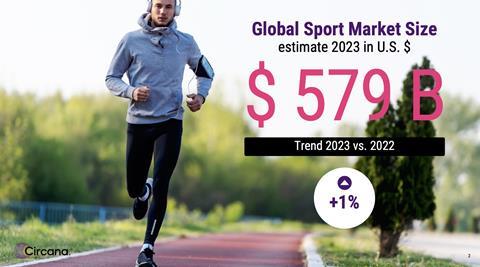
The global sport market reached a value of $579 billion in 2023 with a growth rate of 1 percent vs 2022. This shows the latest Global Sport Market Estimate by Circana. The data presents a mixed picture across categories, with equipment and footwear growth compensating for a notable decline in bicycles and accessories.
Market trends
Overall, the market edged up compared with 2022, but category performance varied significantly:
-
Equipment grew by 1 percent,
-
Footwear increased by 5 percent, confirming its role as a key driver in the global market and supported by continuing demand for performance running and lifestyle crossover products.
-
Apparel stagnated, posting flat results compared to 2022.
-
Bicycles and accessories fell by 5 percent, reflecting a normalization after the pandemic boom and persistent supply chain challenges.
Top markets
The top ten countries by market size in 2023 together represent the lion’s share of global demand. While the U.S. remained the largest single market with $207 billion, European countries continue to play a central role in global consumption. Nevertheless second biggest market is China with almost $60 billion.
A sector in transition
The divergent performance across categories highlights the ongoing structural shifts in the global sport business. Equipment sales benefited from strong participation trends in outdoor and fitness activities, while footwear’s resilience reflects its dual position in sport and fashion. The decline in bicycles underscores how post-pandemic adjustments are reshaping the market, with excess inventories and slowing demand weighing on growth.
Outlook
While 2023 showed modest growth overall, the data suggests that long-term expansion opportunities remain intact, particularly in categories tied to performance and lifestyle. For brands and retailers, the key challenge will be balancing innovation and demand management in a market that is increasingly fragmented by category and geography.