The world’s largest sports retailer is extending its employee ownership program globally under a three-year vesting scheme tied to collective performance. More than 56,000 Decathlon employees - 54% of the workforce - already hold shares.
As Decathlon marks its 50th anniversary, the French sports retailer is extending free share allocations worth €2,000 to eligible employees worldwide: a move that could expand the program significantly beyond its current base of more than half the global workforce.
The program, named the Decathlon Seed, was announced June 16, 2026. It covers eligible employees across the group’s global operations, with each allocation vesting after a three year period. During that window, the value of each grant will track collective company performance – meaning the scheme ties individual wealth creation directly to business outcomes rather than offering fixed cash incentives.
How does the allocation work
Each recipient receives either free shares or an asset-incentive equivalent, depending on local regulations and subsidiary structure: a program design that took more than a year to coordinate across all markets and family shareholders. The vesting timeline and performance linkage also set this apart from conventional profit-sharing schemes, which typically distribute value retrospectively. Here, employees take on forward-looking exposure.
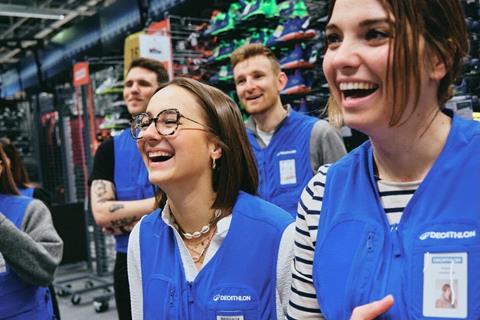
More than half the workforce already holds a stake
Decathlon’s commitment to employee ownership predates this announcement. Since 1987, the company’s founding family shareholders have run a program that enables teammates to become shareholders. As of the announcement date, more than 56,000 employees, around 54 percent of total headcount, hold shares across 1,902 stores and 102,900 teammates worldwide.
The Decathlon Seed accelerates that model. Chairman Julien Leclercq described the move as “a sustainable project together, founded on trust, commitment and collective success.” CEO Javier López added that the initiative reflects a conviction that “value is created on the ground and should be shared with those who create it.”
The 50th anniversary: time to reaffirm Decathlon’s values and send a message to future hires
Privately held companies with family ownership structures rarely rely on broad-based equity compared with listed peers. Decathlon’s move is a cultural signal: it positions the ownership model as a structural differentiator at a moment when the company is operating at scale (€16.8 billion in revenue, 2025, presence in over 70 countries) while still projecting the internal culture of a founder-led enterprise.
That is a positioning choice. For a company competing for talent across retail, technology and product design roles globally, embedding ownership as a baseline benefit rather than an executive perk sends a clear message to potential hires.