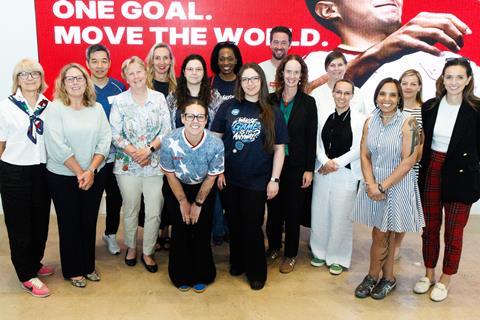
Inspirational moments in sport alone are not enough. In New York, WFSGI and ten member brands made the case for structural collaboration, and a five-point policy agenda.
This article was updated and amended on Friday, June 26, 16:32 CEST. We apologize for a couple of factual mistakes in the earlier version.
The most revealing moment of WFSGI’s One Goal. Move the World. gathering in New York on June 25 came in the closing remarks. Emma Zwiebler, CEO of the World Federation of the Sporting Goods Industry, told the room: “Inspirational moments in sport, while incredibly special, they are alone not enough.”
It was the throughline of the day, and of the challenge the sporting goods industry has been building toward for two years. A room of sports executives, brand leaders, public health advocates and community organizers all arrived at the same conclusion: turning a major sporting event into lasting gains for young people requires structural collaboration that does not currently exist by default.
Zwiebler made clear that encouraging and enabling that collaboration is the work WFSGI is now explicitly focused on.
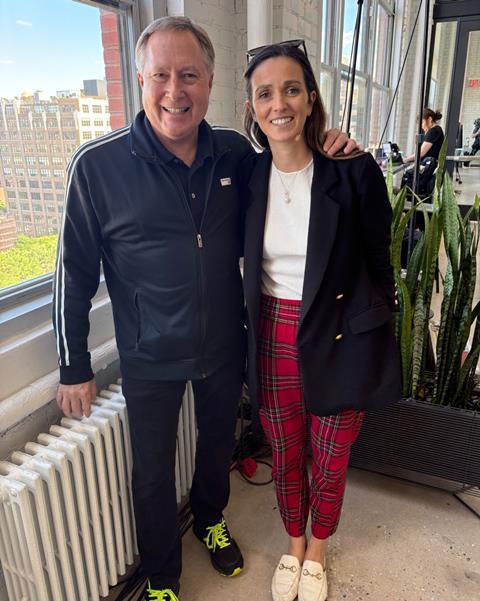
The number behind the gathering, the message to take outside
The urgency rests on a single figure that the industry tracks but that rarely breaks through the mainstream media’s agenda. According to the World Health Organization (WHO), 81 percent of teenagers globally do not meet its basic physical activity guidelines. WFSGI has been monitoring this data since the WHO published its global status report in 2022.
For the sporting goods industry, that number carries a specific meaning beyond public health: it represents the long-term contraction of the future consumer base. The industry’s commercial interest in reversing it is structural, not philanthropic.
Zwiebler addressed the wider circulation problem directly in her remarks: “We have to bring this message outside of our sports ecosystem, Juan Mata referenced this today. We have a real opportunity to influence how countries strengthen their health and wellbeing ambitions through major sporting events. We have a chance to shape future event bids and delivery to make sure that they are designed with an increase in participation from day one. There is no need to re-invent the wheel, we have the organizations on the ground and work together in this and be ready to step up to the mark to work together and contribute our part.”
Not a one-off request, but a commitment already made
adidas, Amer Sports, Arena, ASICS, Brooks, Decathlon, New Balance, Nike, Oakley, Specialized and Under Armour: the ten WFSGI member brands that backed the event are all members of WFSGI’s Physical Activity Committee (PAC), which has coordinated the industry’s collective response to the physical inactivity crisis for the past two years.
In June 2024, the same brands signed a Joint Industry Statement committing to four areas of action, including a pledge to use major sporting events to drive participation. The New York gathering was not a standalone initiative; it put that commitment into practice.
Their involvement is institutional, not event specific. Under the PAC model, brands show up not as backers of a single day, but as partners in an ongoing program.
Dave Wheeler, COO of New Balance and WFSGI Co-Chair, described the industry’s role in supportive, forward-looking terms that echoed the Joint Industry Statement:
“The FIFA World Cup reminds us of sport’s extraordinary power to unite, inspire, and move the world. But our greatest impact is not only in what we make; it’s in how we help more young people experience the confidence, connection, and opportunity that sport can provide.”
New Balance’s positioning is supported by specific proof points.
The New Balance Foundation has invested more than $150 million since 1981, including over $12 million distributed to 90 nonprofits in 2024. Days before the New York event, New York Road Runners (NYRR) and New Balance announced a track refurbishment at the Star-Spangled Playground in Brooklyn, tied to a decade-long partnership that has distributed nearly 50,000 free pairs of shoes to students at more than 1,000 underserved schools and community centers in the area.
What Common Goal brings, and why it matters here
Juan Mata, the former Spain international and co-founder of Common Goal, opened the event with a call for collective responsibility. “One of the first lessons I learned in football is that it takes a team to accomplish your dreams,” he said.
“It’s not the sole responsibility of one organization, one rights holder, one government or one community to grow participation and create a lifelong love of football or any other sport.”
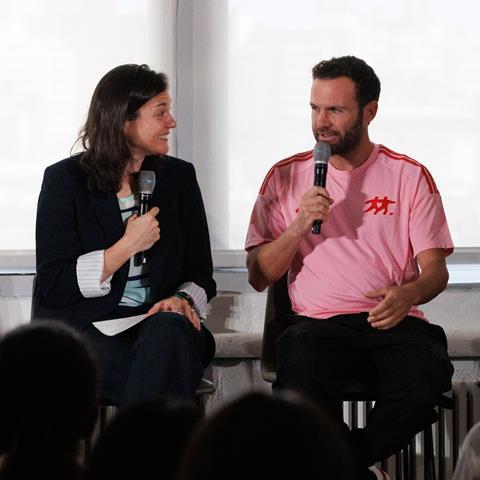
Common Goal has been working around World Cups for nearly two decades, dating back to its first Youth Festival alongside the 2006 tournament in Germany. At the FIFA World Cup 2026, that work is operating across three distinct programs:
Play Coll3ctive: a three-year commitment developed with the adidas Foundation and Beyond Sport, allocating $3.78 million to 21 project partners across 16 host cities, aimed at strengthening grassroots organizations across North America.
Soccer Forward Fests: more than 500 locally led community events across the US, in partnership with U.S. Soccer’s Soccer Forward Foundation, engaging more than 100,000 people and marking 20 years since Common Goal’s first World Cup youth festival.
The Player Escort Program: with Quaker and PepsiCo, 1,738 young people from community organizations walking onto the pitch alongside players at World Cup matches, paired with educational programming on well-being and nutrition.
WFSGI’s One Goal. Move the World. initiative is designed to sit alongside, not duplicate, what Common Goal does at the community level. The policy layer, where WFSGI operates, is distinct: it is about embedding participation obligations into how future events are bid for and designed.
Two panels and five principles designed to spur action
The event was structured around two panel discussions. The first, From Moment to Movement, addressed why youth participation needs to be built into event planning from the design stage rather than added afterward. It drew rights-holder voices across formats: Brianna Keys (Director of Social Impact, FIFA Host City NYC/NJ), Brian Flinn (SVP Global Flag Football, NFL), Jennifer Gray (Regional Partnership Manager, World Rugby) and Renata Simril (CEO, LA84 Foundation).
The second panel, From Inspiration to Habit, examined what works at the community level to convert event energy into sustained behavior change, with a specific focus on underserved youth. Participants included Tom Farrey (Executive Director, Sports & Society Program, Aspen Institute), Jennifer Sullivan (COO, New York City Football Club), Andy Jenkins (Director of Youth Development, South Bronx United) and Laurie Whitsel (VP, American Heart Association).
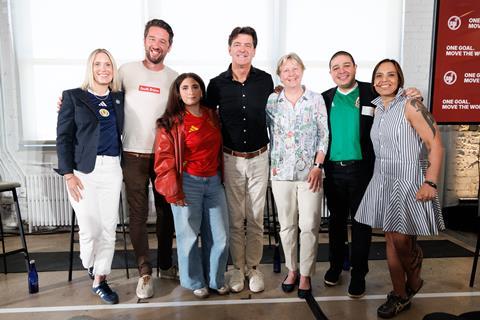
The two sessions and supporting breakouts produced five principles to advance youth participation from major sporting events. WFSGI will work with participants and interested stakeholders to bring those principles to governments at the WHO World Health Assembly (WHA) in Geneva in 2027. The principles were still being finalized from breakout session notes at the time of writing and will be published later this summer.
It is also worth noting the context into which this event landed.
The FIFA World Cup 2026 is the first mega-sporting event in history to incorporate human rights into its bid process, execution and evaluation framework. The Child Rights & Sports Alliance — led by the Aspen Institute’s Project Play, the Centre for Sport and Human Rights, the National League of Cities, UNICEF USA and the U.S. Soccer Foundation — was launched specifically to help host cities center youth voice and participation in tournament planning.
WFSGI’s initiative sits downstream of, and complementary to, this existing framework.
The policy pathway: what it is and why it matters
WFSGI holds Official Relations status with the WHO, a formal mechanism that gives the federation direct access to intergovernmental policy processes. That relationship is what distinguishes this initiative from brand sponsored advocacy: the five principles are intended to move through an established institutional channel to governments.
The mandate draws from WHO Resolution WHA77.12 (“Strengthening Health and Well being through Sport Events”), adopted in 2024, which called on member states and sporting bodies to collaborate to turn large scale events into platforms for lasting public health gains.
WFSGI’s goal is to embed the five principles into the 2027 WHA agenda, giving the industry a formal mechanism to influence how future host city agreements are written and what youth participation obligations they carry from day one of the bidding process.
At that point, the conversation moves from advocacy to governance architecture.
What to watch, and where SGIE continues this
The five principles, once published, are the next significant moment in this story. The gap between an aspirational declaration and an operational commitment with named owners and timelines is where initiatives of this kind either gain traction or stall. SGIE will report on the principles when available and track their progress toward Geneva.
On July 13, SGI Europe and WFSGI host the second Coffee Break Webinar, with adidas and Decathlon on how two of the industry’s largest brands are rethinking what event activation is actually for. The session will draw directly on the One Goal. Move the World. experience — examining how the industry can connect what happens on the ground during a tournament to what it intends to leave behind. Register here.