Researchers at the University of Houston (UH) have developed a fully stretchable fabric-based lithium-ion battery prototype.
The idea for stretchable batteries originally occurred to Haleh Ardebili, professor of mechanical engineering at UH, several years ago. A science fiction fan, he imagined smart, interactive and powered clothes. “It seemed a natural next step to create and integrate stretchable batteries with stretchable devices and clothing,” Professor Ardebili explained. However, a major problem in the development of wearable technology is that conventional batteries are usually rigid, limiting the item’s functionality. Furthermore, these batteries use a liquid electrolyte that is flammable and can even make the batteries catch fire or even explode under certain conditions.
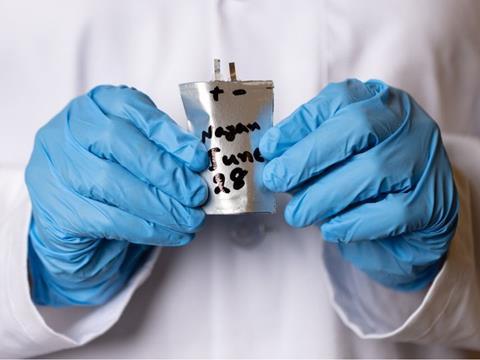
The UH research team used conductive silver fabric as a platform and current collector. Weaved silver fabric mechanically deforms or stretches while maintaining its electrical conduction pathways. The paper detailing this research, of which Ardebili is the corresponding author, is published in the scientific journal Extreme Mechanics Letters. The paper’s first author is Bahar Moradi Ghadi, a former doctoral student who based her dissertation on this study. According to the authors, the article demonstrates that their fabric-based battery can stretch up to 15 percent strain without significantly increasing its internal impedance.
Ardebili is optimistic that the prototype for a stretchable fabric-based battery will pave the way for many types of applications, such as smart space suits, consumer electronics embedded in garments that monitor people’s health and devices that interact with humans at various levels. There are many possible designs and applications for safe, light, flexible and stretchable batteries, but there is still some work to be done before they are available on the market, he commented.
Images: © University of Houston, www.uh.edu