With 11 federation kits and the tournament’s most concentrated African portfolio, PUMA is using the 2026 World Cup as its most visible test yet of a turnaround strategy now being watched from Shenzhen.
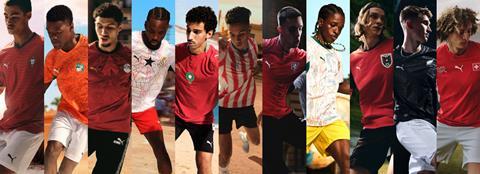
PUMA will supply 11 national teams at FIFA World Cup 2026, confirming the full lineup on June 2. The federations - Austria, Czech Republic, Egypt, Ghana, Ivory Coast, Morocco, New Zealand, Paraguay, Portugal, Senegal, and Switzerland - span four continents and represent close to a quarter of all competing nations. It is the Herzogenaurach brand’s largest kit portfolio at the tournament since 2006.
Wha about the competitors? At this expanded 48-team tournament, adidas outfits 14 nations and Nike 12, placing PUMA third in volume but ahead of every other manufacturer by a significant margin. Where PUMA has concentrated its position is in Africa: five of its 11 partner federations - Ghana, Senegal, Ivory Coast, Morocco, and Egypt - represent the continent, more than any other kit manufacturer at FIFA WC26.
The Africa play is the commercial story that matters most
Africa is a market adidas and Nike have historically dominated through a handful of high-profile national team contracts. PUMA’s five-federation African block at this tournament is both the result of years of targeted investment and a positioning argument for what comes next. Replica jersey revenues from African football fans, dispersed across large diaspora communities in Europe and North America, as well as domestic markets, are harder to quantify than European equivalents but have grown steadily as African teams’ on-pitch ambitions and global followings have expanded.
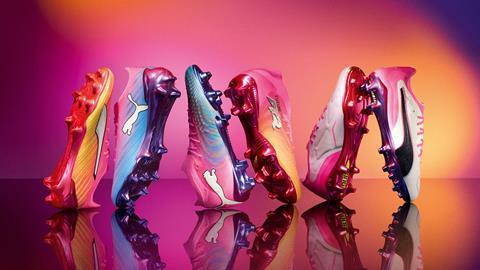
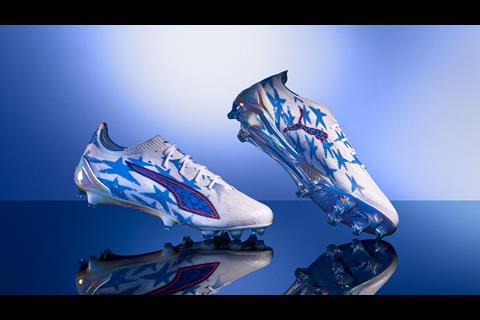
The 11-kit lineup accompanies a multi-chapter product campaign. The Showtime Pack covers three footwear silhouettes — the Future 9 Ultimate, Ultra 6 Ultimate, and King 20 Ultimate — drawing on the mismatched two-tone aesthetic PUMA previously deployed in its Tricks packs in 2014 and 2016.
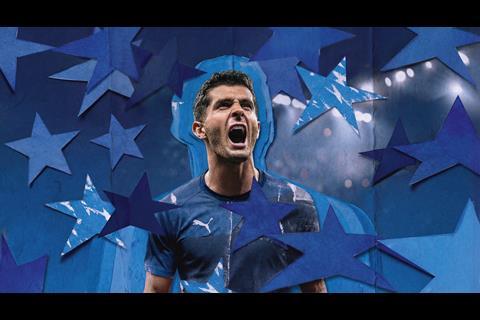
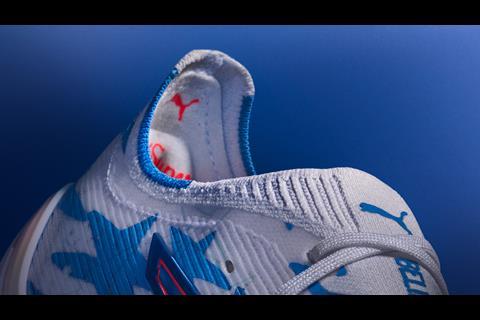
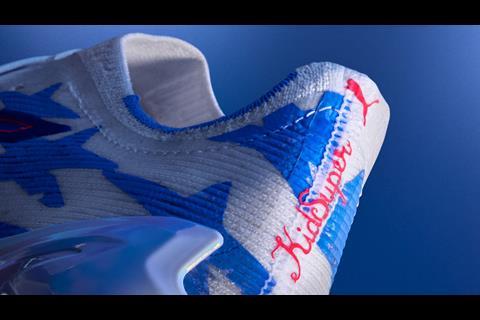
A collaboration with Brooklyn-based independent designer KidSuper produced a custom boot for US captain Christian Pulisic, incorporating personal iconography including his parents’ shirt numbers and a “I Believe” mantra. A third chapter, to be announced before the tournament, will add a new Ultra 7 silhouette.
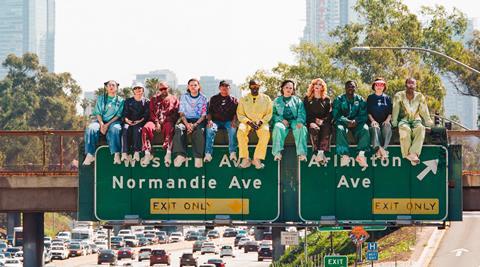
Travel wear and goalkeeper kits were developed with designer Salehe Bembury, available from June 4. The collection reworks the King tracksuit silhouette alongside the Velum 1 Akita sneaker, which uses PUMA’s Nitrofoam cushioning and a UV-reactive finish. Bembury developed distinct visual codes for each federation, drawing on geographical and cultural references.
On the technical side, Authentic match jerseys use PUMA’s Ultraweave fabric. All replica jerseys are produced through the RE:FIBRE program, which uses recycled textile waste as its primary raw material, adding a sustainability layer alongside performance claims.
Is FIFA World Cup 2026 the first real test of PUMA’s ANTA-backed turnaround?
The kit launch coincides with the most significant ownership change in PUMA’s recent history.
ANTA, now the majority shareholder, has a track record of acquiring and revamping Western sports brands. In 2009, it acquired the China business of FILA. In 2019, it joined a consortium to acquire Finland-based Amer Sports for €4.66 billion. The PUMA stake is intended to follow that pattern: a minority position in an internationally recognized brand trading below its potential, with China market expansion as the primary growth thesis.
For PUMA’s new Chief Executive Officer Arthur Hoeld, a former adidas executive who took over last year, FIFA WC26 is the first major international tournament under his leadership and the new ownership structure. The scale and coherence of the kit portfolio — 11 federations, a unified visual campaign, and consumer-facing activations described by the company as culture- and creator-led — will be read by the market, and by ANTA, as evidence of whether the brand’s turnaround has already begun.
FIFA World Cup 2026: The Business of the Beautiful Game
How brands, retailers, and the sports economy compete on football’s biggest stage.
Explore Our Coverage →