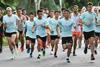
A record 596 million domestic trips and in tourism spending during the 2026 Spring Festival underscore the scale of China’s consumer mobility – and its growing appetite for active lifestyles.
China’s biggest holiday just got bigger again. The official nine-day Spring Festival holiday ran from Feb. 17 to Feb. 25 – but the broader travel season, known in Chinese as Chūnyùn (春运), extends across a 40-day window around the New Year and continued through early March.
Taken together, the 2026 cycle produced record-breaking numbers across every major metric of domestic movement and consumer spending – and for sporting goods brands paying attention to the China opportunity, the data points well beyond the holiday itself.
Domestic tourist trips reached 596 million over the nine official holiday days, up 95 million from the previous year’s eight-day holiday, according to the Ministry of Culture and Tourism. Tourism spending hit RMB 803.48 billion ($116 billion, approximately €107 billion) – also a new record.
Cross-regional passenger trips exceeded 2.8 billion in total across the holiday period, an 8.2 percent year-on-year increase, with a daily average of 311 million, reported the Ministry of Transport. On Feb. 22 alone, passenger flows hit 380 million – a new single-day peak.
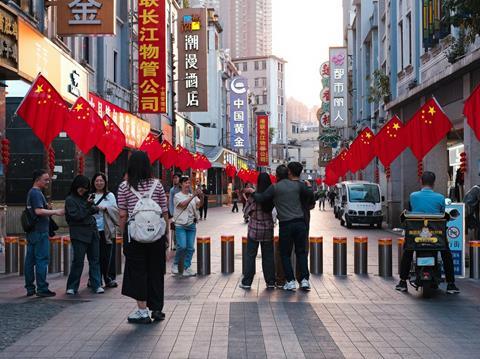
The civil aviation sector transported 22.05 million passengers over the holiday period, up 7.7 percent year-on-year, according to the Civil Aviation Administration of China (CAAC). Railways carried 121 million passenger trips, an increase of 11.5 percent over the comparable 2025 period, as reported by China State Railway Group. International flows also rose: border inspection authorities registered 17.796 million cross-border trips, with around 460,000 foreign visitors entering under visa-free arrangements – a daily average 28.5 percent higher than the 2025 holiday.
For any brand with China ambitions, these are not background statistics – they are the operating environment.
Movement at scale – and what it means for the sporting goods industry
The Spring Festival figures are significant not just as a seasonal data point, but as a structural indicator of how Chinese consumers are choosing to spend their time and money. Hundreds of millions of people on the move means hundreds of millions of people walking, hiking, cycling, skiing, running – experiencing the physical world at varying levels of intensity, from a stroll through a historic district to a trail run in the mountains. Tourism, in China’s current consumer culture, has become a gateway to outdoor activity, and outdoor activity has become a gateway to sport.
That progression carries direct commercial implications. Yang Jinsong, a tourism expert with China’s Tourism Academy, noted that services-oriented spending is becoming a stable, recurring demand driver – and the data from the active lifestyle market shows what that looks like in practice. According to Hot Pot, an agency specializing in premium lifestyle brand strategy in China and a strategic partner of SGI Europe, 2025 e-commerce figures confirm that Chinese consumers are not just spending more on sportswear and outdoorwear – they are spending more on the best of it.
Adam Sandzer of Hot Pot noted that while Western consumers tend to trade down during periods of economic uncertainty, China’s active lifestyle segment has moved in the opposite direction: toward superior materials, advanced technology and brands that align with aspirational, health-oriented identities.
The mechanism is a reallocation of wallet share. As high-end fashion spending has pulled back, some of that budget has migrated toward premium activewear – a category that delivers the status signaling of luxury at a fraction of the price, while directly supporting health and self-improvement. Wellness, in other words, is becoming China’s new luxury.
The outdoor market: from niche to structural pillar
Behind the headline holiday numbers lies a sector that has undergone a transformation rarely visible in aggregated statistics. China’s outdoor sports market reached RMB 150 billion (€20 billion) in 2024, according to data presented at ISPO Munich 2025 by Oliver Wang, Secretary General of the China Outdoor Association (COA) – the only active national industry association for outdoor sports in China. That figure represents 23 percent year-on-year growth and a market five to seven times larger than pre-Covid levels.
Running leads participation, with 58 percent of Chinese outdoor consumers having run in the past 12 months, followed by hiking at 52 percent, cycling at 43 percent and camping at 33 percent. Skiing and snowboarding, often assumed to dominate China’s outdoor narrative given the country’s high-profile winter sports investments, represent only a marginal share of total outdoor activity.
Wang also identified a loyalty premium across three specific activities – cycling, trail running and marathon running – where a 15 percent gap separates casual from performance-level participants, indicating stronger upgrade willingness and higher lifetime value for brands that can convert those consumers.
What the movement means for brands
For any brand with China ambitions, Spring Festival is when the operating environment becomes most visible – and most legible. Hundreds of millions of people moving across the country generates demand for footwear, apparel and equipment, and the aspirational identities that go with them. It also generates something less tangible but equally commercially significant: an emotional moment. Spring Festival is when Chinese consumers are most receptive to storytelling, and the sporting goods industry has learned to meet them there.
This year’s Chinese New Year campaigns from major Western brands reflected a market that has matured well beyond zodiac-themed product drops. Nike’s “Breaking Through with Sport” film series used family salary comparisons as its backdrop to position running as an antidote to social pressure. On built its “New Year, Your Pace” campaign around the idea of personal rhythm over external performance expectations. Lululemon partnered with cellist Yo-Yo Ma for its third consecutive “Be Spring” campaign, framing athletic practice as a form of daily meditation. Salomon turned to the ancient Tea Horse Road as a cultural reference for its Year of the Horse collection, treating trail gear as historical artefact. Arc’teryx launched a limited-edition “Year of the Horse Rush” series priced at over $1,000 – and sold out instantly.
The through-line across all of them, as SGI Europe reported in February, is a shift from product to psychology: brands positioning athletic gear not as a tool for competition but as a vehicle for personal freedom, self-discovery and wellbeing. Adidas, meanwhile, took a different route – embedding its campaign within China’s institutional football ecosystem through a partnership with the Chinese Ministry of Education and a new deal with the Su Super League (officially the Jiangsu Provincial Urban Football League), a regional competition that drew over 2.4 million spectators and 2.2 billion online views in its 2025 season.
The Spring Festival’s record numbers confirm the consumer economy is moving. Sporting goods brands, it seems, are learning to move with it.
Sources
- Ministry of Transport, China (via CCTV News / Xinhua, Feb. 24, 2026)
- Ministry of Culture and Tourism, China (Feb. 24, 2026)
- Civil Aviation Administration of China (Feb. 24, 2026)
- China State Railway Group (Feb. 24, 2026)
- Caixin Global, “China Lunar New Year Tourism Spending Hits Record $116 Billion,” Feb. 25, 2026
- Oliver Wang / China Outdoor Association, ISPO Munich 2025 presentation
- Hot Pot / Adam Sandzer, Webinars at SGI Europe
- SGI Europe: China market 2025: Outdoor & premium activewear trends
- SGI Europe: Chinese New Year 2026: How Sporting Goods Brands Shifted From Products to Psychology
- SGI Europe: Adidas Chinese New Year 2026 Campaign Signals Strategic Integration Within China’s School Football System