While much of the sporting goods industry battles weak wholesale demand and margin-eroding promotions, the Swiss premium brand has delivered another quarter of profitable growth. CFO Frank Sluis and Co-CEO David Allemann make clear the brand will not trade long-term positioning for short-term volume.
Leaps and bounds are almost the norm at On Holding. In the second quarter, the Swiss running specialist once again proved that consistent premium positioning pays off. While large parts of the industry are struggling with price discounts and a weak wholesale market, On continues to grow profitably – and deliberately avoids growth at any cost.
These leaps and bounds are now also reflected in the financial figures. While revenue rose by 13.5 percent to CHF 850.3 million (€920m), the high-margin direct business grew twice as fast. At the same time, the gross margin reached a new high of 65.4 percent, adjusted Ebitda rose by nearly a quarter, and net income returned to the black by a significant margin. With cash reserves of more than CHF 1.2 billion (€1.3bn), the company is also entering the second half of the year in a comfortable financial position.
| On Holding - Income | |||
|---|---|---|---|
| 2026 | 2025 | Change | |
| Q2, ended June 30 (CHF million) | |||
| Net sales | 850.3 | 749.2 | 13.5% |
| Cost of sales | -294.6 | -288.4 | 2.1% |
| Gross profit | 555.7 | 460.8 | 20.6% |
| SG&A expenses | -436.3 | -368.0 | 18.6% |
| Operating result | 119.4 | 92.8 | 28.7% |
| Financial income | 11.3 | 7.5 | 50.7% |
| Financial expenses | -8.3 | -7.7 | 7.8% |
| Foreign exchange gain | 3.3 | -139.9 | -102.4% |
| Income before taxes | 125.7 | -47.3 | -365.8% |
| Income tax expense | -20.7 | 6.4 | -423.4% |
| Net income | 105.0 | -40.9 | -356.7% |
| Diluted EPS Class A (CHF) | 0.31 | -0.12 | 358.3% |
| Diluted EPS Class B (CHF) | 0.03 | -0.01 | 400.0% |
| H1, ended June 30 (CHF million) | |||
| Net sales | 1,682.2 | 1,475.8 | 14.0% |
| Cost of sales | -592.2 | -579.7 | 2.2% |
| Gross profit | 1,090.0 | 896.1 | 21.6% |
| SG&A expenses | -853.2 | -726.3 | 17.5% |
| Operating result | 236.9 | 169.8 | 39.5% |
| Financial income | 18.3 | 14.8 | 23.6% |
| Financial expenses | -16.3 | -13.6 | 19.9% |
| Foreign exchange gain | 2.9 | -154.4 | -101.9% |
| Income before taxes | 241.8 | 16.6 | 1356.6% |
| Income tax expense | -33.5 | -0.8 | 4087.5% |
| Net income | 208.3 | 15.8 | 1218.4% |
| Diluted EPS Class A (CHF) | 0.62 | 0.05 | 1140.0% |
| Diluted EPS Class B (CHF) | 0.06 | 0.00 | – |
| Source: On Holding | |||
Premium over price wars
This marks yet another leap forward that goes far beyond mere revenue growth. Particularly noteworthy is the 3.9 percentage point increase in the gross margin – despite higher US tariffs. Frank Sluis, who has served as CFO for the past few months, sees this as proof of the financial strength of the premium model. “We do not compromise our full-price integrity for volume – even in the heavily promotional environment we saw this quarter in some markets,” he said. In other words: On would rather forgo short-term sales volume than jeopardize its premium positioning with deep discounts. This is what currently sets the premium brand apart from many competitors.

Strong results, weak stock
However, On shares one experience with Adidas: The strong quarterly numbers did not spark euphoria on the stock market. Revenue fell slightly short of Wall Street’s expectations. Despite rising margins and an upward revision to the gross margin forecast, the stock came under pressure following the release of the numbers. This reaction shows once again that what counts on the capital markets is not just strong growth, but above all analysts’ expectations.
Guidance: Low-20% revenue growth
Nevertheless, Sluis is looking confidently toward the second half of the year and confirms the company’s course of profitable growth. The company continues to expect currency-adjusted revenue growth in the low 20s for 2026 and, at the same time, has raised its forecast for the gross margin to at least 65 percent. The adjusted Ebitda margin is expected to remain unchanged at between 19.5 and 20 percent. The company still needs to generate revenue of between CHF 1.79 billion (€1.93bn) and CHF 1.88 billion (€2.03bn) in the second half of the year to meet its full-year forecast – a goal that appears realistic given the traditionally stronger year-end business.
Direct sales are surging ahead
The real growth is now taking place through the company’s own channels. While wholesale sales grew only moderately, the DTC business grew more than five times as fast. Accounting for 45.7 percent of consolidated revenue, direct sales are increasingly becoming a key driver of growth. Strategically, this is of central importance: Every additional sale made through its own channels not only strengthens customer loyalty but also increases margins and reduces dependence on wholesale. Especially in a market that is often characterized by discounts, this gives the company additional control over its premium positioning.
According to Co-CEO David Allemann, there is generally more to this than just a sales strategy. “They don’t come for price. They come for innovation and cultural relevance,” he said during the earnings call. He noted that one in three customers is now under the age of 34.
The fact that wholesale sales are growing at a comparatively slow pace is no coincidence. On is deliberately scaling back shipments to its retail partners to avoid price discounts, keep inventory levels in check, and make room for the next wave of innovations, which is set to hit the market in 2027. The company is thus consciously forgoing higher short-term revenue in favor of a stronger brand in the long term.
Innovation secures premium strategy
This is exactly where the next product innovations come into play. On is deliberately making room for new technologies and collections, rather than flooding the market with additional merchandise in the short term. With the Cloudboom Strike 2, the Cloudsurfer 3, the new SURREAL foam, and the further development of LightSpray technology, management is making it clear what the next phase of growth will be built upon.
The message behind this is clear: Innovation is no longer just a concern for product developers, but an essential component of the financial strategy. After all, only with sought-after new products can premium prices and high margins be maintained in the future. Allemann put it this way: “We planted many seeds, and now they are sprouting.” These include running, training, tennis, apparel, new regions, and the expansion of the company’s own retail network.
Apparel grows by nearly 50%
Another key component of the brand story is the apparel business. This primarily includes running apparel, such as running shirts, tights, shorts, jackets, and sports bras, but increasingly also lifestyle-oriented collections for everyday wear. Even though apparel has accounted for only about 6 percent of quarterly revenue so far – at CHF 54.2 million (€59m) – the segment grew 47.7 percent, significantly faster than the footwear business (+10.9%).
| On Holding - Sales | ||||
|---|---|---|---|---|
| 2026 | 2025 | Change | ||
| Q2, ended June 30 (CHF millions) | ||||
| Channels | ||||
| Wholesale | 461.9 | 441.0 | 4.7% | |
| DTC | 388.4 | 308.3 | 26.0% | |
| Net sales | 850.3 | 749.2 | 13.5% | |
| Products | ||||
| Shoes | 781.6 | 704.9 | 10.9% | |
| Apparel | 54.2 | 36.7 | 47.7% | |
| Accessories | 14.5 | 7.7 | 88.3% | |
| Net sales | 850.3 | 749.2 | 13.5% | |
| Regions | ||||
| Americas | 451.6 | 432.3 | 4.5% | |
| EMEA | 228.2 | 197.8 | 15.4% | |
| Asia-Pacific | 170.5 | 119.2 | 43.0% | |
| Net sales | 850.3 | 749.2 | 13.5% | |
| H1, ended June 30 (CHF millions) | ||||
| Channels | ||||
| Wholesale | 971.5 | 890.6 | 9.1% | |
| DTC | 710.7 | 585.2 | 21.4% | |
| Net sales | 1,682.2 | 1,475.8 | 14.0% | |
| Products | ||||
| Shoes | 1,545.3 | 1,385.8 | 11.5% | |
| Apparel | 109.5 | 74.8 | 46.4% | |
| Accessories | 27.4 | 15.2 | 80.3% | |
| Net sales | 1,682.2 | 1,475.8 | 14.0% | |
| Regions | ||||
| Americas | 902.3 | 869.7 | 3.7% | |
| EMEA | 435.4 | 366.4 | 18.8% | |
| Asia-Pacific | 344.5 | 239.7 | 43.7% | |
| Net sales | 1,682.2 | 1,475.8 | 14.0% | |
| Source: On Holding | ||||
This is strategically important for On. The more successfully running apparel and lifestyle collections develop, the more the company transforms itself from a specialized running-shoe brand into a comprehensive premium sportswear brand. If this expansion succeeds, the growth story will be built on a significantly broader foundation in the long term.
Also on the rise: accessories. Although they currently account for only a small portion of revenue – just under 2 percent – they are growing significantly faster than the core business, with an increase of 88.3 percent, underscoring On’s ambition to establish itself as a premium sportswear brand beyond running shoes.
Asia leads, Europe follows
Regionally, Asia remains by far the strongest growth driver. Once again, the region contributed more than one-fifth of consolidated revenue. Management highlights Japan, South Korea, and Greater China in particular as growth markets. This underscores that the brand continues to gain traction in Asia and that the region is increasingly becoming a cornerstone of the company’s international expansion.
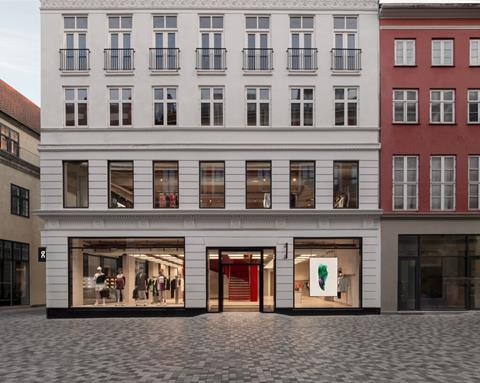
At the same time, Europe continues to gain in importance. France and Italy, in particular, are experiencing dynamic growth. According to management, lines now form daily outside the flagship store in Milan, while On continues to expand its store network in Germany and open new locations in Stockholm and Copenhagen.
By contrast, the outlook for the US market is significantly more cautious. Although the Swiss brand continued to grow there as well, management describes the market environment as increasingly dominated by discount promotions. Rather than focusing on additional sales volume, On is sticking to its full-price strategy and is consciously accepting more moderate growth in the wholesale sector. Here, too, the company is consistently following its premium strategy: brand value and margins take precedence over short-term market share.
A safe landing on a solid foundation
But visionary leaps also require a safe landing. With CHF 1.21 billion (€1.30bn) in the bank, On has the financial resources to drive store expansion, innovation, and brand-building on its own. For Co-CEO Allemann, however, that’s only part of the story. What’s crucial, he says, is that the groundwork laid in recent years is now beginning to bear fruit – from running to apparel to tennis and training. On’s leaps forward are therefore likely to continue for some time to come.