The world’s largest sporting goods company delivered modest top-line growth in Q2 FY26 but struggled with profitability, margin pressure and regional imbalances. While North America shows strength, China remains a drag – intensifying pressure on CEO Elliott Hill to deliver results.
A weak bottom line is overshadowing modest revenue growth at Nike: The sportswear giant generated sales of $12.4 billion in the second quarter of fiscal year 2026. Although this represents a slight increase of 1 percent over the previous year, currency-adjusted sales remained flat. Wholesale sales rose by 8 percent to $7.5 billion, while direct sales were again significantly weaker (down 8%). Net income plunged 32 percent to $792 million, with diluted earnings per share at $0.53. The gross margin fell to 40.6 percent, weighed down in particular by higher tariffs in North America.
| Nike - Income | |||
|---|---|---|---|
| 2025 | 2024 | Change | |
| Q2, ended Nov. 30 ($ million) | |||
| Revenues | 12,427 | 12,354 | 0.6% |
| Cost of sales | 7,382 | 6,965 | 6.0% |
| Gross profit | 5,045 | 5,389 | -6.4% |
| SG&A expense | 4,039 | 4,005 | 0.8% |
| Interest income, net | 9 | 24 | -62.5% |
| Other income, net | -16 | 8 | – |
| Pre-tax | 999 | 1,416 | -29.4% |
| Tax | 207 | 253 | -18.2% |
| Net income | 792 | 1,163 | -31.9% |
| Diluted EPS | 0.53 | 0.78 | -32.1% |
| H1, ended Nov. 30 ($ million) | |||
| Revenues | 24,147 | 23,943 | 0.9% |
| Cost of sales | 14,159 | 13,297 | 6.5% |
| Gross profit | 9,988 | 10,646 | -6.2% |
| SG&A expense | 8,055 | 8,053 | 0.0% |
| Interest income, net | 27 | 67 | -59.7% |
| Other income, net | -39 | 63 | – |
| Pre-tax | 1,921 | 2,723 | -29.5% |
| Tax | 402 | 509 | -21.0% |
| Net income | 1,519 | 2,214 | -31.4% |
| Diluted EPS | 1.03 | 1.48 | -30.4% |
| Source: Nike Inc. | |||
Investors reacted cautiously: The share price fell by around 9 to 10 percent in after-hours trading, as the focus was primarily on weak earnings, margin pressure and ongoing problems in China, despite the slight increase in sales.
No breakthrough yet on Nike’s reset strategy
The market reaction confirmed the skepticism expressed in advance by many analysts, who had viewed the quarterly report as a test of the group’s turnaround strategy (as we’ve reported). The hoped-for signs of operational progress have failed to materialize – particularly with respect to profitability and a return to sustainable growth. Instead of providing new impetus, the current figures reinforce doubts. Above all, there are questions about whether the strategic shift initiated by CEO Elliott Hill will take effect quickly enough for the brand to regain lost ground. The reset, focused on sports-oriented teams and innovative product lines, is being closely watched in an increasingly competitive market environment.
Hill: Progress – but only in parts
Nike’s chief executive tried to strike an optimistic note during the earnings call. Nevertheless, he admitted: “That’s why we’re sitting there saying we’re in the middle innings – great success in North America, work to do in China.” The sports giant is still in the early stages of a necessary diversification, particularly in the important sportswear business.

North America stabilizes, EMEA consolidates, China slows down
From a regional perspective, the second quarter was mixed. In North America, the most important market, the Oregon-based sporting goods producer achieved year-on-year sales growth of 9 percent to $5.63 billion. This increase was driven primarily by the wholesale business. Europe, the Middle East and Africa (EMEA) grew slightly, by 3 percent, to $3.39 billion. Asia-Pacific and Latin America (APLA) recorded a decline of 4 percent to $1.67 billion, while Greater China disappointed again: sales there fell by 17 percent to $1.42 billion.
Hill summed up the regional development in clear terms: “North America is leading; EMEA has just transitioned to the offensive, followed by APLA.” And he also knows: “China has our longest road ahead.”
| Nike - Revenue | ||||
|---|---|---|---|---|
| 2025 | 2024 | Change | ||
| Q2, ended Nov. 30 ($ million) | ||||
| North America | ||||
| Footwear | 3,542 | 3,236 | 9.5% | |
| Apparel | 1,811 | 1,693 | 7.0% | |
| Equipment | 280 | 250 | 12.0% | |
| Total | 5,633 | 5,179 | 8.8% | |
| EMEA | ||||
| Footwear | 2,012 | 1,982 | 1.5% | |
| Apparel | 1,196 | 1,136 | 5.3% | |
| Equipment | 184 | 185 | -0.5% | |
| Total | 3,392 | 3,303 | 2.7% | |
| Greater China | ||||
| Footwear | 954 | 1,203 | -20.7% | |
| Apparel | 442 | 472 | -6.4% | |
| Equipment | 27 | 36 | -25.0% | |
| Total | 1,423 | 1,711 | -16.8% | |
| Asia-Pacific & Latin America | ||||
| Footwear | 1,151 | 1,234 | -6.7% | |
| Apparel | 457 | 437 | 4.6% | |
| Equipment | 59 | 73 | -19.2% | |
| Total | 1,667 | 1,744 | -4.4% | |
| Global Brand Divisions | 9 | 13 | -30.8% | |
| Total Nike Brand | 12,124 | 11,950 | 1.5% | |
| Converse | 300 | 429 | -30.1% | |
| Corporate | 3 | -25 | – | |
| Total Nike Inc. | 12,427 | 12,354 | 0.6% | |
| Total Nike Brand | ||||
| Footwear | 7,659 | 7,655 | 0.1% | |
| Apparel | 3,906 | 3,738 | 4.5% | |
| Equipment | 550 | 544 | 1.1% | |
| Global Brand Divisions | 9 | 13 | -30.8% | |
| Total Nike Brand | 12,124 | 11,950 | 1.5% | |
| Source: Nike Inc. | ||||
Between a sharpened profile and weak demand
The CEO sees the reasons for the sometimes significant regional differences in the varying speeds at which reforms are taking effect. In North America, the group is clearly furthest ahead in implementing its “Win Now” strategy: there, the product range has been sharpened, the marketing revitalized and relationships with wholesalers reorganized.
In China, on the other hand, many things are still going wrong. The industry giant has sold itself too much as a lifestyle brand via price, while at the same time cutting back on store presence and staff. The result: weak demand, a discount spiral and dwindling profitability. In EMEA and APLA too, the company is still in the very early stages of restructuring. Hill made it clear that each region is following its own pace – and that this is slowing down the turnaround for the group as a whole.
2026: Innovation as a source of hope
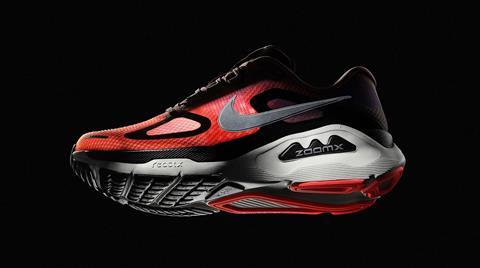
Despite the mixed figures, the US group is striving to generate momentum with new products. Hill emphasized that the innovation pipeline is well filled, especially in the running segment, which grew by more than 20 percent again in the second quarter. Two key new products are set to launch in January: the Structure Plus and the new Nike Mind training shoe. New collections and platforms are also planned for soccer, basketball and women’s apparel, which are to be rolled out throughout the year.
Olympics and World Cup as growth catalysts?
According to Hill, particular attention is being paid to global sporting events, which the group intends to use to highlight its innovative strength: “We believe that by moving into these sports-obsessed teams through our sports offense, we are already starting to see the pipeline and the flow of innovation coming through across the three brands.” This refers to the group’s three core brands: Nike, Jordan and Converse.
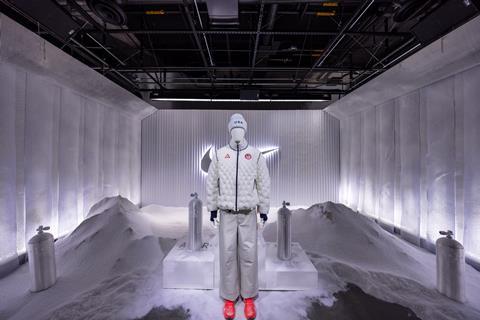
For the 2026 Winter Olympics in Milan, the company launched the new Therma-FIT Air Milano jacket in October, which automatically inflates depending on the cold by means of an air chamber. This is an unusual step for the equipment supplier, which is primarily at home in summer sports, but a conscious attempt to reach new target groups. Nike attaches even greater importance to the 2026 World Cup in North America: according to the company, more than 1,400 retailers and stores worldwide are to be upgraded with redesigned sales areas.
Outlook for Q3: CEO Hill must deliver
The outlook for the third quarter remains cautious, however. Although the world’s largest sports equipment producer expects slight sales growth and continued strength in wholesale, the gross margin remains under pressure – particularly because of tariffs, which are expected to have an impact of over 3 percentage points in Q3. According to CFO Matthew Friend, China is also unlikely to bring about a turnaround in the short term.
The coming months are now considered crucial – for the company and for CEO Hill, who has been in office for just over a year. If he fails to demonstrate operational progress soon, pressure from analysts and investors is likely to increase.