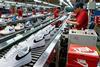
Nike has filled its top sustainability post after a five-month gap, promoting a manufacturing insider as the company works to close the distance between its carbon commitments and actual progress.
Nike has appointed Cimarron Nix as its next Chief Sustainability Officer (CSO), ending a five-month vacancy at the top of the sportswear giant’s environmental function. Nix, a nine-year company veteran most recently serving as Vice President of Global Apparel and Accessories Manufacturing, will take up her new role on March 15 and relocate from Singapore to Nike’s headquarters in Beaverton, Oregon.
The appointment was announced internally by Chief Operating Officer Venkatesh Alagirisamy, who described sustainability as integral to the business. “She and her team will continue to deliver measurable progress toward our sustainability targets while helping shape the vision and priorities for our extended team of sustainability experts embedded across the enterprise,” Alagirisamy wrote in a company-wide email.
A supply chain path to the CSO seat
Nix follows a trajectory similar to that of her predecessor, Jaycee Pribulsky, moving through sourcing, manufacturing, and health and safety roles rather than arriving via a traditional ESG or communications background. Pribulsky left Nike in September 2025 after 19 months in the role to become a partner and CSO at private equity firm Apollo Management Group, leaving the position open for roughly five months.
Before joining Nike in 2017, Nix held supply chain responsibility roles at technology company Hewlett Packard and apparel retailer J. Crew. She also held positions at telecoms firm Level 3 Communications and financial services company Citigroup. She holds a master’s degree in international affairs from Columbia University and an undergraduate business degree from the University of Colorado.
Trimmed team, unfinished targets
Nike’s most recent impact report showed a 74 percent reduction in combined Scope 1 and 2 emissions — direct operational and energy-related emissions — against a 2015 baseline, exceeding its 65 percent target for 2030.
The picture is less favorable on Scope 3 emissions, which arise primarily from overseas footwear manufacturing and product shipping and account for more than 99 percent of the company’s total emissions footprint. Nike aims to cut Scope 3 emissions 30 percent by 2030 from a 2015 baseline but had achieved only an 11 percent reduction as of its latest disclosure. Progress on freshwater reduction in production and on recycling and product waste recovery was also reported as off track.
Nike is among more than 5,000 companies participating in the Science Based Targets initiative (SBTi), a global framework that aligns corporate emissions reduction goals with the Paris Climate Agreement.