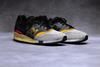
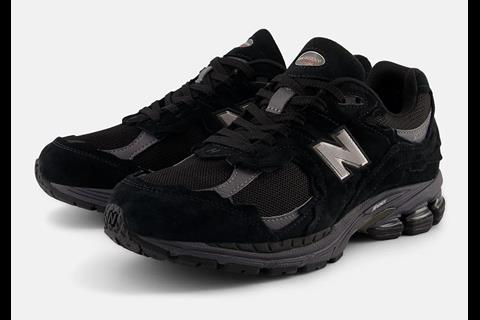
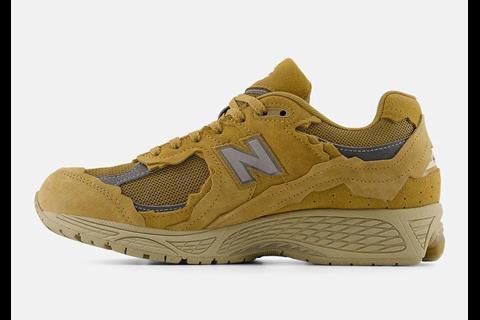
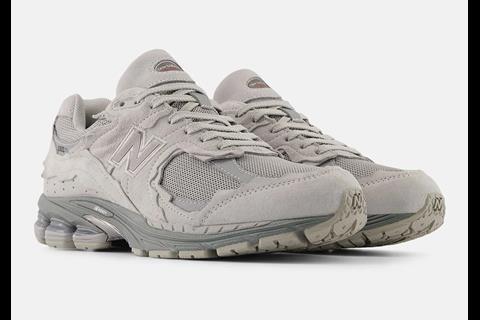
New Balance is preparing an update to its 2002R lineup with a Gore-Tex Protection Pack slated for spring 2026 that pairs the model’s signature styling with weatherproof functionality. The pack comprises three monochromatic colourways – grey, black and wheat – that retain the jagged overlay construction and leather bases that defined the 2002R’s recent resurgence.
The grey iteration leans into New Balance’s heritage palette, favouring texture and tonal layering over contrast. Pale blue, dark grey and tan touches are integrated subtly into the sole unit. The black version adopts a triple black approach, presenting a fully dark, utility-minded finish that complements the Gore-Tex membrane. The wheat pair brings a warmer, seasonally minded tone intended to sit easily alongside autumn and winter wardrobes. Each silhouette preserves the Protection Pack’s multi-panel, layered aesthetic while adding the weather resistance of Gore-Tex, shifting the 2002R further towards a functional lifestyle shoe capable of handling variable conditions.
Retail availability for the spring 2026 pack is expected through New Balance’s official outlets and select retailers, though exact release dates have not been confirmed.
Heritage meets function in archival footwear strategy
Updating archival footwear is a common product strategy among sports shoe brands – less about re-releasing old designs, more a calculated blend of nostalgia and contemporary function. The pack signals continuity in New Balance’s recent strategy of iterating the 2002R through both nostalgic and practical updates.
The primary driver is creating a recognisable archival design that also offers everyday usability. Brands leverage the established aesthetic of an old silhouette (the nostalgic appeal) and pair it with modern, practical technologies (the functional update). In this case, the Gore-Tex membrane adds weatherproof utility, shifting the 2002R further towards a functional lifestyle shoe.
The updates are typically implemented without altering the model’s recognised profile. The brand must preserve the visual identity – such as the 2002R’s jagged overlay construction or Protection Pack styling – because those specific aesthetic signals drove the model’s resurgence in the first place. The functional element enhances, but does not overwrite, the form.
By updating the models, brands reposition them as versatile pieces in contemporary wardrobes. These updates ensure the shoe meets modern demands for durability, comfort or weather resistance, allowing it to compete with newer designs whilst offering a deeper heritage story.
Updating an old model allows for a continuous flow of sub-drops that maintain consumer interest over time. By adjusting colourways – like the grey, black and wheat tonal treatments – or materials, the brand can create multiple distinct releases under one successful model banner, ensuring market continuity.
Brands updating heritage models
The trend of updating or reissuing successful archival models is central to the strategy of many legacy sportswear companies. Several brands are recognised for consistently updating their old model series, particularly in the lifestyle and “retro” categories. Nike is famous for its vast archive and frequent retro releases. The brand constantly updates and iterates classics like the Air Force 1, Air Max line and Dunk.
Adidas has successfully revitalised its heritage through models like the Superstar and Samba. The brand also updates classic shells with new cushioning technology, such as Boost. New Balance has made updating models like the 2002R, 550 and 990 series a cornerstone of its current market success. The brand focuses heavily on heritage colourways and premium materials. ASICS and Puma are also frequent participants in the retro trend. Both brands often re-release and update popular models from their running and basketball archives, such as the ASICS GEL series