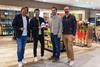
Like many others, the Swiss market for sports has had trouble sustaining growth since the pandemic. SGI Europe has gotten hold of Peter Bruggmann, CEO of ASMAS, the Swiss sports retail association, to obtain details on how the Swiss market developed in full-year 2024.
SGIE: How does the Swiss sports market compare with the rest of Europe?
Peter Bruggmann: Switzerland has a dynamic and diverse sports market. Because of its geographical location, the high level of sports affinity among the population and the strong winter sports culture, sport plays a particularly important economic and social role in Switzerland.
A key feature of the Swiss market is the high proportion of private, independent sports shops. Many of these shops are strongly rooted in their local communities, are family-run and have been established in their regions for decades. They are characterised by personal advice, expertise and strong customer loyalty.
In addition to the independent providers, there are also larger chains like Decathlon and Ochsner Sport as well as buying groups and cooperations such as Sport 2000 and Intersport, which enable small and medium-sized businesses to buy together, run marketing campaigns and operate digitally.

Which are the most prominent chains, and how are they doing?
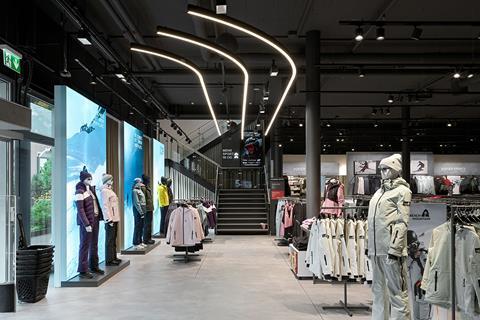
After the closure of SportX’s business, Ochsner-Sport took over 24 SportX stores in Switzerland and opened them under the Ochsner-Sport brand in March 2025. This makes Ochsner-Sport the largest provider in Switzerland, with 100 stores.
Decathlon operates 40 stores in Switzerland and continues to expand. This makes Decathlon the clear number two, after Ochsner-Sport, in the Swiss market.
The Swiss market 2024 in detail
How did the Swiss sports market do in full-year 2024?
For FY 2024 the Swiss sports market had a turnover of 2 billion CH (€2.1bn) excluding bicycles. This was a decrease of 1.3 percent compared with FY23, when the market had a turnover of 2.204 billion. The bicycle market, on the other hand, increased by 5.7 percent in FY24 compared with the previous year.
By segment, shoes were the least affected, with a drop in sales of only 0.4 percent. Clothing dropped 1.1 percent, and hardware declined the most, with 2.4 percent.
The market shares of the different sporting goods categories in the Swiss market are as follows: snow 14 percent, running 6 percent, outdoor/camping 24 percent, multisport 42 percent and leisure 14 percent.
Was there anything special that affected the decrease of the sport market in 2024?
The market situation was difficult, with the liquidation sale in the SportX stores. This sale supplied the market with extremely cheap goods, which affected the numbers of 2024.
To look at 2024 more in detail, which were the winning and loosing categories for sports retailers in Switzerland?
I would say that the ski-boot and boot-fitting business did very well. Also, the rental business developed positively. More alpine skis, cross-country skis and touring equipment were rented, and also slightly more snowboards.
Ski clothing, accessories, thermal underwear and ski jackets sold significantly less well. Generally speaking, product groups that are advice- or service-oriented are preferred for in-store shopping.
How did e-commerce do in comparison with in-store sales?
Looking at total sales in 2024, we saw that e-com accounted for 27 percent of all sales, which is an increase of 1.2 percent from 2023, while physical stores accounted for 73 percent of sales, which is a decline of 2.1 percent from 2023.
How important is it to be a multichannel retailer in Switzerland right now?
Multichannel is of central importance in today’s Swiss sports market – especially for the specialist trade, which has to assert itself in the tension between personal advice, regionality and digital competition. For many smaller and medium-sized businesses, this is a challenge. They do not have the personnel or financial resources to build and maintain online shops.
Tourism is key
Tourism is an important income resource well connected to the Swiss sports market, especially in the winter season. Just how important is it?
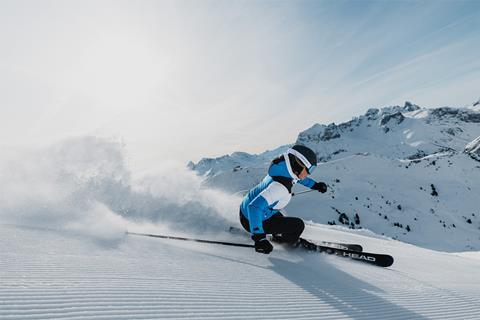
The tourism industry and, in particular, alpine winter sports are key revenue drivers for the Swiss sports equipment industry, especially in the retail sector in mountain regions. This dependency shapes not only the product range, but also the economic stability of many specialty stores.
How dependent is the Swiss market on a good ski season?
A good ski season is essential for many retailers to be economically successful. At the same time, it is becoming clear that weather-independent offers, year-round strategies and stronger integration of digital channels are important means of reducing dependence and strengthening future prospects.
Future of the Swiss sports market
What is the outlook of the Swiss sports market for 2025?
I expect further consolidation and a stable market. It’s important that the sports market create trends, like the current one for Boa ski boots. Renting sports equipment is also becoming increasingly important.
The Swiss sports market
The Swiss sports market, excluding bicycles, had a turnover of CH 2 billion (€2.1bn) in 2024.
The ten biggest multi-sport retailers on the Swiss market are Ochsner Sport (100 stores and number one), Decathlon (40 stores), Transa, Bächli, Intersport Group and Sport 2000 group.
ASMAS is Switzerland’s association for sports retail, representing its members in matters of politics, the economy and society. It also promotes professional qualifications in sports retail, supports training and further education opportunities, and collaborates with educational institutions.