Sporting Goods Intelligence is pleased to welcome Sébastien Willefert to its network of editors and contributors. His column, The Playbook, launches today — bringing an operator’s perspective to the industry’s most pressing strategic questions, with a focus on turning complex market dynamics into actionable intelligence. A dedicated Playbook newsletter is forthcoming.

When the Munich edition was canceled at the last minute in 2025, Europe’s outdoor industry held its breath. After 25 editions in Friedrichshafen and a difficult reinvention in Munich, the OutDoor seemed out of road. Then came Riva del Garda, with the European Outdoor Week, raising a real question: was this a true reset and the first chapter of a new legacy, or simply a welcome one-off reunion?

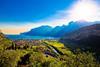
More than 350 brands showed up on the shores of Lake Garda. The show floor felt alive, and the post-show celebrations lit up online. But what actually happened in Riva, and how much of it was momentum versus illusion?

The new 2026 format, hosted in Riva del Garda – home to Italy’s long-running national trade show – drew high hopes and plenty of curiosity. European OutDoor Week, co-organized by MagNet SRL and the European Outdoor Group, stretched across a full slate of events, from the OutDoor Impact Summit and Activation Day to the Outdoor Awards, Media Day and the trade show as the week’s closing act.

The good points

Strong brand presence, from outdoor to trail running. Over 350 brands covered all segments of the industry, reuniting outdoor and running under one roof, with a focus on mountain sports and away from the pull of urban outdoor. Asolo held a central position on the show floor, arriving with a renewed and lively identity that drew real attention.

Encouraging international traffic: the majority of exhibitors spoke Italian, but the DACH region was well represented, alongside visitors from France, Spain and beyond – promising for a first edition in a fairly remote location.

A vibe that resonated with the Outdoor’s DNA: closeness, exchange and emotion. The ceilings were low, the halls busy, the aisles irregular and narrow – sometimes too narrow – with generous outdoor spaces framing the surrounding mountains. The layout encouraged natural interaction away from the coldness of a conventional exhibition center, and made intuitive sense for outdoor-minded people.

A grounded brand presence, without excess and in line with outdoor values. After years of exuberance, cost management and rationalization have brought discipline back to stand design: clean, easy-to-mount structures that no longer represent a financial burden for mid-sized brands. What mattered was product clarity and human connection. The busiest brands even discovered the meeting rooms available upstairs.

A social energy that extended well beyond the show floor. On Sunday evening, Rab hosted a party where hundreds gathered – the kind of high-energy moment that reminds the industry why face-to-face matters. Tim Parkin from Rab was philosophical in the aftermath: he is already weighing up for next year whether to order more beers or simply keep the party shorter. On Monday night, Polartec hosted its traditional party, sustaining the momentum through to the close of the week.

The points to be cautious about

A sense of relief for the industry after the turbulence of the Covid years. The industry is not dead – it has navigated peaks driven by consumer demand and some frightening moments of stock mismanagement, not yet fully resolved. That relief is understandable, but it risks tipping into over-optimism while real pressures remain.

On innovation, the picture was sobering. Charles Ross noted a relative lack of true innovation across the fair floor – a reminder that the industry’s ability to surprise and excite with newness cannot be taken for granted.

A disconnection between a corner of paradise in Trentino, where outdoor enthusiasts can truly thrive, and the harsh realities of today’s fragmented outdoor retail landscape. Physical retail doesn’t grow anymore and profitability is a complex equation, between product offering, differentiation, margin, service and stock management.

The “Friedrichshafen vibe” was regularly mentioned: the laid-back atmosphere of the little town by Lake Constance, where thousands of outdoor enthusiasts would once sleep in the local campsite. Nostalgia is comforting, but it is not a strategy.

So has the industry moved forward in 20 years?

The question deserves a frank answer.

On sustainability, the signal is quietly encouraging: the marketing noise has faded, replaced by genuine implementation. As Cira Riedel from Greenroom Voice observed, brands are now “busy with implementing” their sustainability strategies, embedding regulatory compliance and responsible practice into core operations, rather than using it as a communications headline. That is maturity, even if it generates fewer dramatic press releases.

On innovation, the picture is more complex. Lightweight remains the prevailing currency; stock discipline now outranks ambition. The industry is not standing still, but it is moving carefully.

In a pendulum swinging between innovation and sustainability, outdoor brands can appear static. But the real shift lies elsewhere.

What has genuinely shifted is storytelling - now a common denominator among the strongest brands, both online and in-store. Products still matter, but the brands winning today are those that build and inspire communities: from ambassadors and hardcore users to everyday participants. The ability to infuse meaning into a community – through product performance, sustainability credentials or design – is what differentiates a brand now.

Ultimately, the outdoor industry sells aspiration, and that’s why Riva makes sense.

Beyond products, people need to be inspired – and inspiration requires emotion, not specification alone. Riva delivered that. But the next edition will need to go further: showing how brands can create genuine value with retailers and build strong ecosystems capable of attracting consumers at a time when purchasing power is constrained, sustainability legislation is looming, the largest retail players are consolidating and pure D2C brands are accelerating – steadily eroding the foundation of outdoor retailers who can no longer rely on relationships alone.

Personally, I will be back in Riva next May for the second edition. Early signals for 2027 suggest the organizers are keeping the right pulse – understanding that the industry needs to work together not merely for the pleasure of gathering, but to build something bigger and better. Whether Riva becomes the opening chapter of a new legacy will depend, in the end, on what the industry chooses to do next.


About the contributor

Sébastien Willefert is a marketing, commercial and brand strategist with more than two decades of experience across the global sporting goods, outdoor and lifestyle industries. He has held senior roles at Berghaus, Lafuma and Mavic, and has since worked with start-ups and scale-ups across sport, fashion and mobility as a consultant and interim executive. He holds an Executive MBA from IMD Business School in Lausanne and has lectured in international business management at SAWI Lausanne and HEG Geneva. He is based in Swiss Romande.