Intersport International Corporation (IIC) achieved retail sales totaling €13.7 billion in 2023. This is exactly the same record amount that the association achieved in 2022. At the end of the calendar year, the Intersport Group boasted a network of 5,381 stores worldwide, an increase of 72 stores compared to the previous year, solidifying its presence in 42 countries around the globe. For Steve Evers, CEO of IIC, this is a pleasing result, given that the past year presented a number of challenges. We spoke to him about the result and the outlook for the future.

Mr. Evers, Intersport Germany, and perhaps other countries, too, have already set new records for 22/23. How are things looking internationally?
“First of all, we are very pleased that we were able to achieve the same record sales in 2023 as in 2022. In both financial years, we achieved record sales of 13.7 billion euros. It would have been even higher in 23, but the exchange rate of the Canadian dollar, which is very important for the overall volume of our group, was under strong pressure. In local currency, the result would have been even better.
Secondly, we are very proud of the fact that we had a network of 5,381 stores worldwide in the calendar year 2023, an increase of 72 stores compared to 2022. This is due to the acquisition of GoSport in France, but also to the fact that many NOs have opened stores. And we expect this figure to continue to rise this year.”
In terms of turnover, that means stagnation. What other reasons can you name - apart from currency problems?
“Internally, we are very satisfied with the result because we are still able to grow despite the difficult climate in which we operate. The year 2023 has started with a very strong start, which I think is how many retailers in the sporting goods sector have perceived it. So, the first quarter was quite good and formed the basis for us to assume that the rest of the year would be extremely positive. But after the first quarter, the development slowed down. And we believe that the latter was caused by a combination of factors. Firstly, the generally difficult economic climate and, moreover, the geopolitical climate. We have ongoing supply chain challenges that have been an issue for years now, first caused by Covid and then by many things like the Suez Canal, the Houthis attacking the ships, etc.”
What was the impact of the high stock levels last year?
“Especially in the first half of the year, many partners still had very high stock levels. Combined with rising operating costs, this has impacted the profitability of many retailers and members of our group. But at the same time, it’s good to know that the majority of our members are quite strong financially, so there have been no major financial problems or bankruptcies. So we are quite strong, and that has proven to be the case.”
How have the regions developed over the past year?
“We are pleased to report that we have maintained and even expanded our strong position in many of the markets in which we operate. We conducted a global survey internally, which showed that we were able to achieve exponential growth despite the difficult conditions in some sports markets. And there are some national organizations that stood out and significantly outperformed others.
Regions with exceptional growth were, for example, countries such as France, Ireland and Greece, which achieved robust double-digit growth. Just like the entire Central and Eastern European region. It is also worth noting that declines were recorded in Canada and the Far East, among others.”
Which categories were ahead?
“If you take a closer look at the categories in which we recorded growth, it was primarily footwear and hard goods, while sales in the apparel sector were under pressure. Many - not just our retailers - had to contend with enormous pressure on gross margins due to high stock levels.”
Online retail stagnated for the first time in years in some countries in 2023. How have the various Intersport sales channels developed?
“We have noticed that consumers seem to be predominantly returning to brick-and-mortar retail channels. Last year, we were quite surprised by the number of visitors to our physical stores. This does not mean that e-commerce is becoming less important; we see that it is gaining importance day by day and is still growing. But it has also been shown that the sporting goods consumer likes to shop in physical stores. This means that the omnichannel offer is becoming more and more mature.”
How do you know that retail is recovering?
“What we are seeing is that growth in the brick-and-mortar segment is more relevant than in previous years when e-commerce or online sales growth figures were much higher. So relatively speaking, the brick-and-mortar channel is quite strong at the moment, and when we look at omnichannel, we’re talking less and less about online versus offline. It’s all omnichannel. It’s clear that the majority of consumers look online first and then go into stores.
What we are also seeing is a huge growth in the ‘ship from store’ concept, which means we are increasingly using physical stores as a distribution center for local areas. We are using our advantage of our many physical stores even better than in the past.”
You launched your “Grow Together Faster” transformation strategy last year. How is the implementation going?
“There’s a big story behind every word. Growth: Yes, we want to grow with a capital G. But we also believe that it is more important to achieve healthy growth. And this healthy growth is achieved, among other things, through healthy and good partnerships. Not only with the NOs and the IIC as service providers and guardians of the temple of the Intersport brand but of course, also with the industry partners. And with regard to the latter, we have launched an internal project that aims to ensure that we speak with “one voice” in the future. We have agreed within the group to appoint a team made up of a number of IIC specialists and experienced CEOs from various national organizations who will jointly conduct strategic discussions and negotiations with the industry on the basis of a mandate from all national organizations. This is very convenient for the industry because they are talking to a partner who represents the group. In this sense, we can agree more efficiently and effectively with these strategic brand partners on how we want to proceed. It’s a very efficient process and a high priority.

A second important pillar of our strategy is that we place great emphasis on further developing and strengthening our own brands. For many retail brands, it is very important to generate a certain percentage of total sales with private labels in order to improve profitability. The aim here is to rationalize the product ranges and standardize them within the group wherever possible in order to achieve higher volumes and have a better basis for negotiation in sourcing. This is a challenge in this heterogeneous world with all the different consumer preferences and differences in business models. This is Grow Together, with a capital T. And becoming faster is one result of this.
This new strategy was developed together with all NOs and is now further coordinated by Intersport International Corporation. It is really positive that it has been agreed and adopted by all national organizations. So you can imagine that this is a small step for mankind but a quantum leap for our group because we are now working so closely together. We are on the right track.”
How has the industry reacted to this new strategy so far?
“We are satisfied with the support we are receiving from the industry, which we believe has improved post-COVID, partly due to the fact that many manufacturers are re-emphasizing the importance of their wholesale business. Because of our size and volume, we are obviously more important to them again, and they are expressing that more than they have in the past.
So, I think we can be quite proud of the maturity we have achieved in recent years despite the difficult climate.”
What plans do you have for 2024?
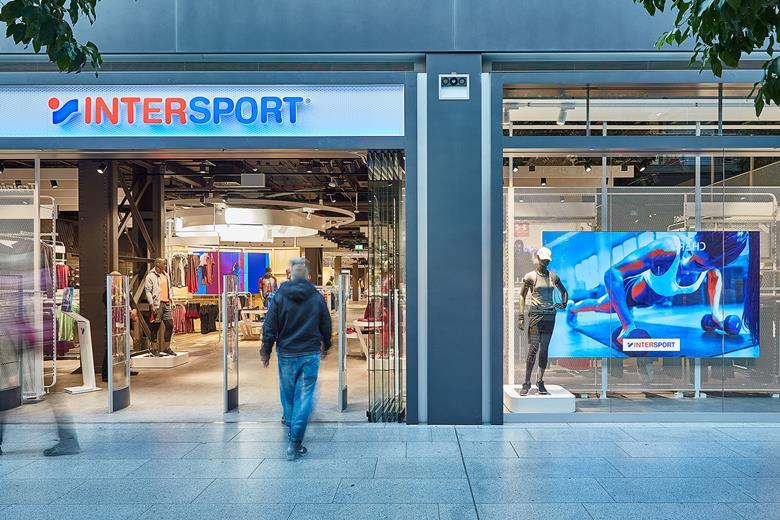
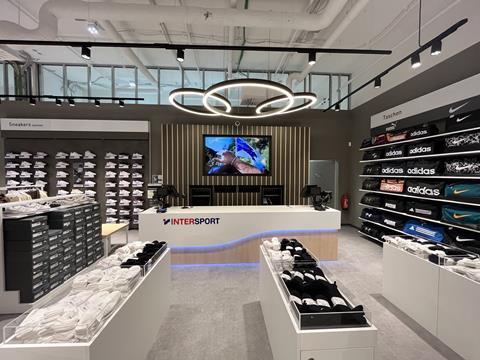
“For this year, we are focusing more than ever on omnichannel. In terms of retail, we have decided to move forward on the basis of five different store concepts. For example, we have introduced the highly successful big box business model and store concept that we have in France. This has enabled us to more than double our share in France over the last 10-12 years. This store concept has proven to be very successful and is highly valued by French consumers as a high-service, multi-specialist and multi-brand store.
In contrast, the industry has often criticized the fact that the large big box stores are positioned much lower, with lower price points and a higher proportion of private labels than our higher-end stores in other countries. But we also believe that with market consolidation and the growth of some large competitors such as Decathlon, we have an obligation to give all national stores the opportunity to decide for themselves whether they want to introduce this big box model in their market. In the coming years, you will see these large stores with 4,000 or 5,000 square meters in different areas in Europe more than ever.”
There will be some major sporting events in 2024. What do you expect for Intersport?
“We are expecting a dynamic year, which is always very strong in terms of sales with the European Football Championships in our group. We are also eagerly awaiting the Olympic Games in Paris. We are planning to open a number of flagship stores in the center of Paris to mark the occasion. We will be opening very high-quality stores at the two main locations, La République and Les Halles. These are former GoSport stores that are currently being completely converted to an Intersport label. So we’re pretty optimistic about the future.”
What forecast can you make for 2024?
“I am quite optimistic about the future growth of the Intersport Group, although we are still facing some pressure on sales at the beginning of this year, mainly due to the unusually warm weather conditions in Central and Northern Europe. In Sweden, for example, conditions are quite good at the moment, as the CEO of our Swedish organization has just told me. This means that we are currently seeing good growth in the Nordic countries, but we are seeing some pressure in the rest of Europe, particularly in the winter sports countries. Furthermore, 2024 is a very eventful year with the UEFA Cup and the Olympic Games, of which I am sure we will benefit.”