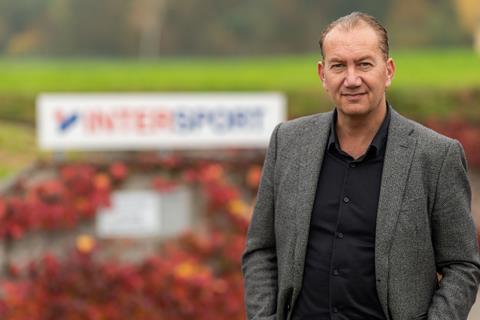
Last year was a tough one, and the year ahead still holds many challenges for the sports industry. Industry and retail alike are struggling with inflation, increased energy costs, consumer restraint, loss of margins and full warehouses. Yet Intersport International announced record sales of 13.7 billion euros in 2022. How does that fit together? We spoke to Steve Evers, CEO of Intersport International Corporation (IIC), about last year’s impressive figures, the ongoing challenges and what the Intersport Association can do to counter these difficult times.
Intersport sales figures
Intersport International has just published record figures for 2022 and is talking about the highest sales in the company’s history. Can you break down the figure of 13.7 billion euros sales for us by region, category, etc.?
Steve Evers: We’re mostly talking about retail sales in the countries where we have cooperative business models, which are mainly the Netherlands, Germany, France and Austria, and where we have some hybrid national retail models, where we have franchises and own stores. Germany, France and Austria were the biggest contributors to the increase in total sales. So, it’s a big cocktail, but it’s an important performance indicator for us.
And, of course, this indicator consists of the sales of Intersport stores and other members operating under their own name. The positive thing here is, we are seeing double-digit growth in our Intersport-labeled stores. It is one of our goals for the future to grow our branded businesses in all the markets in which we operate.
Which regions have lost growth?
It’s interesting to note that the Nordic regions grew less than the year before. 2021 was a really good year for the Nordic countries – Sweden, Norway, Finland, Denmark – because they were less affected by the covid restrictions than other countries. So, the growth there was a little bit lower in 2022 than in other countries that had more restrictions in 2021.
But the relevant and big growth came from the central regions, stretching from Ireland to Ukraine and covering 18 markets. There we had growth of more than 20 percent. In the southern region, Italy and France led the way, and Greece also had good results – there we had double-digit growth. So, we are very pleased with that.
Intersport growths by region and category
Which categories contributed particularly to growth, and which lost out?
All categories performed well. The only category that was behind the others in growth was Running, because people had already invested massively in running apparel during the lockdowns and a certain market saturation had been reached. All the other categories – whether it was Training or Soccer – saw big double-digit growth last year.
Which categories grew the most?
Soccer was actually the biggest growth category last year. Training also represented a big part of the growth. We had a great start to the winter season in early November, although races had to be postponed in October due to the lack of snow. In November and December, it started snowing and Winter sales were saved. With over 650 stores and rental locations in the mountains, this is an important factor and led to great sales in the Winter category.
Overall, Apparel achieved the most growth, Footwear was slightly below average but still achieved good growth, and Hard Goods was in between.
Intersport Quick Facts:
- Retail Sales 2022: 13.7 billion euro (+13.4%)
- Number of stores (end 2022): 5,300 stores
- Global presence: 42 countries
Last year had some new challenges to offer. First and foremost was the issue of overstock and buying restraint. What impact did that have on your members’ pricing policies and inventory levels, for example?
What is interesting is the average sales price – which is an important performance indicator for us – was pretty constant in 2022. Only in Footwear was it a bit lower; probably due to all the promotional activity that dominated the market in the last quarter of 2022 because of oversupply.
It’s an interesting phenomenon that we’re gradually turning from a seller’s market into a buyer’s market because of the problems in the supply chain (where we had to deal with inventory shortages for a long time because of the ships stuck in the Shanghai area). When the goods finally arrived, we had an oversupply of goods, especially in Europe. And obviously we still have a lot of capital tied up in inventory today.
This situation is a concern because the resulting markdowns will keep us busy for quite a while and put pressure on margins.
“Cutthroat competition on the sporting goods retail market”
So, you don’t yet see a recovery in 2023?
We are currently in a cutthroat competition with some of the giants of sporting goods retail in all markets, and if there is one thing I am concerned about, it is this whole cocktail of excess inventory, margin pressure, and rising operating costs. Of course, any retailer – and this doesn’t just apply to sporting goods retailers – can try to compensate for this by raising prices, but compensating for everything is impossible, which automatically means that non-food retail results and profitability will remain under pressure for quite a while.
How has the situation affected orders?
The overstock situation has had an impact on the order book for the FW 2023 season. And obviously, this has a psychological effect on buyers. When you’re sitting on a pile of inventory – a lot of capital investment – and you have to place an order for next year in August/September, it’s human nature that you try to limit [what you order], which brings another risk: The risk of being short on inventory in the last quarter.
So, it’s a difficult moment. We are trying to put pressure on the industry, our brand partners, to have sufficient inventory in their distribution centers towards the end of the year so that our retailers can buy directly from their inventory. We’re asking the industry to take some additional risks here at a time when most of them have also had a very tough year, especially the publicly traded companies.
“Intersport as one of the most important retail partners”
These are certainly interesting conversations. How is the industry reacting? Are they cooperating?
Yes, they are absolutely cooperating because they want to support us. I think it’s good that everyone is showing and reiterating that they see Intersport as one of their most important partners.
Another interesting development is that, after the tensions in recent years between the bigger brands and us in terms of their DtoC strategies, everybody is starting to realize that the wholesale channel, the wholesale customers, are more important and will determine future successes more than was thought before the pandemic. I think that’s one of the most important changes that’s happening now.
Which leads us to Adidas. Adidas is just launching its new sportswear line. Will Intersport get this line?
Yes, fortunately. We were one of the customers that pushed Adidas to develop an alternative category for Originals, which we couldn’t get in many places because of our positioning and the restrictive distribution policy of Originals. They developed this sportswear category to fill that gap. I would say we are one of the first to test this new category.
Will prices continue to rise this year?
I don’t see any way to prevent that. The price weapon is one of the few we have to offset rising costs. In fact, even though we’ve already seen unprecedented inflation numbers in 2022, which in the Netherlands, for example, was 17.2 percent from September to October and 10 percent for the whole year, I think consumer prices are going to rise even faster now.
We have to somehow get a handle on this economic pincer – this combination of factors with margins under pressure, increasing sales promotions, excess inventories. Prices will go up, and at the same time, sales promotions will increase. I don’t know where that’s going to end up yet.
What I do know is that this whole mix is putting constant pressure on the bottom line. If you look at what’s happening out there, those are the ingredients for a perfect storm.
What advice do you have for your members? What service can you offer to improve the situation?
Our advice is to hold back on price cuts and promotions. It’s very difficult, of course, not only because our retailers have to look at what the competition is doing.
We are trying to negotiate the best terms with the industry, but they are also under pressure; their costs are also going up and they are trying to compensate for that. So, we have some pretty tough negotiations.
I think one of the ways we can create value for everybody who depends on us is to be excellent in our core mission, for example in private labels. There is still a good profit margin to be booked here, which is much better than with the other brands.
Are retailers focusing more on private labels now?
Yes, we see a slight growth because of the higher margins. But we don’t think it’s enough yet. We will focus even more on better collections and better marketing, all of which are high on our list of priorities.
Let’s move on to another burning issue: Sustainability. What are you doing to get better at this?
First of all, it’s one of our strategic priorities. A lot of attention is being paid to the issue in our company. We’re in the middle of internal discussions that are mainly about how we can have the most impact in our sphere of influence, and that ranges from CSR to carbon footprint, the use of plastics, the factories we work with, to compliance, because this is where we can make a big difference.
We are very aware of the fact that we can improve enormously, especially in the area of our own brands, and we are doing everything we can to find opportunities that will have a positive impact. In the Far East, for example, 1.5 to 2 years ago we had a central location in Shenzhen from which we managed all Far East business. We have split it up into different locations so that we have people close to the factories, to improve our quality control and have a better view of production. We follow the supply chain and try to have a positive impact at every step. We have a team here in Bern that is working on this full time.
The issue of compliance is getting a lot of attention in our company right now. I am convinced that a lot of what is voluntary today will turn into laws and regulations in the next few years. Everyone has to be prepared for this.
What other measures have you taken with your products?
In our own brands, we introduced the Green Series two years ago, which means that every product we sell under this label should have a concrete and tangible impact, for example reducing consumption of water or other resources such as fabrics, etc. I think this is a good answer to the question that many consumers have.
Intersport International tries to establish rental models
Rental models have long been established in the winter hardware sector. What about the rental of apparel?

That’s definitely an issue. We have a team here that is looking for those types of opportunities, like rentals, take-back-programs, recycling. There’s a great Swiss location in Grindelwald at Jungfrauenjoch, where we have about a six-figure number of Asian tourists every year. They come without ever having done any ski touring and, of course, without bringing any equipment. What we do here very successfully is to offer them day packages in rental, including clothing. That’s appreciated a lot by those customers.
Believe me, everything you can think of, we’re kind of working on and trying to do somewhere in the world. One of the tasks I see for Intersport International is to identify the best practices and try to spread them.
What developments do you see for 2023? What economic outlook would you venture?
We believe that Training will be one of the winning categories and that even more people will engage here. We also believe that Running will come back full force. In the other categories, we’re betting on a stable trend for the entire year, although we’re forecasting quite conservatively because of all the factors we just discussed – all the ingredients for a perfect storm.
It would be easy to believe that a recession is imminent because of all of these factors. Six months ago, we would have expected that we would be in the middle of a global recession right now, but let’s face it, we’re not. Because at the same time, our unemployment rates are historically low right now. The majority of people are working, earning money and still willing to spend money. And that’s a very interesting phenomenon.
What’s your strategy? How are you responding to the situation as an umbrella organization?
The main task of Intersport International is to create maximum value for all national operations and retailers that rely on our services. If they are successful and able to generate enough funds to invest in our omnichannel strategy, then we will also be successful. Not the other way around. I think this is key for member organizations.
The new board and the new chair, Corinne Gensollen, the former managing director of Intersport France, are very actively challenging our strategy at the moment. I don’t think the result will be a completely new strategy, because the core of our strategy is already based on what we internally call smart verticalization. We have very many double tasks in the group. If we centralize certain tasks either in Bern or in the national operations where they are really good, we could make better use of all our potential and know-how. So, we are thinking about competence centers and discussing this intensively.
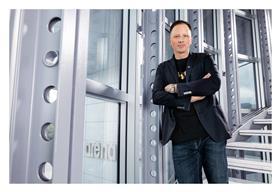
We are under pressure, of course, like everyone else, because we see that there is a lot of consolidation going on; not just in sporting goods, but everywhere. But our leverage is that we are seen as important partners by the big brands, and as you know, Nike has divested 85% of its wholesale accounts in Europe in recent years. Doing more with less is the general motto. On the other hand, we also want to take our destiny into our own hands and shape it. We cannot rely too much on third parties.
Because there’s something else we’ve noticed: There is one thing that really sets us apart from all our competitors, and that’s our scale. There is no one else in sporting goods retail that has so many physical locations, especially in Europe. Of our 5,300 locations worldwide, almost 3,500 are in Europe. Most of these locations – and this is another differentiator – are hyperlocal, meaning we are in city centers, close to athletes, with stores that have long ties to the place (sometimes second or third generation), run by specialists, experts, and authorities.
For us, one of the most important challenges is to find ways to make even better use of this scale. This is something that is very difficult to copy. It has taken us 55 years, since 1968, to get to the level we are now.