At the 2026 FIFA World Cup, electric fuchsia dominates every pitch. Nike, adidas, PUMA, New Balance and Skechers each arrived independently at the same colorway. Pink outperforms all colors against dark turf on broadcast, and no national team wears it.
The most visually striking outcome of the 2026 FIFA World Cup so far is not tactical or national. It is chromatic: five competing brands independently converged on the same shoe color for their partner players. From Vancouver to Guadalajara, the boots of Kylian Mbappé, Jude Bellingham, Harry Kane and dozens of others stand out on TV and mobile screens, yet are indistinguishable at a glance. Not because the brands colluded, but because they consulted the same data.
A convergence nobody planned but everyone executed
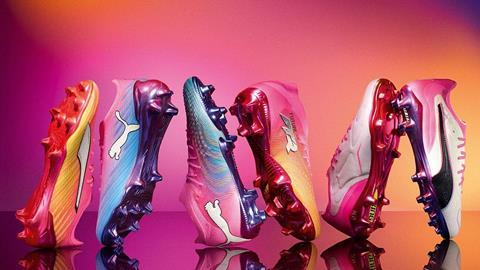
Among players appearing in the tournament so far, the dominant footwear trend has been a succession of vibrant shades of pink, nearly ubiquitous across collections from adidas, Nike, PUMA and New Balance. The visual impact was immediate. In the opening match between Mexico and South Africa, almost every player on the pitch – including those on the bench – was wearing fluorescent pink or electric fuchsia boots.
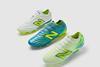
As the tournament progressed, the same shades appeared across squads from Brazil, France, Canada, South Korea, England, Sweden, Germany, Morocco, Saudi Arabia, Uruguay, Iran and Cape Verde. Four rival brands – Nike (Breakout Pack), adidas (Road to Glory), PUMA (Showtime) and New Balance (Pure Ambition) – all arrived at the same color independently. A fifth, Skechers, arrived with its own Sunset Pack. Different names, different technologies, essentially the same shade.
Consumer behavior professor Bianca Dramali at ESPM business school told Valor International (Globo): “Many brands tried to differentiate themselves, but everyone who tried to be different ended up looking the same. Fans watching the matches can no longer tell which brand a player is wearing because they are all the same color.
That is the central paradox of the 2026 World Cup’s defining visual story. Five brands made the same high-visibility play. The result was collective camouflage.
Visualizza questo post su Instagram
Three forces pointed every brand in the same direction
The first is optics. Pink contrasts sharply against the green of the pitch and holds up whether you are watching on television, in the stadium or scrolling on a phone. It reads clearly in slow-motion clips and under stadium lights. Nike’s Director of Global Footwear, Odinga Nimako, told The Athletic that the brand’s internal testing found pink outperformed every other color on the pitch. “When you wear a color like pink, which is so loud and so bright, it is like… you need to be really good to wear these colors as well,” Nimako said, adding that “there’s been a level of acceptance with pink that makes it not too niche for people.”
Visualizza questo post su Instagram
New Balance’s Football Product Director, Rob Sheldon, reached a similar conclusion: the brand’s research linked vibrant colorways to psychological triggers of energy and confidence on the pitch.
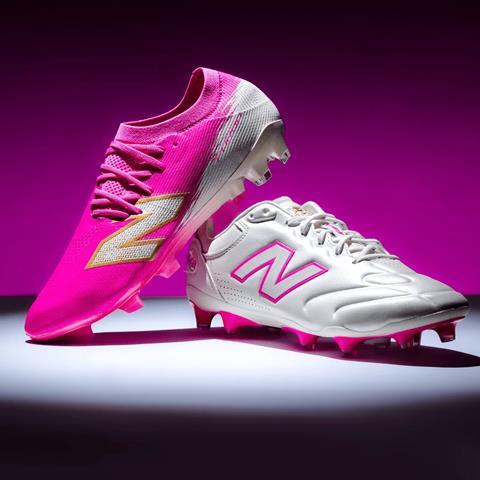
Skechers approached the brief from a different angle: its Sunset Pack draws on the identity of southern California rather than a performance rationale, using “warm shades of pink and purple melting into white, with subtle tinges of orange,” in its product communications.
Visualizza questo post su Instagram
The second force is trend forecasting. Major sportswear brands work with trend forecasting agencies on multi-year product cycles; the boot appearing at a June tournament was designed 18 to 24 months earlier. Agencies such as WGSN flagged bright pink, described as “electric fuchsia”, as a color set to define the summer of 2026, with a clear focus on younger audiences watching on their phones. Whether any brand’s brief traced directly to that specific forecast is not confirmed.
What is clear is that development timelines, forecasting inputs and color conclusions aligned independently across five competing suppliers.
The third factor is kit logic. No nation at the 2026 World Cup plays in a primarily pink kit, meaning the boots contrast sharply with every national jersey on the pitch. That removes one of the traditional constraints on boot color choice entirely.
Who is actually wearing what
Adoption at this 48-team tournament is unprecedented. The list below is not comprehensive: FIFA does not maintain centralized boot-tracking, players switch footwear mid-tournament, and custom or blacked-out models can obscure brand attribution. The inventory reflects in-person sightings, brand athlete rosters and social media posts as of June 22, 2026.
| Pink boots at the 2026 FIFA World Cup — confirmed sightings by brand | ||
| Group stage, as of June 22, 2026 | ||
| Brand / Pack | Player | National team |
| Nike – Breakout Pack | ||
| Kylian Mbappé | France | |
| Vinícius Júnior | Brazil | |
| Erling Haaland | Norway | |
| Folarin Balogun | USA | |
| Jamal Musiala | Germany | |
| Virgil van Dijk | Netherlands | |
| Cristiano Ronaldo | Portugal | |
| adidas – Road to Glory | ||
| Jude Bellingham | England | |
| Declan Rice | England | |
| Lamine Yamal | Spain | |
| Jonathan David | Canada | |
| Gio Reyna | USA | |
| Ousmane Dembélé | France | |
| Ismael Saibari | Morocco | |
| PUMA – Showtime | ||
| Neymar Jr. | Brazil | |
| Weston McKennie | USA | |
| Memphis Depay | Netherlands | |
| Cody Gakpo | Netherlands | |
| Kai Havertz | Germany | |
| Jordan Pickford | England | |
| New Balance – Pure Ambition | ||
| Timothy Weah | USA | |
| Eberechi Eze | England | |
| Endrick | Brazil | |
| Yasin Ayari | Sweden | |
| Skechers – Sunset | ||
| Harry Kane | England | |
| Anthony Elanga | Sweden | |
Source: Personal observations, brand athlete rosters and third-party football media (social media fan accounts, SoccerBible, Footy Headlines, NSS Sports, AP). This list is not comprehensive. No centralized boot-tracking exists at FIFA level; players may change footwear during the tournament and custom or blacked-out versions can obscure attribution. Confirmed as of June 22, 2026.
The exceptions are as revealing as the rule. Lionel Messi opted for custom light-blue boots aligned with Argentina’s kit. Cristiano Ronaldo took a different route: he began the tournament in Nike’s ubiquitous pink “Breakout” pack, before switching to a commemorative all-gold Mercurial marking his sixth World Cup appearance.
The retail signals
The pitch is sport’s most efficient billboard, and the sales data is already moving. Thiago Bessa, Soccer Commercial Manager at Netshoes, a leading Brazilian sporting goods ecommerce platform, told Valor that in the tournament’s first four days, sales of pink football cleats on the site rose 15 percent.
That early spike supports the commercial thesis behind years of product planning. adidas’s magenta (a color closely related to pink) and purple Germany away kit for Euro 2024 became the country’s best selling away shirt on record, nearly matching the traditional white home strip, where the typical split would be about four to one in favor of the home kit.
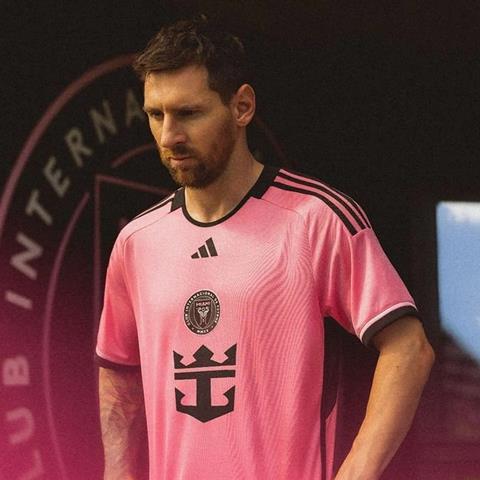
At Inter Miami, Messi’s No. 10 jersey, in the club’s signature pink, became the top selling jersey in MLSStore.com history within three days of its 2023 launch.
A color that took almost 120 years to conquer the sport
Pink’s commercial dominance in 2026 is the end point of a very long arc, started well before the very idea of trend forecasting agencies came into existence.
The Italian club Palermo FC adopted the color in 1907, when founding member Count Giuseppe Airoldi wrote that pink and black were “the colors of the sweet and the sad”: a fitting palette for a team whose results were, in his words, “as up and down as a Swiss clock.” The new kits had to be imported from England; no pink cotton flannel was available in Sicily. Palermo wore them for the first time in a friendly against the crew of Sir Thomas Lipton’s yacht, winning 2–1.
Pink had not reached top-level professional football footwear until November 2008, when Nike introduced the Mercurial Vapor IV“Rosa” colorway. The boots first gained global attention when Arsenal striker Nicklas Bendtner wore them as a substitute in a Champions League match against Dynamo Kyiv, scoring the late goal that sent the club into the knockout stages.
| Key milestones – pink in football, 1907–2026 | ||
| Year | Milestone | What happened |
| 1907 | Palermo FC adopts pink | Count Giuseppe Airoldi names the colors “the sweet and the sad.” The kit is imported from England – no pink cotton is available in Sicily. Pink enters football. |
| Nov 2008 | The first pink boot in football | Nicklas Bendtner wears the Nike Mercurial Vapor IV Rosa for Arsenal against Dynamo Kyiv in the Champions League. He scores. The Sun runs: “They pink it’s all over.” |
| Jun 2014 | PUMA Tricks at World Cup Brazil | PUMA releases mismatched pink and blue boots worn by Mario Balotelli at the World Cup in Brazil. The first pink statement boot on the sport’s biggest stage. |
| Aug 2014 | Real Madrid goes fuchsia | adidas releases a fully fuchsia away kit for Real Madrid – the first use of the color in the club’s 112-year history. It sells. |
| Jun 2024 | Germany’s magenta kit, Euro 2024 | adidas’s magenta-and-purple away kit becomes Germany’s best-selling away shirt in history, selling almost as much as the white home strip. |
| Jun 2026 | The World Cup takeover | Nike, adidas, PUMA, New Balance and Skechers independently converge on electric fuchsia at the 2026 FIFA World Cup. Five rival brands. One color. No coordinated plan. |
Source: SGI Europe, based on brand records, club archives, football media and personal memory. Timeline reflects major documented milestones; not exhaustive. While football’s roots are in the UK, to the best of our knowledge the first professional club was Palermo. We’re happy to hear from our UK friends if you have more historical context.
Early uses of pink in football footwear were rare and highly visible, typically associated with players willing to embrace unconventional design. That logic was still visible at the 2014 World Cup, when PUMA introduced its mismatched pink-and-blue “Tricks” boots — a deliberately provocative design worn by players including Mario Balotelli and intended to maximise on-pitch visibility. In the same summer, adidas pushed the color further into the mainstream by putting Real Madrid in a fully fuchsia away kit. The club’s official release described it as “a concept never seen before in the club’s 112-year history,” marking a clear break from tradition and signalling a shift in how bold color could be used at the highest level.
What the paradox tells brands about forecasting-led design
The 2026 World Cup boot story will be studied for a reason that has nothing to do with the color itself. It is the clearest illustration yet of what happens when an industry’s reliance on shared forecasting infrastructure overrides competitive instinct.
Every brand made a rational choice. Pink was forecast to dominate. Pink contrasts maximally with green turf. No national team wears it. The psychological research supported it. And yet the sum of five rational individual decisions was a pitch where nobody stood out – except the goalkeeper who refused to follow the brief.
For product directors, the lesson is this: when the same forecasting agencies brief the same development timelines across competing brands, color differentiation becomes a coordination problem disguised as a creative one. The 2026 World Cup did not expose a failure of design thinking. It exposed the limits of what shared trend data can actually deliver.
And yet collectively, it may be working. Pink boots rank among the most shared and commented topics on social media in the tournament’s opening weeks, with fans searching brand names and specific models they spotted on the pitch.
Time to open a pink corner in your store?
FIFA World Cup 2026: The Business of the Beautiful Game
How brands, retailers, and the sports economy compete on football’s biggest stage.
Explore Our Coverage →