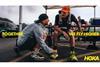
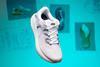
From Start-Up to Billion-Dollar Brand: Hoka’s unique design philosophy disrupted the running shoe market, propelling it from obscurity to a $2 billion valuation. Diverse Appeal Across Markets: Hoka expanded beyond athletics into lifestyle and medical sectors, endorsed by professionals and high-profile individuals. Commitment to Sustainability and Partnerships: Hoka’s strategic focus on sustainability and collaborations enhanced brand integrity and market presence.

Hoka, formerly known as Hoka One One, is undeniably one of the global success stories from the past decade in the world of sporting goods. Recognized for its chunky, maximalist soles, bright colors, and oversized logo, the brand has followed a similar course to On from Switzerland, bursting onto the scene from nowhere and stealing market share from longer-term big hitters within the sector. Founded initially to appeal to serious runners, today Hoka’s shoes still firmly retain a foothold in the sports world while booming in the lifestyle category—and also in the medical field, where podiatrists commonly endorse its products.
In 2022, Hoka was valued at $1 billion for the first time, while in May 2024, it was reportedly nearing the $2 billion mark. It has beaten Wall Street’s revenue and net income expectations every quarter except one over the past five years, and the past quarter marked the 32nd straight quarter in which its revenue rose by at least a double-digit percentage.
What’s been the secret to its success? Here’s our exclusive overview.
Hoka was founded by Jean-Luc Diard in 2009

Hoka was initially founded by Jean-Luc Diard in 2009. While working in his last year at Salomon, at a time when bigger was starting to mean better in the world of skis, mountain bikes, golf clubs, tennis clubs and more, he began to wonder whether the same concept could apply to the running world. Partnering with Nicolas Mermoud, the two began developing their prototypes together. Initial designs were shown at a trade show in 2009, where Mermoud struck a deal with Mark Plaatjes, a former world marathon champion and the co-founder of Boulder Running Company. He acquired 770 pairs after taking the shoes on a test run and becoming instantly endeared by their oversized soles. A sponsorship deal with ultra-runner Karl Meltzer was signed shortly after, with the now-legendary ultra-runner dropping La Sportiva in favor of the upstart brand.
These developments were all closely followed by Jim Van Dine, who at the time was Brand President at Deckers. Having helped to grow Reebok into a global powerhouse in the 80s and Keen to the accolade of once being the fastest growing brand in the shortest time to hit $100 million in yearly sales, Van Dine knew a good product when he saw one. He led the acquisition of Hoka, with Deckers purchasing the company for approximately $1.1 million in September 2012, adding it to its roster alongside Teva and UGG. At the time, Hoka had less than $3 million in sales.
Hoka: Maximal success with maximalist shoes
In an interview in 2014, Van Dine revealed how quickly the brand took off under Deckers: “We’ll at least triple our sales this year, with growth of somewhere between 300 and 400 percent,” he said, adding that he expected Hoka to become a “very significant brand” worth hundreds of millions, if not more. “By the time it hits $1 billion, I’ll probably be dead, or at least retired.”
While Van Dine only remained with Deckers for a couple more years, his prediction about Hoka’s fortunes proved to be correct, with the “crisis-proof running brand” reaching the billion-dollar mark shortly after its huge acceleration during the COVID-19 pandemic. Fortunately, Van Dine’s LinkedIn profile indicates that the industry veteran is still alive, though sadly for him, not yet retired.
What’s behind the success? First of all, timing. Hoka’s maximalist shoes arrived at a time when most footwear brands were chasing minimalism. This was driven by the popular book Born to Run, which highlighted the running techniques of Mexico’s Tarahumara people who run long distances in minimal footwear. A new belief had formed that overly cushioned shoes might contribute to injuries. As Marina Chilingaryan put it in her article dissecting Hoka’s meteoric rise, the brand “zigged while others zagged,” and, trends being trends, the pendulum was ready to swing back.
Hoka is not only for runners
There’s also the fact that Hoka has been able to smash its way out of the running segment. “Hokas are the chunky sneakers of choice for runners. And nurses. And waiters. And teens. And grandpas,” said the Wall Street Journal last year. One such grandpa that has been pictured in Hokas is none other than former U.S. President Joe Biden, who was one of the many Hoka customers who turned to the footwear after, what you could imagine, was a recommendation from a health professional. Google is awash with Hoka endorsements from podiatrists, and if you look down in a hospital, you’ll see many doctors and nurses are also practicing what they preach. In fact, Hoka has a whole category of shoes aimed at medical professionals.

Then there’s the fashion world. While in its early days Hoka’s popularity was driven by consumers seeking to move away from minimalism, in more recent years, it’s tapped into a new trend where ugly shoes are now celebrated. “The street style trend for ugly footwear that’s been simmering since roughly 2017 fits Hoka’s exaggerated proportions and overt technical features like the proverbial glove,” wrote Katie Baron in Forbes. The COVID-19 pandemic and the rise of remote work then turbocharged a shift towards prioritizing comfort over style. This overt preference for comfort then eventually became an anti-fashion statement in itself. New Balance, the shoe that’s “worn by supermodels in London and dads in Ohio,” has been riding the same wave (read our case study), while the same can be said for On and Birkenstocks.
Hoka supports running and women
Has it just been as simple as being in the right place at the right time? And can product alone drive a business past the billion-dollar mark? There is a strong case to be made that Hoka’s marketing campaigns have been a significant contributing factor. Carefully chosen athlete partnerships, such as Team Trail Hoka’s 2016 achievement as the first team to win the UTMB in both men’s and women’s categories, have helped elevate the brand. Additionally, event sponsorships—most notably Hoka’s headline sponsorship of the UTMB World Series—have reinforced its prominence. Then there was its first global integrated marketing campaign in 2022, which centered around the tagline, FLY HUMAN FLY, featuring dynamic visuals of athletes and everyday runners “flying” or moving effortlessly. By targeting a wide audience and encouraging people of all abilities to embrace movement and the exhilaration of running, former Deckers CEO and President, Dave Powers, credited this as being the “key catalyst” for the surge in brand recognition in recent years.

This matches up with the theory proposed by Katie Baron, writing in Forbes, on why Hoka has been so successful. Baron credits the brand’s genuine ethos around inclusivity as being absolutely key. “How’s it doing it?” said Baron. “It’s by foregrounding women.” She identified Deckers’ former president of its Performance Lifestyle Group, Wendy Yang, as being the main driver here, highlighting how Yang “conscientiously focused on women over the last five years, in a sector that was predominantly very white and very male,” shifting the fanbase from 60% male to over 50% female and into a far more racially diverse space.
As well as echoing the same theory that inclusivity has been central to Hoka’s success, Business Insider surmised that another large part has been its strategy of spreading brand awareness through the leveraging of partnerships with similar-minded companies, tapping into new audiences beyond the running world. These include Opening Ceremony and Engineered Garments and designers such as Strada founder Hillary Taymour. “These are brands that share our brand values, but they’re very different than the Hoka brand,” said Yang in 2021. “They have different consumer bases than Hoka, and that really helps us in growing awareness because we’re tapping into an entirely different consumer set.”
Hoka with a conservative financial approach
Beyond the shoe itself and beyond the savvy marketing campaigns, Hoka’s conservative approach to business is what has really paid off for it, said The Wall Street Journal’s Jinjoo Lee – it’s running a marathon and not a sprint. “Hoka’s executives are pacing themselves,” said Lee. “They’re cautious about getting too big too soon, betting that trying to win every consumer is how a company loses its identity.” Central to this has been a red line Hoka has seemingly set for itself, where the company never oversupplies, ensuring that production and distribution of goods are always in accordance with actual consumer demand as opposed to predictions.
“We’re not chasing business. We’re operating on a pull model,” said former Deckers CEO Dave Powers in an interview in 2023. “We’re protecting margins and full-price selling. That’s what you’ve got to do.”
It’s a ‘keep them wanting more’ approach—one that has been integral in helping the brand maintain a premium reputation. “Could we grow faster? Yes,” said Stefano Caroti, Deckers’ Chief Executive Officer, President & Director. “Is that good for the long-term health of the brand? No.”

That discipline certainly seems to be paying off. Hoka sales amounted to less than 10% of Deckers’ revenues in 2019, and now they’ve risen to account for nearly 40%. The group has never been worth so much.
The forecast for Hoka
As we reported last October, Hoka had a better than expected Q2 (for 2024) with Deckers sales for the full year predicted to rise 12 percent to $4.8 billion, above a previous guidance of $4.7 billion. By channel, direct-to-consumer sales for the company increased by 19.9 percent to $397.7 million and wholesale sales climbed by 20.2 percent to $913.7 million. Domestic sales had modest success rising by 14.3 percent, while international sales jumped by 33.0 percent to $457.4 million.
Hoka and its parent company are therefore still heading in the right direction. Is the trajectory sustainable? With the shoe remaining popular, the athleisure trend still burning strong, throwing in Hoka’s track record of patient management and prudent decision-making, the future looks optimistic.