”In our new role, we want to support our retailers – together with the industry – with clear concepts and tools that enable them to address their target groups in a targeted way,” says Irina Andorfer, the new CEO of Sport 2000 Austria, about her company’s ongoing transformation since the recent founding of ANWR 2000 GmbH. She also describes what Sport 2000 retailers can expect from ANWR and what has changed. In our exclusive interview, by Susa Schreiner, Andorfer also explains why listening and understanding are not enough for her first 100 days as CEO of Sport 2000 Austria.
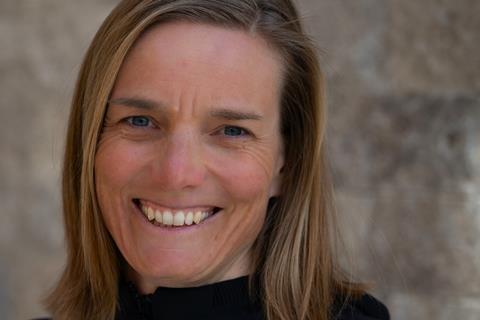
Irina Andorfer (40) has been Managing Director of Sport 2000 Austria since October 2024. The native of Bad Ischl has been working in the sporting goods industry for 20 years. For the last 8.5 years, Andorfer has worked for the Oberalp Group – most recently as Senior Sales Manager for DACH. The Austrian loves sports, people and change. In this respect, her new role at Sport 2000 Austria is ideally suited to her, as the association is currently undergoing its greatest transformation: After the successful closure of Zentrasport Österreich e. Gen. in September 2024, the newly founded ANWR sports GmbH is responsible for the reorientation of Sport 2000 in Austria and thus for the further development of the Austrian sports trade.
SGI Europe: What is the biggest change in the transformation of Sport 2000 Austria?
Andorfer: It’s a new company. ANWR sports GmbH, which operates in the Austrian market as Sport 2000, is a retail service organization. Sport 2000 Austria is a strong community of independent, regionally rooted, specialized sports retailers in Austria, offering quality, a top product range, expertise and a strong community.
In our new role, we want to support our retailers – together with the industry – with clear concepts and tools that enable them to address their target groups in a targeted way, to position themselves even more as experts and to expand or create new communities. We see ourselves as a service partner, doing some of the groundwork for the new season before the retailer can actively get involved. When the retailer then starts preparing for the next pre-order season, we provide him with a “pre-selection” and an overview of the direction in which the market is moving and where there are advantages for the retailer – always as a recommendation, not as an obligation. It’s about targeted support to strengthen competitiveness and to differentiate in the market. The “daily business” is managed independently by our dealers.
Does DZB Bank, which is part of the ANWR Group, offer additional support for retailers?
Absolutely. DZB Bank provides security through centralized settlement and other financial services. This is a great advantage for the participating dealers. Payments are processed simply, and financial flexibility is maintained during seasonal peaks in delivery. This is a big change from the old organization. There are also positive effects from the point of view of the brands, since our industrial partners can rely on the fact that they will get their money at the agreed time.
Let’s talk about your new role. You’ve been in your position for about 100 days. There’s a saying that goes: ”In the first 100 days, try to listen and understand…”
Yes, I have heard that, but it’s only a theory, because just sitting around cannot be the solution. For me, personal contact is crucial, and here my team had top priority in the beginning, then the dealers, stakeholders and interest groups. To be able to do this, we’ve created and used many platforms, such as Sport 2000 Rent’s winter season kickoff. Over the course of two days, I got to know most of the dealers personally. The next touchpoint for me was our in-house multisport trade show, also a great platform for initial discussions. The most important platform for me was our presence at the well-known ÖSFA [SGIE: winter sports trade show for the Austrian retail market] in the brandboxx in Salzburg. Every year in January, many retailers and industry partners come together to kick off the upcoming winter order season. We organized an industry get-together, and I was able to meet many Sport 2000 dealers as well as industry partners.
Has Sport 2000 Austria had its own booth at the ÖSFA in past years?
No, we have not. This is, if you like, the first big change in my new role. It was my decision to go to the ÖSFA. In my opinion, personal exchange is immensely important for trustful cooperation at eye level. In the years before, the in-house fairs were held at the headquarters – very successfully. It’s important to note that in the old organization, there was a Sport 2000 warehouse, so an order show was fully justified. This situation has changed; there is no longer a warehouse in Austria. In the new organization, we benefit from our warehouse of the Sport 2000 seven-country association. Here I’m challenged with my team to make the products relevant for our Austrian dealers available there. That takes time.
Many things have already been set in motion, but you’ve also had many conversations and listened to many things.
I have listened and analyzed very much, and I’m still not finished. The challenges are great, but they are solvable. We need time to be able to take the next steps in a well-considered manner. I feel that both the dealers and my team are looking for guidance. My job is to create trust and stability through clear communication and targeted measures.
For which specific changes do you need guidance?
ANWR sports GmbH / Sport 2000 Austria is a new beginning. Many things were good in the past but are no longer possible. What we need now is openness and confidence that we are making ourselves fit for the future. We must rethink things, because the consumer and the market demand it. At the same time, it’s challenging to leave the familiar behind and go new ways. But our great opportunity lies in combining the tried and tested with new, forward-looking approaches. In this way we create the best of both worlds.
But the association as a purchasing cooperative is also history, right?
Yes and no. Of course, it’s still important to combine forces and achieve advantages. But that’s not the focus. As a retailer, I have to earn my USP. Gone are the days when I could attract customers simply by offering a low price. Community building will be a key success factor for Sport 2000 in the future. Dealers will become hotspots for events such as lectures, social rides or other joint activities that enhance the shopping experience and intensify customer loyalty. We’re accompanying our dealers on this path.
These are great challenges. But where do the opportunities lie?
Above all, it requires a change of mindset. That’s the greatest challenge, but also the greatest opportunity. It requires clarity, openness, agility and flexibility. You have to be bold and try new things. This is what we want to do together with our retailers. Large sums are being invested to optimize processes. That would have been unthinkable earlier, when a higher margin could only be achieved through a better product price.
In which specific areas are you investing?
Well, right at the top is the development of specialist concepts adapted to the Austrian market. For this purpose, there will be expert groups consisting of retailers and industry with whom we will jointly develop these concepts.
When it comes to the big issue of digitalization, we benefit from the existing systems and the expertise in the seven-Länderverbund and the ANWR Group.
Tourism is also very important to us. The proportion of Sport 2000 retailers in tourist regions is very high. Here too we have to push ahead with future-oriented projects with all our might. At the moment we are thinking in terms of winter tourism. But it is time to think 365 days a year in the sports retail business.
In addition, the Sport 2000 brand is to regain its former strength in Austria. For this, we will invest a lot in marketing.
Will the transformation succeed?
Yes, it will. Because I believe in the power of community. That is our future, and not just for sports retailers. I’m convinced that in the future, it will not go without strategic partnerships anymore. In my opinion, this is the role of a sustainable association. That’s why we call the association a retailer community. This is where we want to develop. We want the dealers to talk to each other, to trust each other, to use the strength of the network. For that, you have to be flexible and agile – in your head and in your actions.
The odds are stacked against you as you take on this new role. Would you decide for it again?
[Laughs.] Absolutely! I’m very happy to have made this decision. It’s like a sport: You have to keep moving, you have to have a goal in mind and you need a good team. I also love change. Dwelling on a problem will not get you anywhere. You have to focus on the solution. I think I can contribute here. I’m a team player, and I have no fear of making decisions. I want to have people around me who are willing to take responsibility.
There’s another thing we need to talk about: You’re a woman in a leadership position in a male-dominated industry. How does that affect you?
As an athlete, it’s not unusual for me to be surrounded by men. This is also the norm in my professional career. I have not thought about it most of the time. But I have to say that the higher I’ve climbed on the career ladder, the more I’ve realized that as a woman I have to do more than my male counterparts. Our society is still very much shaped by the classic role model, and we have to get used to the idea that the typical top manager is not male and wears a suit. I often experience amusing situations that show me that we still have a long way to go to make this topic no longer an issue. But as long as women are still being asked this question, we are not where we need to be. I want to do my part.
Why do you think there are so few women in leadership positions?
Difficult to answer, because women are very efficient, balancing and can keep many balls in the air at the same time without losing sight of the priorities. I think it would help if there were more female role models and more women in leadership positions. But I also want to say very clearly that I’m against a women’s quota. At the end of the day, it has to be the competence for an issue that decides. In my opinion, the true strength of a team comes out when you combine many different points of view. A mix of young and old, women and men, different cultures. In other words, diversity. And then it’ll be time for something great to happen.