85 percent of sports coverage still goes to men. Here’s why that’s a structural and a business problem, not just a fairness one.
In this column, Katalina Farkas explores why visibility in sports media matters so much for the development of women’s sport. It’s this conviction that led her to found ERSTE WIRD MAN NICHT ALLEIN — a German-language magazine created to give women in sport greater visibility.
Each and every year, we celebrate the power of sport. We say it builds confidence, strengthens communities and improves health. I get it. It sounds intriguing. It’s a good story. And I genuinely believe that all of it is true. But here’s the thing: if sport has all this transformative power, why do we keep telling only part of its story?
Basketball shaped me long before working in journalism did. I never became a professional athlete (although there is this one game where I almost scored two points in the Second German Bundesliga, trust me, I’ll make sure one day my grandkids will hear about it). But still, spending about two decades on teams in different cities taught me lessons I still draw on: how to trust others, how to take responsibility, how to keep showing up, and how to lose without giving up (this, I must admit, works most days only).
Why do I write this? Well, I believe sport to be one of the most important classrooms of them all. Which is precisely why I find it so difficult to accept how selectively we tell its stories.
Back when I played basketball, I never even considered going to a women’s game. I never watched a game on TV. Why? There were none. Zero. They must’ve existed somewhere; they just happened outside of the public eye. Even if my life had depended on it, I wouldn’t have been able to name a single female professional basketball player (I did have a poster of Michael Jordan on the wall, though).
Point is, professional women athletes – except the occasional Steffi Graf, maybe – were basically nonexistent in the German media. There were none on TV, and there were none in the newspaper. Simple as that. I knew lots of other girls who played sports. They were on basketball teams, on hockey teams, on football teams. They were competitive. Eager. Gritty. Yet, these girls never seemed to enter professional sports. Very few of them turned into sports fans. Sports, it seemed, were a man’s world.
Twenty-something years later, things look a lot better, of course. But they’re not great – and there’s lots of room to grow. Coverage of women’s sport continues to lag behind that of men’s. Dramatically, that is. A recent Austrian study found that last year, 15 per cent of Austrian media coverage was devoted to women’s sports only. Which means that male athletes were given 85 per cent of the space. (For a quick check across The Athletic, I just recently opened The Athletic, the New York Times’ sports outlet, on a random Monday. There were no stories (read again: no stories) explicitly covering women’s sports before the digital fold. When it comes to women’s sports, I think we can all agree that outside of certain social media bubbles, visibility has room for improvement. To say the least.
“By the age of 14, girls are already twice as likely as boys to stop playing sports”
Katalina Farkas
And here we are, wondering why by the age of 14, girls are already twice as likely as boys to stop playing sports? Even though we already established how good it is for stamina, self-confidence, grit, and the like? Research points to familiar reasons: gender stereotypes, body image, fewer opportunities – but also a lack of visible role models. If you rarely see people who look like you celebrated in sport, it becomes harder to imagine yourself belonging here.
Of course, visibility alone is not the goal. But visibility creates momentum. Momentum drives investment (because it also shows who is investing – and who is missing out). Investment builds sustainable structures, professional pathways, and enables long-term growth. So, visibility is not all, maybe. But it is the beginning. Maybe we should start by telling the whole story.
About the author
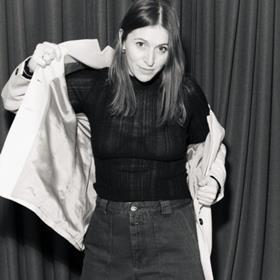
Besides founding ERSTE WIRD MAN NICHT ALLEIN, Katalina Farkas is a journalist writing for outlets including Süddeutsche Zeitung, DIE ZEIT, and Condé Nast. She also hosts the podcast Wunderbar Together, exploring similar themes around visibility and equity. Through her writing and podcasting, Farkas continues to examine the structural reasons behind the persistent visibility gap between women’s and men’s sports.

Impact of Sports
Physical inactivity keeps rising, and with it the risk to this industry's future. Our Impact of Sports series follows the evidence, from global data to the brands and policymakers working to get more people moving.
>> Explore the series.