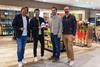
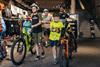
Intersport Austria achieved record sales of €645 million in its fiscal year 2022/23. Its success rests on two strategic pillars. In the latest insights into the retailer, Managing Director Thorsten Schmitz discussed the figures and the latest Bike Report Austria, and he revealed more about Intersport Austria’s strategy and brick-and-mortar stores.
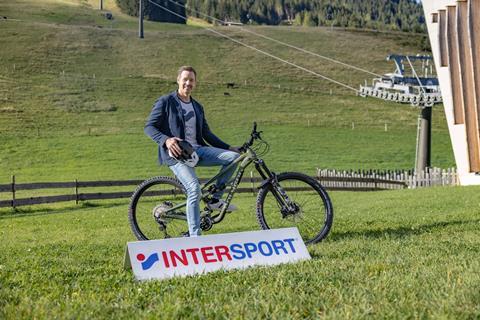
“In the recently ended fiscal year – Oct. 2022 to Sept. 2023 – we reported a turnover of €645 million and, right before Intersport Austria’s 20th anniversary in 2024, the highest turnover in the history of Intersport Austria,” said CEO Thorsten Schmitz at the company’s recent press conference.
Adjusted for inflation, Schmitz said Intersport Austria is ending the fiscal year – which is reported from October to September to reflect seasonality – with real growth of “plus-minus zero” compared to the previous year. Last year’s 21/22 period saw the company finish with €631 million.
Schmitz said the retail group started with very good winter business in Austria. In particular, the trend for renting winter sports equipment, as well as the strong potential in the touring and cross-country skiing segment, gave Intersport a “strong result” here.
“We see rental as a sustainable business model. Through shared use, sports equipment is used more frequently. It is designed to last and can be repaired. In addition, to ensure a long product life cycle, we sell our used rental skis to customers and wholesalers at the end of a season. We are already working intensively to further expand this area.”
According to Schmitz, the main driver in the second half of the year was the bicycle business, with an increase of 25 percent compared to the previous year. Here, Intersport Austria benefits from the very high average product prices, which are around €1,700 for bikes without a motor and €3,500 for e-bikes. In addition, Intersport Austria has its own “Firmen Radl” (”company bike”) store. Here, the average selling price of e-bikes is almost €4,000.
The Outdoor, Running, Fitness and Team Sports segments support the business result with good figures.
Schmitz says that E-commerce sales were down in the “mid-single digits” and continued to decline. However, this is not the focus of Intersport Austria; that focus is directed at stores and rental centers on-site.
1st strategic pillar for Intersport Austria: Consistent investment in locations
Intersport Austria aims to hook customers using a “multichannel journey that ends in the local sports store,” says Schmitz. To this end, Intersport Austria has invested a total of €100 million in the expansion and renovation of its locations over the past five years.

The declared goal is to offer customers more than just transactional business: “Retail of the future means experience, product expertise, advice and community,” says Schmitz.
Ideally, rental transactions should take place online so that the customer only has to pick up the products in the store. In addition, when buying and renting hardgoods, the goal is to up-sell the customer lower-priced softgoods.
The fact that Intersport has been so successful in this is also due to its positioning in the premium segment with a focus on advice, says Schmitz.
2nd strategic pillar: Focus on bikes
Advice is also key to growth in the bike segment. Just how important can be seen, among other indicators, by the fact that Intersport Austria presented what is probably the largest and most representative survey in Austria on the subject of bicycles and bicycle mobility at this annual press conference.
The potential in the bike segment is enormous: One in four people in the Alpine Republic already has an e-bike. According to the Intersport Austria study, more than 1.1 million Austrians want to buy a (new) e-bike in the next three years.
Coming back to Intersport Austria’s own “Firmenradl” scheme – whereby an employee obtains a bike from their employer, which can be used both for work purposes and for leisure purposes, paid for via a monthly partial deduction from the gross salary, making savings of over 30% possible – the offer is particularly popular with the younger respondents. It also offers Intersport Austria high sales potential, as the bikes sold via the employer are usually €200 to €300 more expensive than those purchased privately.
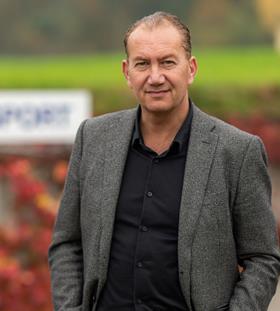
Accessories also have great potential in the bike sector. For this reason, the campaign that Intersport has linked to the study also focuses on the topic of “safety.” Currently, only about one-third of Austrians always wear a helmet when cycling. Intersport wants to increase this figure. After all, Austrian retailers currently sell a helmet with every bike, on average.
To promote sporty cycling in Austria, Intersport is investing in a “bike infrastructure fund.” Communities, together with retailers, can use the funds to build local trails or, for example, pump tracks.
This also fits well with the community idea of Intersport Austria. “This is how healthy growth can take place,” concludes Schmitz.