The Olympic Games have high organizational demands and equally high economic expectations. A study by the Centre de Droit et d’Économie du Sport (CDES) estimates the positive economic impact of the Paris Olympic and Paralympic Games on the Île-de-France (Greater Paris) region at €6.7 to €11.1 billion over 17 years (2018–34). Not only are the 15 million estimated Olympic visitors expected to bring in a lot of money, but other investments made in connection with the Games – in infrastructure, for instance – will have long-term benefits.
However, not everyone is convinced of these benefits. The fashion world, for one, disliked the many restrictions placed on it in June during Paris Fashion Week, which was brought forward. There was a lack of suitable venues for fashion events and affordable hotels. At the same time, the hotel industry is not expecting a major impact on bookings, as the major event, with its strong concentration in the city center, will deter tourists who are not interested in the Olympics.
However, the Olympics’ importance remains undiminished on the media front. This is evidenced by the numerous cultural events, store openings and product launches taking place around the Games.
Fashion hijacks sport: LVMH is the main sponsor of the Olympic Games
A year ago, the French luxury goods group Moët Hennessy Louis Vuitton (LVMH) signed a remarkable sponsorship deal, agreeing to pay €150 million to present its brands in the emotional and far-reaching sporting environment of the Olympics. The medals for the Games were designed by Chaumet, a jeweler owned by LVMH. Other LVMH brands – Louis Vuitton, Dior and Berluti – provide the uniforms for certain teams. Even the Olympic torch was ceremoniously lit from a Louis Vuitton suitcase.
For the first time, athletes sponsored by LVMH will be participating, among them world swimming champion Léon Marchand, European gymnastics champion Mélanie de Jesus dos Santos and Olympic fencing gold medalist Ezno Lefort. The LVMH squad also includes Paralympic athletes, such as cyclist Marie Patouillet. According to Business of Fashion, the collaboration is “the biggest sign yet of the new importance of sport in fashion.”
Vogue organized a major gala event, similar to the Met Gala in New York, to celebrate in Paris. Called Vogue World, the live-streamed mega-event with 500 hand-picked guests at Place Vendôme featured a parade of France’s greatest designers on the theme of sport.
New openings: from mega-flagship stores to pop-ups
Paris is an attractive location for a flagship store, but it is especially so during the Olympic Games. Two new flagships, Salomon and On, both located on the famous Avenue des Champs-Élysées, are among the most eye-catching openings in recent weeks.
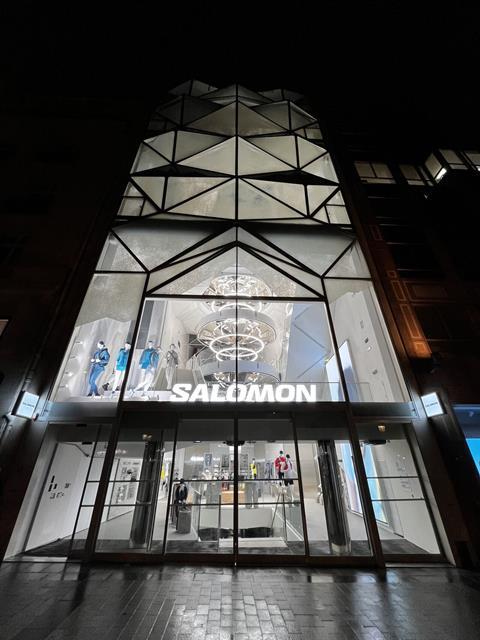
Salomon, which opened its store in May, is the first outdoor brand to set up shop on the boulevard. With nearly 300 square meters of retail space between the ground floor and the basement, the French brand is showcasing not only its standard range but also an entire wall of sports-style footwear. Ever since Rihanna appeared on the Super Bowl stage last year in Salomon sneakers, the brand has been on the radar of fashion enthusiasts. In April, Salomon opened its first sport-style store in Paris’s Marais district, setting its design collaborations alongside boutiques, designer brands and galleries.
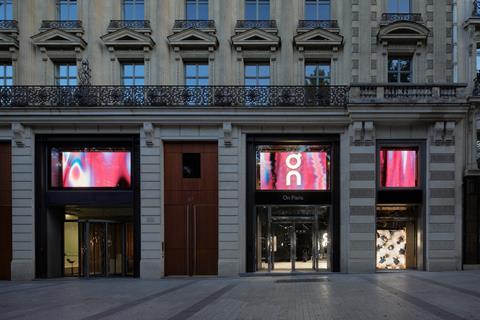
On opened its second store in Paris in mid-July. With over 1,500 square meters spread over three floors, it is the brand’s largest store to date. It offers the largest collection of footwear, apparel and accessories in the running, training, tennis, lifestyle and outdoor categories.
These two sports shops have counterparts in the fashion world. Calvin Klein has opened its largest store in the world on the Champs-Élysées, 600 square meters spread over three floors. The first Solebox store in Paris, although not located on the Champs-Élysées, is very stylish. The interior is reminiscent of a typical Parisian brasserie, and the store includes a café.
Only Intersport has gone bigger, opening in May a Parisian store of 1,900 square meters – its first flagship in the French capital. It is located at Place de la République on the site of a former Go Sport store. Last year, Intersport acquired 68 Go Sport stores in France, increasing its presence in the country in one fell swoop.
Brands are also taking the opportunity to present themselves in temporary stores: running brand Circle Sportswear, for example, has opened a pop-up in the Marais district. Its 55 square meters, open for business until September, are intended to be more than a traditional store. There, running enthusiasts can participate in events, meet athletes from the pro team and attend athlete talks.
Havaianas, the Brazilian flip-flop brand, hopes to attract international customers with a 150-square-meter pop-up on the Champs Élysées until the end of August.
Danish tent brand Nordisk, meanwhile, is opening a window to its brand, not a pop-up. As a participant in the official Denmark Pavilion on the Champs-Élysées, the brand is presenting itself alongside other Danish cult brands such as Lego, Bang & Olufsen and Bestseller.
Special collections and product launches
Japanese sports company Mizuno has developed apparel for the Olympic Games that blocks infrared radiation – not to enhance athletic performance but to protect from prying eyes. After the Tokyo 2020 Olympics, images of athletes in underwear or with bare body parts, generated by infrared technology, appeared on the Internet. Athletes complained to the Japanese federation, and Mizuno developed a new technology to prevent such practices.
Swiss running brand On unveiled an equally groundbreaking new technology on July 25, the eve of the Paris Olympics. At the On Labs hub in Paris, the brand demonstrated its new LightSpray technology, which uses a robot to spray the upper onto a last, with a method similar to 3D printing. The On Cloudboom Strike LS shoe will be worn in Paris by four-time world champion Hellen Obiri. The Kenyan won the Boston Marathon earlier this year wearing a prototype.
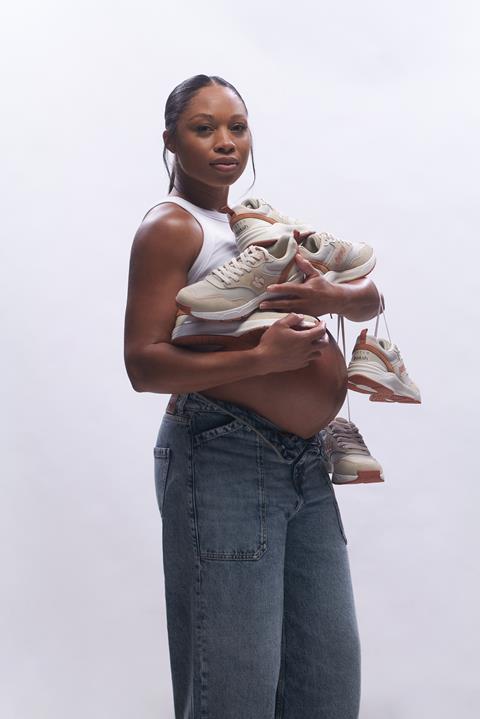
French women’s fashion brand ba&sh and US women’s running brand Saysh have teamed up to create a limited-edition sneaker for the Olympics, launching the Saba on July 10. Saysh, co-founded by 11-time Olympic medalist Allyson Felix, is dedicated to supporting women in professional sports. Throughout her career, Felix has fought for the rights of mothers and pregnant women in professional sports.
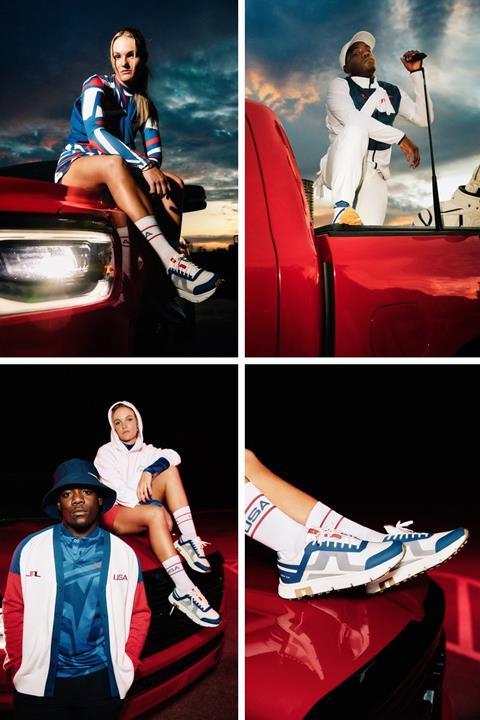
J.Lindeberg is providing the USA Golf team with an exclusive collection, available in stores and online since June. It is accompanied by the “Red, White, Blue for Gold” campaign, with each piece reflecting the iconic colors of the American flag in different designs.
Sport demonstrates purpose: support for refugees and athletes in wheelchairs
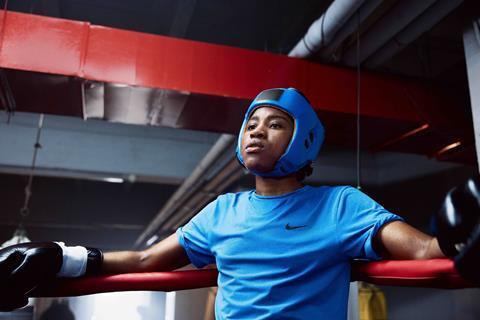
In March, Nike signed a first member of the IOC Refugee Olympic Team, boxer Cindy Ngamba of Cameroon, to its roster. The company collaborates with the Olympic Refugee Foundation (ORF) to help displaced people find a sense of community and belonging through sport. One way is by outfitting the IOC Refugee Olympic Team. Nike is also supporting the IOC Refugee Olympic Team and the ORF-managed Refugee Athlete Scholarship Program, which sponsors 63 refugee athletes from around the world in 13 sports.
Adidas has been particularly active in developing uniforms for Paralympic athletes this year. Its designers and engineers spent two years ensuring the optimal fit for athletes in ParalympicsGB, Team D Paralympics, the Brooklyn Nets and wheelchair basketball teams in Germany. The resulting collection and special adaptive training apparel are designed to allow athletes to play their sport in comfort and without distraction.
Failures & criticism: From anti-semitism to sexism to financial troubles
In April, Nike was one of the first brands to cause controversy this year when it released its Olympic uniforms for athletes. The high leg cut of the women’s tracksuits drew criticism and accusations of sexism. Nike was quick to point out that female athletes were not required to wear these suits and that Nike was offering its athletes a range of possible outfits.
Adidas also had its moment of scandal: after accusations of anti-Semitism, the sportswear manufacturer was forced to change an advertising campaign for the reissue of its SL 72 sneaker model. The shoe was originally designed for the 1972 Munich Olympics, where several Israeli athletes were murdered by Palestinian terrorists. The shoe was presented by top model Bella Hadid, who has repeatedly expressed pro-Palestinian sentiments on social media.
While some brands aim to be more inclusive during the Games, the IOC has done the opposite. Human rights organizations have sharply criticized France and the IOC for the French delegation’s ban on hijabs. Athletes from other countries are not restricted in their religious freedom. The decision is based on a law that has banned hijabs in many public places in France since 2004.
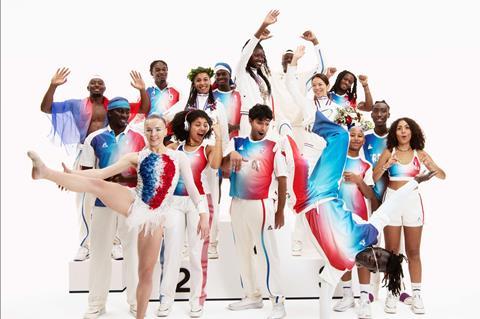
However, the IOC and its supplier, Le Coq Sportif, received far more unwanted attention. The French Olympic team, of all teams, had long been concerned about the punctual delivery of their jerseys. The traditional French brand Le Coq Sportif fell behind schedule, delivering around 370,000 items of clothing and equipment for the French Olympic teams. At the same time, it was revealed that the brand’s parent, Swiss holding company Airesis, had run into financial difficulties and had its listing suspended on the Swiss stock exchange after it missed the publishing deadline for its 2023 financial results. The company finally admitted to the French news agency AFP that there had been “some delays in the payment of suppliers.” The annual report, finally published at the end of June, revealed a loan of €2.9 million granted in May to Le Coq Sportif from the organizing committee of the 2024 Olympic Games in Paris for the “purchase of sports equipment.” The report also revealed that Le Coq Sportif suffered a drop in turnover of €20 million to €121.4 million last year and a loss of more than €28.25 million. Airesis reported a loss of 36 million Swiss francs (€37m) for 2023.
Cultural Olympiad: Art, fashion and sport
Under the motto “Cultural Olympiad,” Paris is organizing a popular festival throughout the summer with hundreds of events – most of them free and open to the public – where fashion, art, sport and Olympic values come together. Some examples:
The International Fashion Academy (IFA) hosted a marathon for sustainable fashion in June, while through January 2025 the Palais Galliera fashion museum will be running the “Mode en mouvement” exhibition to showcase the influence of sport on fashion. For the new Olympic disciplines of BMX, freestyle, skateboarding, sport climbing, surfing and 3x3 basketball, there is an immersive exhibition called “Spot 24 - l’Exposition Olympique, sport et cultures urbaines” at the foot of the Eiffel Tower. Several LVMH brands are also presenting exhibitions. One is Louis Vuitton, with an exhibition on the historical links between sport and the brand.
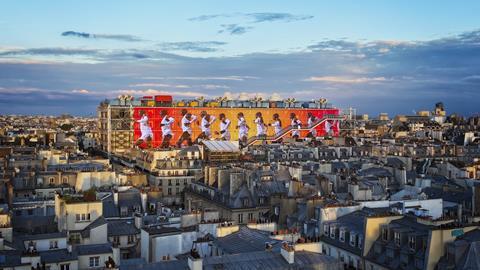
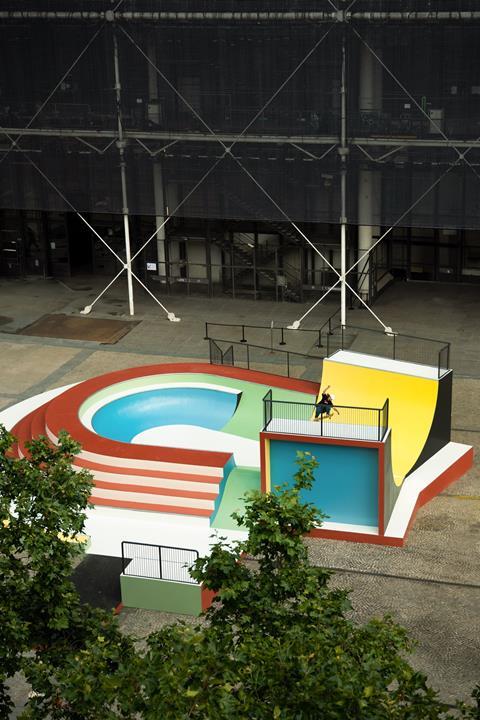
Sports brands are also celebrating the cultural significance of sports, of course. On July 24, Nike opened its “Art of Victory” exhibition at Paris’s Centre Pompidou, the very place that inspired the design of the Air Max 1 nearly 40 years ago. Nike has transformed the museum’s iconic facade into a canvas, inviting the public to engage with art through sport, and has set up a walk-in half-pipe sculpture, “Cycloid Piazza,” by French artist Raphael Zarka.