However, the French giant’s regional investments may also be good news for local retailers.
In recent years, Latvia, Lithuania, and Estonia have welcomed several foreign sporting goods retailers lured into the region with promising potential yet to be unlocked. Sales of sporting goods in the Baltic region are projected to rise in the foreseeable future as local governments embark on ambitious programmes aimed at increasing the popularity of healthy lifestyles.
The announcement of Decathlon’s plans to establish its first store near Tallinn, the capital of Estonia, in 2023, sent ripples of concern through local sporting goods retailers, signaling a potential shift in the competitive landscape.
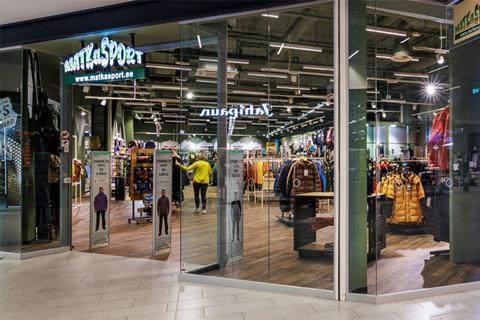
Tarmo Mere, director of Matka Sport, the largest camping goods chain in Estonia, projected that Decathlon would undoubtedly make competition in the market fiercer.
Some sporting goods retailers warned that Decathlon’s arrival would generate the same effect as the Lidl expansion into the Baltic region did a few years earlier: benefiting the customers but making the lives of other retailers a little more challenging.
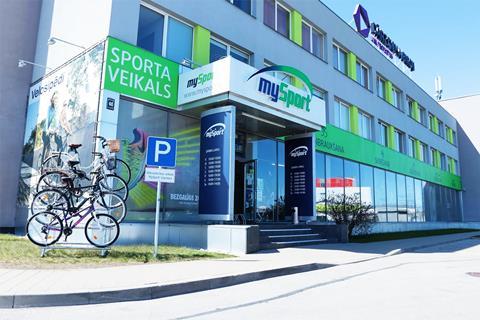
However, the fears of Decathlon’s expansion appeared to be overblown, as indicated by Lauris Purnins, co-owner of sporting goods chain MySport, running several stores in Latvia, where the French retailers gained a foothold a few years earlier.
“Decathlon focuses on customers looking for low-priced products,” Purnins said, adding that the French sporting goods retailer is believed to eat out some market share from Sportsdirect, a company focusing on the same niche, some grocery stores and some large household goods stores. “Decathlon also took some market share of the cheap bicycle segment.”
However, in the end, the specialist stores or more high-end stores were almost unaffected by the Decathlon launch, he noted.
Besides bringing its business culture with it and involving efforts aimed at popularizing sports activities, the French retailer has contributed to a growth in sales in the market in recent years.
“We believe that Decathlon helps us to sell more, because they attract customers who want to try some sport, and firstly buy lower-priced products or just don’t know about specialist stores,” Purnins said.
Decathlon, which has been present in the Baltic countries for six years since the opening of its store in Vilnius, the Lithuanian capital, is happy with its performance in the region, as revealed by Nicolas Fogola, CEO of Decathlon Lithuania-Latvia-Estonia.
“We see that the Baltic countries were waiting for amazing value-per-money sports products and for Decathlon to open here,” he said.
The French retailer plans to strengthen its presence in the Baltic region in 2025.
“This will be a turning point for Latvia as we plan to open a second store this year in Riga on the other side of the city, which will not only guarantee greater availability to our sports enthusiasts but will also present our brand in a modern way because it will be opened in a new concept – offering modern test zones, visibility of the products and showing all the components needed to do sports differently than before,” Fogola said.
The key part of the Decathlon strategy, Fogola added, is that the company wants to be known in the main cities in the Baltic countries, be available to everyone through its web store and then look forward to further possible physical development.
In 2024, British sporting goods retailer JD Sports announced plans to kick off its first store in Latvia in the Akropol Alfa store not far from Riga. JD Sports press office declined to provide comments about its further plans and expectations from the operation in the Baltic region.
Growth for all
In the past few years, business has been particularly good for sporting goods retailers in each of the Baltic countries.
As revealed by Mere, sales of sporting goods jumped in the region during the Covid-19 pandemic.
Purnins said that the post-Covid years were not as good as planned, as the demand in the bikes and outdoor goods segment dropped. As a result, the Baltic bike market has even been hit with an oversupply.
“We also feel the bad influence from the war in Ukraine; most people are careful and keep money in bank accounts,” Purnins admitted.
However, the general demand is still rising, and consumer tastes are becoming more sophisticated.
“The young generation prefers known sports brands like Nike and Adidas, but from the sales of key top sports, we see how we have changed that significantly in the last years. For sure, we still need to build trust between consumers as the brand is not very well known, but other than that, we only see a positive impact from our openings,” Fogola said.
Sales in the B2C category of sporting goods for private use spiked during the pandemic times, agreed Gints Kuznecovs, CEO of Latvian leading fitness goods retailer Gfitness. The B2B category, on the other hand, experienced a slump in sales.
In recent years, the demand on the market was on the rise, though the B2C category, at some point, sustained a decline, and competition with Decathlon has not made a difference, Kuznecovs revealed.
Demographic is the key
In the future, the Baltic sporting goods retailers believe the regional governmental programmes aimed at promoting a healthy lifestyle will become the key to market growth.
“For example, this year, swimming in Lithuanian primary schools became mandatory; we see that when sports equipment is affordable, and some programs promote it, it is easier for parents to let their children try various sports and not stop when one of the chosen sports is not succeeding,” Fogola said.
“Of course, a healthier lifestyle improves sporting goods sales, and there is very big potential in the future,” Purnins said, who, however, hasn’t felt any support from the governmental programmes just yet.
According to Kuznecovs, the Latvian fitness association set the target to double the number of people engaged in workout activities from the current 8 to 9 percent in the next five years.
The room for improvement in this field is vast, Kuznecovs said, indicating that Latvia holds the last place in Europe in terms of healthy years. A huge work is underway by the governments of all Baltic countries to promote physical activity among the population, and these efforts are due to bear fruit in the coming years, he stated.
These government programmes obtain even greater importance if the demographic situation is taken into account.
Over the past decades, all Baltic nations have seen their population shrink. For example, Lithuania’s official data indicated that the number of citizens dropped from 3.5 million in 2000 to 3.1 million in 2010 and 2.9 million in 2023. Latvia, with 1.9 million residents, lost nearly a quarter of its population over the past two decades.
With 1.36 million, Estonia stands out as a country where the depopulation trend has reversed in recent years. However, it remains to be seen whether this trend is sustainable.
“Indeed, the demographic situation will be a big challenge for the Baltics in the future. The good situation is only in capital cities and within 50-70 km around. If we trust statistics, very soon, it will be very hard to do good business, except for health care, but we try to stay positive and hope that fewer and fewer people will go to work abroad and that people will “make” more kids in every family,” Purnins said.